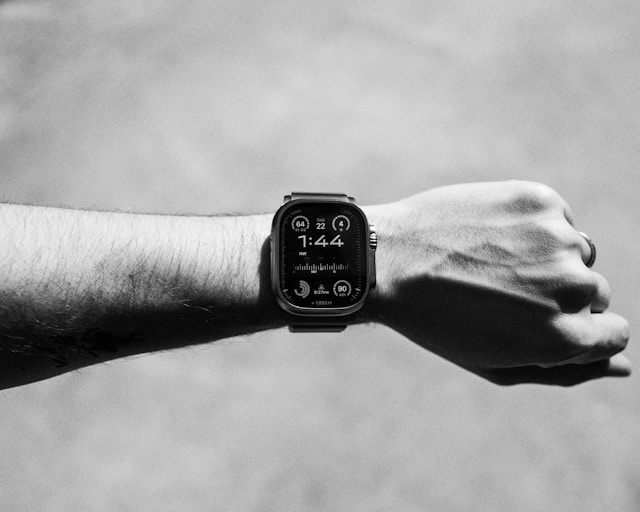
Wearables can be useful, but only if you know which numbers deserve attention. The fitness metrics that matter are not always the ones your Apple Watch, Garmin, or WHOOP makes most prominent.
Quick Take
- Resting heart rate is one of the clearest long-term signals your device tracks. The trend matters more than one morning’s number.
- HRV can help you understand recovery, but it is highly individual and should be judged against your own baseline.
- Sleep duration and consistency are more useful than a proprietary sleep score or exact sleep-stage breakdown.
- VO2 max estimates are imperfect, but they can still show whether your aerobic fitness is moving in the right direction.
- Calorie-burn estimates are too unreliable to guide eating decisions. Use them cautiously, if at all.
The problem is not that wearables collect too much data. The problem is that they often present guesses, scores, and branded formulas with the same confidence as direct measurements. That makes it easy to overreact to a bad recovery score, eat back calories you may not have burned, or ignore a useful trend because it changes slowly.
A better approach is simple: use your device as a trend tracker, not a truth machine. Look for patterns over weeks, compare numbers to your own baseline, and let your training plan, sleep, mood, and performance provide the context.
Why fitness metrics that matter Are About Trends
Apple Watch, Garmin, WHOOP, Oura, Fitbit, and similar devices estimate a lot from wrist-based sensors. Heart rate, movement, skin temperature, accelerometer data, and algorithms are combined into scores that feel precise. Some outputs are reasonably useful. Others are educated guesses.
Research on commercial wearables generally finds that step count and heart rate can be acceptable in many settings, while energy expenditure is much less reliable. One systematic review found that wrist-worn activity trackers performed poorly for energy expenditure estimates, with large errors across brands. Another review concluded that commercial devices tend to be better for heart rate and steps than calories burned.
That does not make your device useless. It means the fitness metrics that matter are the ones that show repeatable trends and connect to training decisions: resting heart rate, HRV trends, sleep duration, VO2 max estimates, and daily movement.
Resting Heart Rate Metrics for Fitness That Matter
Resting heart rate is simple: how many times your heart beats per minute when you are at rest. Most wearables estimate it overnight or during quiet periods, which makes it one of the more practical metrics to follow.
A lower resting heart rate can reflect improved cardiovascular efficiency, especially when it changes gradually alongside consistent aerobic training. The exact number varies by age, fitness level, medication use, stress, caffeine, illness, and genetics, so avoid comparing your number with someone else’s.
The useful question is whether your own baseline is changing. If your 7-day average gradually drops over several weeks while training feels manageable, that often suggests improved aerobic fitness or better recovery. If it rises suddenly, look at sleep, alcohol, illness, heat, stress, or a sharp jump in training load before assuming something is wrong.
How to use it: follow your weekly average, not one isolated morning. A small downward trend over a training block can be meaningful. A sudden jump of several beats per minute is a reason to check recovery and symptoms, not a reason to panic.
HRV Metrics for Fitness That Matter in Context
Heart rate variability, or HRV, measures the variation in time between heartbeats. It is influenced by the autonomic nervous system, which is why many devices use it as a proxy for recovery, stress load, and readiness.
HRV is one of the fitness metrics that matter, but only when interpreted carefully. A single low reading does not prove you are overtrained. HRV can shift because of poor sleep, dehydration, alcohol, travel, emotional stress, caffeine timing, illness, menstrual cycle phase, or a hard session the day before.
Reviews of HRV monitoring suggest it can help guide training adaptation when measured consistently and interpreted in context, especially as a trend rather than a one-day score. The key phrase is “in context.” HRV is not a command; it is a clue.
How to use it: compare your 7-day or 14-day trend with your own normal range. If HRV is down and you also feel flat, slept poorly, or are under heavy life stress, reduce intensity or choose an easier session. If HRV is low but you feel fine, consider warming up and making the final decision based on performance.
If you are building a broader recovery plan, BeeFit’s guide to mitochondrial energy and recovery habits explains how sleep, food rhythm, training, and stress all affect how ready you feel.
Sleep and Fitness Metrics: What Matters More Than Scores
Sleep scores feel helpful because they compress the night into one clean number. The problem is that each company calculates that number differently, and wrist-based devices are limited in how accurately they can classify sleep stages.
Total sleep time is more actionable. Most adults need at least seven hours of sleep, and many active people do better closer to seven to nine hours depending on training load, stress, and individual need. The CDC notes that good sleep is essential for health and lists seven or more hours as the general adult recommendation.
Sleep architecture still matters biologically, but your device’s exact estimate of deep sleep or REM should not become a daily judgment on your recovery. If you slept eight solid hours and feel good, do not let a mediocre sleep score ruin your training day.
How to use it: set a realistic sleep target and track how often you hit it. Look for patterns after late caffeine, alcohol, hard evening workouts, travel, or high-stress workdays. Consistency usually tells you more than the score.
For more practical sleep habits, see BeeFit’s guide to sleep and fitness recovery.
VO2 Max and Daily Movement Metrics That Matter
VO2 max estimates how much oxygen your body can use during hard exercise. A lab test is the gold standard. Wearables estimate it from heart rate, pace, speed, power, and profile data, so the number is not perfect.
Still, VO2 max belongs on the list of fitness metrics that matter because cardiorespiratory fitness is strongly linked with long-term health. The American Heart Association has argued that cardiorespiratory fitness should be treated as a clinical vital sign because it provides important information about cardiovascular and overall mortality risk.
Use your wearable’s VO2 max as a directional marker. If it climbs over months while your training is consistent, your aerobic system is probably improving. If it stalls, the answer may be more consistent easy cardio, some appropriate higher-intensity work, better recovery, or simply patience.
Daily movement is the less glamorous partner. Steps and activity minutes help you see whether your non-exercise activity is stable. This matters because many people train hard for an hour, then sit almost the entire rest of the day.
How to use them: check VO2 max monthly, not daily. Track weekly average steps or movement minutes and keep them consistent with your lifestyle. If you want a simple aerobic starting point, BeeFit’s Zone 2 cardio guide can help you build steady conditioning without turning every workout into a test.
What to Ignore, Downgrade, or Treat Carefully
Calories burned: Treat this as a rough estimate, not a nutrition target. Devices cannot fully account for your metabolic rate, efficiency, body composition, temperature, fatigue, or compensation later in the day. Do not use exercise calories as permission to eat a precise amount back.
Sleep-stage percentages: Your device may estimate REM, light sleep, and deep sleep, but these are not the same as a clinical sleep study. Use them only as loose pattern data.
Readiness, recovery, strain, and body battery scores: These can be useful summaries, but they are proprietary blends. They do not know your motivation, pain level, nutrition, life stress, training goal, or how you feel during warm-up.
Device-to-device comparisons: Switching between Apple Watch, Garmin, and WHOOP can make your numbers look different even if your body has not changed. Pick one device and watch the trend.
A Simple Tracking System
You do not need a dashboard full of alerts. A simple weekly review gives you most of the value without turning health into another inbox.
- Daily: sleep duration, movement, workout completion, and how you feel.
- Weekly: resting heart rate average, HRV trend, total training volume, and step average.
- Monthly: VO2 max trend, workout performance, and whether your plan still fits your recovery.
The fitness metrics that matter should help you make better decisions. If resting heart rate is rising, HRV is falling, sleep is short, and workouts feel worse, reduce load. If sleep is stable, resting heart rate is improving, movement is consistent, and performance is rising, keep going.
FAQ
Which wearable is most accurate?
No device is best at everything. Apple Watch, Garmin, and WHOOP can all be useful for trends, but accuracy varies by metric, activity, fit, skin contact, and algorithm. Consistency with one device matters more than comparing numbers across brands.
Should low HRV make me skip a workout?
Not automatically. Low HRV is one input. If it comes with poor sleep, unusual soreness, high stress, or a bad warm-up, choose an easier day. If you feel good, a moderate session may still be reasonable.
Do I need a wearable to improve fitness?
No. You can track workouts, sleep, morning pulse, steps from a phone, and performance without a premium device. Wearables make tracking easier, but consistency, progressive training, recovery, and honest feedback matter more.
The Practical Takeaway
Your wearable is most useful when it helps you see patterns you might otherwise miss. Resting heart rate, HRV trends, sleep duration, VO2 max, and movement consistency are the fitness metrics that matter because they connect to recovery, conditioning, and daily behavior.
Ignore the urge to optimize every score. Review the trend, compare it with how you feel and perform, then adjust training or recovery only when the pattern is clear.
This article is for informational purposes only and is not medical advice. If you have chest pain, dizziness, fainting, known heart disease, sleep disorder symptoms, or concerns about heart rate, HRV, or exercise readiness, consult a qualified healthcare provider.
Photo: Blocks / Unsplash
Discover more from BeeFit: Fitness & Wellness
Subscribe to get the latest posts sent to your email.
Share :