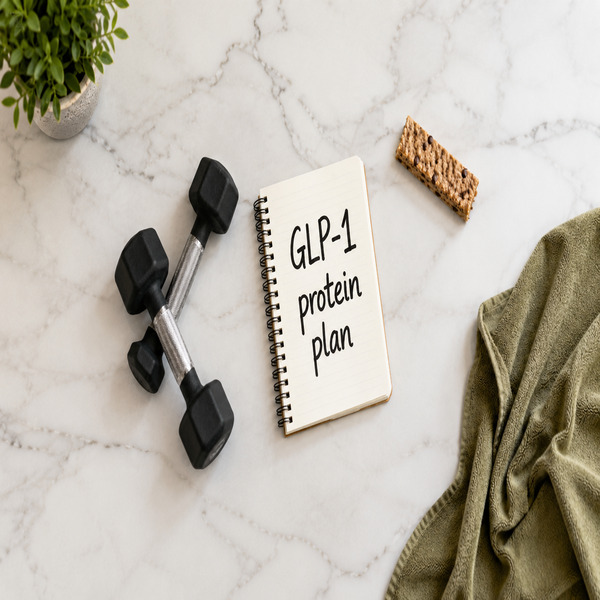
GLP-1 muscle loss is a real concern when weight drops quickly but protein intake and strength training fall behind. This guide explains how to keep more muscle while using GLP-1 medication safely and strategically.
Quick Take
GLP-1 medications can help people lose weight by reducing appetite and slowing digestion. However, they do not automatically protect muscle.
GLP-1 muscle loss becomes a bigger risk when weight drops quickly, protein intake falls, and strength training disappears.
The goal is not to “out-train” the medication. The goal is to give your body a clear reason to keep muscle while the scale moves down.
The best strategy is simple:
- Eat smaller, protein-dense meals.
- Strength train 2–4 times per week.
- Keep workouts moderate, not punishing.
- Walk regularly instead of relying on intense cardio.
- Build habits you can keep if medication use changes later.
GLP-1 muscle loss can happen when weight drops quickly but protein intake and strength training fall behind. GLP-1 medications can support weight loss, but they do not automatically protect muscle.
How to Reduce GLP-1 Muscle Loss With Protein
GLP-1 receptor agonists and related medications can make weight loss easier because they reduce appetite, increase fullness, and slow gastric emptying. Semaglutide medications include Ozempic and Wegovy. Tirzepatide medications include Mounjaro and Zepbound, though they work through both GIP and GLP-1 pathways.
The important point is this: losing weight is not the same as losing only fat.
When total food intake drops sharply, your body has to decide what tissue to keep and what tissue to use for energy. Fat is one source. Muscle can become another, especially when you are eating too little protein, not lifting, and losing weight quickly.
Body-composition studies do not show that everyone loses half their weight from muscle. That claim is too broad. However, they do show that lean mass can decline during major weight loss. In semaglutide body-composition data, fat mass decreased more than lean mass, but lean body mass still went down. In tirzepatide body-composition research, about three-quarters of weight lost came from fat mass and about one-quarter from lean mass.
That does not mean GLP-1 medications are “bad.” It means they should be paired with the habits that protect muscle: protein, resistance training, sleep, and enough overall nutrition. The practical goal is to reduce GLP-1 muscle loss, not to chase the fastest possible scale drop.
Why Protein Gets Harder on GLP-1s
Most advice says, “Just eat more protein.”
That is not wrong, but it is incomplete.
On GLP-1s, appetite can be very low. Large meals may feel unappealing. Meat can feel heavy. A normal-size protein shake may feel hard to finish. Nausea, early fullness, or food aversions can make eating enough protein feel like work.
The solution is not to force huge meals. Instead, use smaller protein doses throughout the day.
For many active adults, a practical protein target is about 1.2–1.6 grams per kilogram of body weight per day, depending on body size, training, age, kidney health, and medical guidance. Some lifters may use higher targets, but GLP-1 users should personalize this with a clinician or registered dietitian, especially if they have kidney disease or other medical conditions. For broader context, see this protein and exercise position stand.
The goal is not perfection. The goal is to avoid accidentally eating very low protein for weeks while the scale drops. Protein is one of the simplest ways to reduce GLP-1 muscle loss risk because it gives your body the raw material it needs to maintain lean tissue.
A Smaller-Meal Protein Strategy
Think of protein on GLP-1s as a pacing problem.
Instead of three large meals, many people do better with four to six smaller protein moments.
Example day:
Morning:
Protein smoothie with whey or plant protein, fruit, and water or milk.
Late morning:
Greek yogurt, cottage cheese, or tofu-based option.
Lunch:
Salmon, chicken, eggs, lean beef, tofu, tempeh, or lentils with rice, potatoes, or vegetables.
Afternoon:
Protein bar, shake, turkey roll-ups, edamame, or another small protein snack.
Dinner:
Chicken, fish, tofu, lean meat, eggs, or beans with an easy carb and vegetables.
Optional evening:
Cottage cheese, Greek yogurt, or a small shake if you are short on protein.
This approach works because no single meal has to be huge. You are not fighting the appetite suppression. You are working around it.
For more general muscle support, BeeFit’s protein guide can be linked here if published: Protein for Muscle Growth.
Strength Training for GLP-1 Muscle Loss
Strength training is the signal that tells your body, “Keep this muscle. We still use it.” Strength training is the main signal your body needs to fight GLP-1 muscle loss during a lower-calorie phase.
That does not mean you need extreme workouts. In fact, hard training may feel worse during the first weeks of GLP-1 use because calorie intake is lower, appetite is suppressed, and nausea or fatigue may be present.
Train for muscle preservation first.
Frequency:
2–4 sessions per week.
Intensity:
Moderate. Stop most sets with 2–3 reps left in the tank.
Volume:
Lower than a normal muscle-building phase. Use enough work to maintain strength, not so much that recovery crashes.
Exercise selection:
Use simple compound movements: squats, leg press, hip hinge, chest press, rows, overhead press, pulldowns, lunges, and core work.
Cardio:
Walking is usually better than aggressive HIIT during the early phase. If energy is low, keep cardio easy.
If you are new to lifting or over 40, connect this article to BeeFit’s guide: Strength Training After 40.
The First 12 Weeks: A Smarter Training Plan
The first 12 weeks are about consistency, not proving toughness.
| Phase | Goal | Training Frequency | Effort |
|---|---|---|---|
| Weeks 1–4 | Build rhythm and protect energy | 2–3 days/week | Easy to moderate |
| Weeks 5–8 | Maintain strength | 3 days/week | Moderate |
| Weeks 9–12 | Add consistency and confidence | 3–4 days/week | Moderate, not maximal |
Example full-body session
| Exercise | Sets | Reps |
| Squat or Leg Press | 2–3 | 6–10 |
| Chest Press or Push-Up | 2–3 | 6–10 |
| Row or Pulldown | 2–3 | 8–12 |
| Romanian Deadlift or Hip Hinge | 2 | 6–10 |
| Shoulder Press | 2 | 8–10 |
| Plank or Dead Bug | 2 | 30–45 seconds |
This does not need to be glamorous. It needs to be repeatable.
If you leave the gym feeling destroyed, the plan is too hard. If you leave feeling like you could do a little more, you are probably in the right zone.
GLP-1 Muscle Loss: What to Expect While Losing Weight
Weight loss can feel fast in the beginning. Some early loss is water and glycogen, not just fat. Strength may hold steady at first, then feel less predictable as food intake drops.
Watch these signs:
- Lifts drop quickly for more than two weeks.
- Arms, shoulders, or legs look noticeably flatter.
- You feel weak during normal daily activity.
- You are skipping protein because food feels unappealing.
- You are doing intense cardio but not lifting.
Those are signs to adjust.
The first fix is usually not “train harder.” It is often:
- Increase protein.
- Reduce workout intensity.
- Add a rest day.
- Walk instead of doing HIIT.
- Talk to your clinician if fatigue, dizziness, nausea, or weakness feels unusual.
What Happens After You Stop?
Some people remain on GLP-1 medications long term. Others stop because of cost, insurance, side effects, supply issues, pregnancy planning, medical guidance, or personal choice.
The key point is that appetite often returns when medication stops. Research from the STEP 1 extension found that people regained a substantial amount of lost weight after semaglutide withdrawal.
That does not mean the medication failed. It means obesity and weight regulation are chronic issues for many people.
This is why the habits matter.
The medication can create a window where eating less becomes easier. During that window, you want to build the behaviors that make weight maintenance more realistic:
- Protein at most meals.
- Strength training every week.
- Walking or daily movement.
- Regular sleep.
- A plan for hunger returning.
- Follow-up with your healthcare team.
Think of GLP-1s as a tool, not the entire solution.
Common Mistakes
Mistake 1: Losing weight too fast without a plan
Fast scale loss feels exciting, but it can increase the chance of strength loss, low energy, and poor nutrition. A slower pace is often easier to maintain.
Mistake 2: Treating protein like an optional detail
Protein is not magic, but it is one of the main tools for preserving lean tissue during weight loss.
Mistake 3: Doing only cardio
Walking is helpful. Cardio supports health. However, resistance training is the direct signal for muscle retention.
Mistake 4: Training too hard too soon
If you are eating much less, your recovery is different. Moderate training done consistently beats extreme training you cannot recover from.
Mistake 5: Waiting until after weight loss to lift
Do not wait until you hit your goal weight. Muscle preservation starts at the beginning.
GLP-1 Muscle Loss FAQ
Can I do intense cardio on GLP-1s?
Maybe, but it depends on your energy, food intake, medical status, and training history. For most people, walking plus moderate strength training is a better starting point. Save HIIT for later if recovery is strong.
What if I cannot eat enough protein?
Use lower-volume options: protein powder, Greek yogurt, cottage cheese, eggs, fish, tofu, tempeh, or ready-to-drink shakes. If you are consistently unable to eat enough, talk to your clinician or a registered dietitian.
How do I know if I am losing muscle?
The clearest sign is a noticeable drop in strength across multiple workouts. Other signs include flatter-looking arms and shoulders, fatigue, and feeling smaller but softer.
Should I use GLP-1 medication if I am not going to train?
That is a medical decision between you and your clinician. However, if you lose weight without resistance training and enough protein, you may lose more lean mass than necessary.
Can I do this without a trainer?
Yes, if you know basic form and choose simple exercises. If you are new, injured, older, or nervous about lifting, a few sessions with a qualified trainer can help.
What is different from normal weight-loss training?
Normal fat-loss training often pushes progression. GLP-1 training should prioritize preservation first: moderate lifting, enough protein, consistent walking, and recovery.
Should I stop my medication if I feel weak?
Do not stop or change prescription medication without your clinician. If you feel unusually weak, dizzy, dehydrated, or unable to eat, contact your prescribing medical team.
Bottom Line
GLP-1 medications can be powerful tools for weight loss, but they do not automatically protect muscle.
The real win is not only a lower number on the scale. It is keeping strength, preserving muscle, improving health habits, and building a routine that still works if medication use changes later. To reduce GLP-1 muscle loss, focus on protein, strength training, walking, sleep, and regular check-ins with your medical team.
To reduce GLP-1 muscle loss, focus on the basics:
- Eat protein in smaller doses.
- Lift 2–4 times per week.
- Walk regularly.
- Avoid crash-style training.
- Sleep enough.
- Stay connected with your medical team.
Use the medication window wisely. The habits you build during the process are what help determine what happens next.
Related BeeFit Guides
- Strength Training After 40
- Fat Loss After 40
- Body Recomposition: Lose Fat and Build Muscle
- BeeFit AI Calculator
Medical Disclaimer
This article is for informational purposes only and is not medical advice. GLP-1 medications are prescription drugs. Speak with your prescribing physician before changing your medication, diet, exercise routine, or supplement use. If you experience severe nausea, vomiting, dehydration, dizziness, unusual weakness, chest pain, severe abdominal pain, or other concerning symptoms, stop exercising and seek medical care.
Related Articles
- How to Lose Fat After 40: The Science of Sustainable Weight Loss
- Protein Requirements for Women (and Why Most Miss the Mark)
- Strength Training After 40: Preserve Muscle, Maintain Metabolism
- Body Recomposition: Lose Fat and Build Muscle Simultaneously
- GLP-1 Weight Loss Drugs: Science, Safety, and Exercise Tips
Discover more from BeeFit: Fitness & Wellness
Subscribe to get the latest posts sent to your email.
Share :