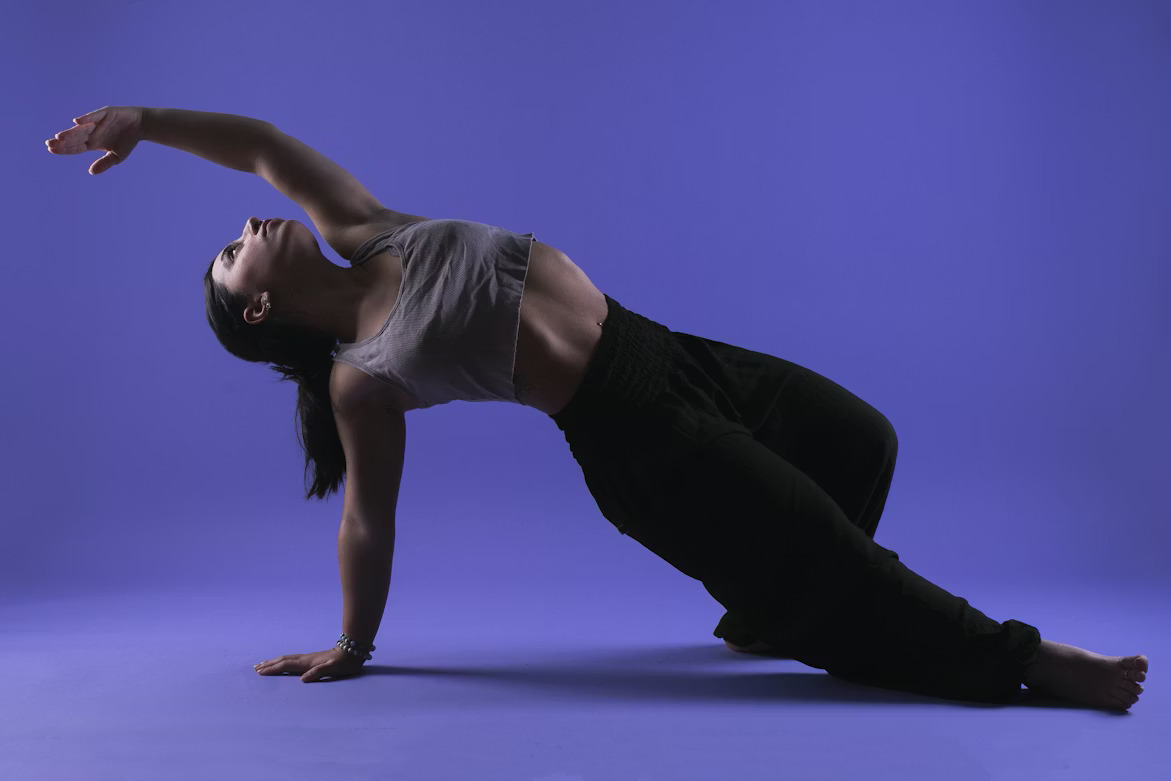
Stretch routines for posture can help when your body feels stuck in the shape of your day: shoulders rounded toward a screen, hips folded from sitting, neck tense from looking down. They are not a cure-all, and they will not “fix” every postural issue by themselves, but the right mix of mobility, stretching, and light strengthening can make standing, sitting, breathing, and training feel easier.
Quick Take
- Posture-related discomfort is often influenced by sitting time, strength, mobility, stress, sleep, training history, and individual anatomy.
- The most useful posture-friendly routines usually address the chest, hips, thoracic spine, and upper back—not just one tight area.
- Stretching works best when paired with active control, such as wall angels, rows, glute bridges, carries, or other strength work.
- A repeatable 8–12 minute routine done most days is more practical than an occasional long session.
- Sharp, radiating, worsening, or unexplained pain deserves medical or physical therapy guidance.
Why Posture Gets Stiff in the First Place
Your posture is not simply a matter of willpower. It reflects the positions you spend time in, the muscles you use often, the muscles you neglect, and how your nervous system has learned to hold you when you are tired or focused.
Long periods of sitting can leave the hip flexors feeling short and the glutes underused. Reaching toward a keyboard can make the chest and front of the shoulders feel tight while the mid-back loses endurance. Looking down at a phone can increase neck and upper-back tension. None of this means your body is broken. It means your daily positions are giving your body repeated signals.
Research on posture and exercise is more nuanced than many fitness claims suggest. A systematic review on stretching, strengthening, and spinal posture found limited evidence that stretching alone creates lasting postural changes, which is why BeeFit treats mobility as one part of the plan—not the whole plan.
The goal of stretch routines for posture is not to force yourself into a rigid “perfect” position. It is to restore options: more comfortable shoulder motion, easier hip extension, smoother spinal movement, and enough strength to hold useful positions without strain.
The Best Stretch Routines for Posture Start With the Chest and Upper Back
Rounded shoulders are often described as a chest-versus-back problem, but that is only partly true. Some people have structural kyphosis, shoulder anatomy differences, old injuries, or training imbalances. For many desk-bound adults, though, opening the front of the shoulders while strengthening the upper back is a useful starting point.
Start with a doorway chest stretch. Place your forearm on a doorframe with your elbow around shoulder height, step through gently, and turn your chest away until you feel a stretch across the front of the shoulder and chest. Hold 20–40 seconds per side. Keep the ribs down instead of arching your lower back to fake the range.
Follow it with wall angels. Stand with your back near a wall, knees soft, ribs stacked over your pelvis, and arms in a goalpost shape. Slide your arms up and down slowly without shrugging. If your wrists cannot touch the wall, that is fine. Stay in a pain-free range and focus on control.
This combination works because it pairs length with active positioning. Stretching may reduce the feeling of tightness, but your upper back also needs repeated practice producing the position you want. If you already train, add rows, face pulls, or band pull-aparts. BeeFit’s guide to muscle building fundamentals explains why progressive resistance, not random exercise selection, drives long-term strength changes.
Open the Hips Without Dumping Into the Low Back
Tight-feeling hips are common after long sitting days, but the fix is not to crank aggressively into a deep lunge. The hip flexors cross the front of the hip, and some also influence the pelvis and lower back. If you stretch them by over-arching your spine, you may irritate the area you are trying to help.
Use a half-kneeling hip flexor stretch. Put one knee down, place the other foot in front, gently tuck your pelvis as if bringing your belt buckle toward your ribs, and shift forward slightly. You should feel the stretch in the front of the back-leg hip, not as pressure in the lumbar spine. Hold 20–45 seconds per side.
If that feels easy and pain-free, progress to a couch stretch with the back foot elevated against a wall, bench, or couch. Keep the glute of the back leg lightly engaged. More intensity is not automatically better; clean position matters more than how dramatic the stretch looks.
There is some evidence that hip flexor stretching can produce small short-term changes in hip extension and pelvic position, including a study on hip flexor stretching and anterior pelvic tilt. Still, low-back pain is multifactorial. Strength, walking volume, sleep, stress, technique, and medical history can all matter. If back pain is persistent, sharp, or radiating, do not self-diagnose it as “just tight hips.”
Use Spinal Mobility to Break Up Desk Stiffness
Cat-cow is useful because it moves the spine through flexion and extension in a low-load position. It does not magically rehydrate discs or correct posture overnight, but it can help you notice where your spine feels stiff, guarded, or disconnected.
Set up on hands and knees. Inhale as you gently extend through the spine, lifting the chest and tailbone. Exhale as you round the back and let the shoulder blades move apart. Perform 8–12 slow reps. Keep the motion smooth rather than forcing end range.
Next, add thread the needle. From hands and knees, slide one arm under your body and rotate your upper back, then return and open the same arm toward the ceiling. Do 5–8 reps per side. This targets thoracic rotation, which can be limited in people who sit, drive, or train mostly in straight-line patterns.
For lower-body mobility that supports squatting, hinging, and daily movement, BeeFit’s squat mobility tips offer a more training-focused progression. Good posture is not separate from movement quality; it shows up when you lift, carry, walk, and reach.
Try This 10-Minute Daily Posture Routine
The best stretch routines for posture are simple enough to repeat. You do not need a long flow, expensive tools, or perfect flexibility. You need a sequence that addresses the positions you lose during the day.
- Cat-cow: 8–12 slow reps
- Thread the needle: 5–8 reps per side
- Doorway chest stretch: 20–40 seconds per side
- Wall angels: 2 sets of 6–10 controlled reps
- Half-kneeling hip flexor stretch: 20–45 seconds per side
- Glute bridge: 2 sets of 8–12 reps
Move at a pace that lets you breathe through each drill. Mild stretch sensation is fine. Pinching, numbness, tingling, dizziness, or sharp pain is not something to push through.
If you sit most of the day, do a shorter version once or twice during work: 5 wall angels, 5 standing back bends with hands on hips, and 30 seconds of hip flexor stretching per side. These small breaks help reduce stiffness accumulation without turning your day into a workout.
For broader health, posture work should sit alongside general activity and resistance training. The Physical Activity Guidelines for Americans recommend regular aerobic activity plus muscle-strengthening work, and that bigger foundation matters more than any single corrective drill. If you are building that base after a long layoff, BeeFit’s strength training after 40 rules can help you start without overcomplicating the plan.
When Stretching Is Not Enough
Stretch routines for posture can reduce tightness and improve awareness, but lasting change usually requires strength. Your body needs the capacity to hold positions under real-life demands: carrying groceries, sitting through meetings, lifting weights, walking uphill, or playing with your kids.
Pair your mobility work with pulling exercises for the upper back, glute and hamstring work for the hips, core exercises that teach rib-and-pelvis control, and loaded carries that train upright posture without overthinking it. Start light and progress gradually.
Breathing can also change how posture feels. Slumped sitting may alter ribcage mechanics, and studies have explored links between forward head posture and respiratory measures, including this PubMed-indexed paper on forward head posture and respiratory function. That does not mean a stretch will dramatically improve endurance, but opening the ribs and practicing slow breathing may help you feel less compressed.
Seek professional guidance if pain travels down an arm or leg, follows an injury, wakes you at night, comes with weakness or numbness, or does not improve with sensible changes. A physical therapist can assess whether mobility, strength, ergonomics, joint irritability, or another issue is driving your symptoms.
FAQ: Stretch Routines for Posture
How long does it take to notice better posture?
You may feel less stiffness within a few sessions, but visible postural changes usually take weeks of consistent mobility and strengthening. Even then, the goal should be comfort and function, not a perfect static shape.
Is morning or evening stretching better?
Choose the time you can repeat. Morning mobility can reduce overnight stiffness, while evening stretching can unwind desk tension. A short midday reset may be best if sitting is your main trigger.
Should posture stretches be done every day?
Gentle mobility can usually be done daily, but intense stretching does not need to be forced. If an area feels irritated, reduce intensity, shorten the hold, or switch to light movement and strength work.
These routines work best when they are practical, specific, and paired with strength. Open the areas that spend all day shortened, practice active control in the positions you want to own, and use movement breaks before stiffness piles up. Small, consistent work usually beats an ambitious routine you rarely do.
This article is for informational purposes only and is not a substitute for professional medical advice, diagnosis, or treatment. Always seek the advice of your physician or another qualified health provider with questions about a medical condition or before beginning a new exercise routine.
Discover more from BeeFit: Fitness & Wellness
Subscribe to get the latest posts sent to your email.
Share :