Muscle building fundamentals are not complicated, but they do require consistency. You need enough protein, progressive overload, compound lifts, recovery, smart nutrition, and a plan you can repeat for months.
Quick Take
- Muscle building fundamentals start with resistance training, enough protein, and recovery.
- Most active people trying to build muscle do well around 1.4–2.0 grams of protein per kilogram of body weight per day.
- Compound lifts should form the base of your workouts, but isolation exercises still have a role.
- Progressive overload does not only mean adding weight; it can also mean more reps, better form, more control, or more total volume.
- Training to failure is not required on every set. Most people should train close to failure and use true failure sparingly.
- Pre- and post-workout meals can help, but total daily protein and calories matter more than perfect timing.
Building muscle does not require secret exercises or a complicated supplement stack. It requires repeating the basics long enough for your body to adapt.
The problem is that most people either undertrain, overtrain, or change plans too often. They chase soreness, copy advanced lifters, or obsess over small details before mastering the foundation.
This guide breaks down the six muscle building fundamentals that matter most for natural lifters.
1. How Much Protein Supports Muscle Building Fundamentals?
Direct Answer
Most active people trying to build muscle do well with about 1.4–2.0 grams of protein per kilogram of body weight per day. Some lifters may benefit from the higher end, but more protein is not automatically better once total daily needs are covered.
Explanation & Evidence
Your body is constantly draining its protein reserves for other uses, like making hormones. To build muscle, you need to build and store new proteins faster than your body breaks down old ones. For a 160-pound man, that means consuming around 160 grams of protein a day. This could come from an 8-ounce chicken breast, 1 cup of cottage cheese, two eggs, a glass of milk, and a handful of peanuts. Split the rest of your daily calories equally between carbohydrates and fats.
Analysis & Application
Protein is the raw material for muscle repair. Without adequate intake, your training stimulus is wasted.
Your Application
Calculate your protein target based on your body weight. Prioritize whole food sources like lean meats, eggs, dairy, and legumes. Use a protein shake only to fill gaps when whole food is not convenient.
2. Should You Train to Failure to Build Muscle?
Direct Answer
Not every set needs to reach failure. Training close to failure can build muscle effectively, but taking every hard set to exhaustion can add fatigue without giving better results for most lifters.
Explanation & Evidence
Your body should move every day, but that does not mean every workout needs to crush you. Aim to finish each session feeling good, not dead. Limit your weight room workouts to 12 to 16 total sets of work, and never go beyond that. Constantly training to the point of exhaustion will be counterproductive to the recovery you need for muscle growth.
Analysis & Application
Recovery is when muscle growth actually happens, not during the workout itself.
Your Application
Plan your week so that hard training days are separated by easier sessions or complete rest. Learn to recognize the difference between productive fatigue and dangerous exhaustion.
3. Why Compound Lifts Matter for Muscle Growth
Direct Answer
Multi-joint movements like squats, deadlifts, and pullups allow you to lift more weight, which is a key stimulator of muscle growth. They also push you to use muscles together, just as you do in real life.
Explanation & Evidence
Biceps curls are fun, but they cannot be the backbone of your training. Isolation training has value, but it works best as a supplement to heavy compound lifts. A dumbbell row, for example, challenges your biceps, lats, and core all at once. Make sure moves like squats, deadlifts, pullups, and bench presses are in your routine.
Analysis & Application
Compound lifts build the most muscle in the least amount of time.
Your Application
Structure every workout around 2-3 heavy compound movements. Use isolation exercises as finishers, not as your main event. For a deeper dive into programming, explore our guide to building a strength routine.
4. Progressive Overload: The Core Muscle Building Fundamental
Direct Answer
No. Progressive overload means pushing your muscles to handle progressively greater challenges, but adding weight is only one method. You can also add reps, improve form, decrease rest time, or increase time under tension.
Explanation & Evidence
It becomes harder to simply put more weight on the bar as you advance. If that was not the case, everyone would be benching 300 pounds. Even if you are not going up in weight, you can push yourself in different ways. You might do 10 reps of deadlifts this set. On the next set, instead of adding weight, do the same 10 reps with even sharper form. You can also decrease rest time between sets, going from 120 seconds to 90 seconds, or increase the number of reps or sets.
Analysis & Application
Progress is not linear, but it must be intentional.
Your Application
Keep a training log. Each week, aim to improve in at least one measurable way on each key lift. It could be an extra rep, a cleaner rep, or a shorter rest period.
5. What to Eat Before and After Training
Direct Answer
Pre- and post-workout meals can support training and recovery, but total daily protein, total calories, and consistency matter more than perfect timing. Post-workout carbs help rebuild muscle faster by increasing insulin levels, which slows protein breakdown.
Explanation & Evidence
A 2001 study at the University of Texas found that lifters who drank a shake containing 6 grams of essential amino acids and 35 grams of carbohydrates before working out increased their protein synthesis more than those who drank the same shake after exercising. Post-workout meals with carbs increase your insulin levels, which in turn slows the rate of protein breakdown. A simple banana, sports drink, or peanut butter sandwich works well.
Analysis & Application
Nutrient timing can help, especially if you train hard or go several hours without eating, but it should not distract from the bigger goal: enough total protein and calories across the day.
Your Application
For your pre-workout shake, use about 10 to 20 grams of protein (about one scoop of whey powder). Can’t stomach a shake? A sandwich with 4 ounces of deli turkey and a slice of cheese on whole wheat bread provides similar benefits.
6. How Time Under Tension Supports Muscle Growth
Direct Answer
Time under tension refers to how long your muscles are actively working against a load. By intentionally slowing down the lowering phase of a lift, you leave your muscles under tension for longer, which can help spark additional muscle growth.
Explanation & Evidence
Experienced lifters use this to their advantage. Instead of just lifting and lowering a weight, they lift with a specific tempo. They might curl up as fast as they can, for example, and then lower the weight for three focused seconds on every rep. This leaves their muscles under tension for longer than a typical set. You can do this on almost any strength exercise, including squats, deadlifts, curls, and pushups.
Analysis & Application
Time under tension adds a new variable for progressive overload when adding weight is not possible.
Your Application
On your final set of an exercise, add a tempo component. Lower the weight for a 3-second count, pause briefly, then explode up. You will feel a significantly deeper burn and fatigue.
Muscle Building Fundamentals FAQ
Q: How much sleep do I really need to build muscle?
A: You should aim for 8 to 10 hours of quality sleep. When you are asleep, your muscles are recovering and muscle-growing hormones are secreted. If you cannot hit 8 hours, focus on maximizing the quality of the hours you do get by sleeping in a fully dark, cool, and quiet room.
Q: Can I still do isolation exercises like biceps curls?
A: Yes, but they should not be the backbone of your training. Use isolation exercises as a supplement after your heavy compound lifts. They are valuable for targeting specific muscles but do not provide the same systemic growth stimulus as multi-joint movements.
Q: How many sets should I do per workout?
A: Limit your weight room workouts to 12 to 16 total sets of work. This volume is sufficient to stimulate growth without exceeding your recovery capacity. Going beyond this can lead to diminishing returns and overtraining.
Q: Is it better to train heavy with low reps or light with high reps?
A: Both have their place. Lead off every workout with an exercise that lets you train low-rep (3 to 5 reps) to build pure strength. Then do three sets of 10 to 12 reps for every move after that. This gives you the best of both worlds.
Q: How long will it take to see noticeable muscle growth?
A: Give yourself at least two weeks for results to show up on the bathroom scale. If you have not gained weight by then, increase your calories by 500 a day. Real visual changes typically take 8 to 12 weeks of consistent training and nutrition.
Bottom Line: Master the Muscle Building Fundamentals
Building muscle is not about secret techniques or magic supplements. It is about consistently applying the fundamentals: adequate protein, a slight calorie surplus, heavy compound lifts, progressive overload, and sufficient recovery. There is no shortcut, but there is a clear, science-backed path.
Stop chasing complicated fitness trends before you have mastered the basics. Apply these six fundamentals consistently, track your progress, and give your body enough time to adapt.
For more support, read our BeeFit guides on:
- Strength Training After 40
- Protein for Muscle Growth
- Rep Ranges for Strength and Muscle
- Body Recomposition
- And the BeeFit AI Calculator
This article is for informational purposes only and is not a substitute for professional medical advice. Always consult with a healthcare provider before beginning any new exercise or nutrition program.
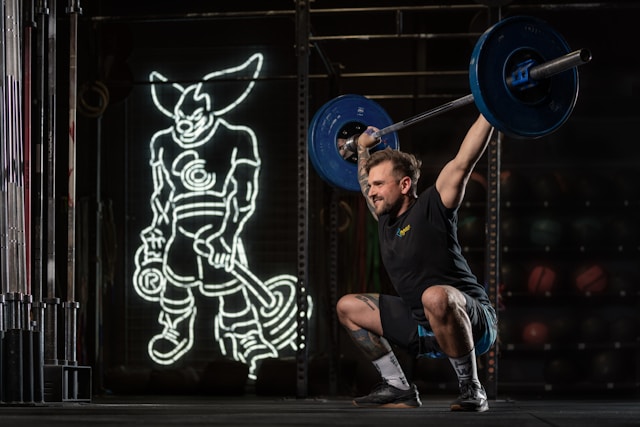
Photo: Jakub Balon / Unsplash
Discover more from BeeFit: Fitness & Wellness
Subscribe to get the latest posts sent to your email.
Share :