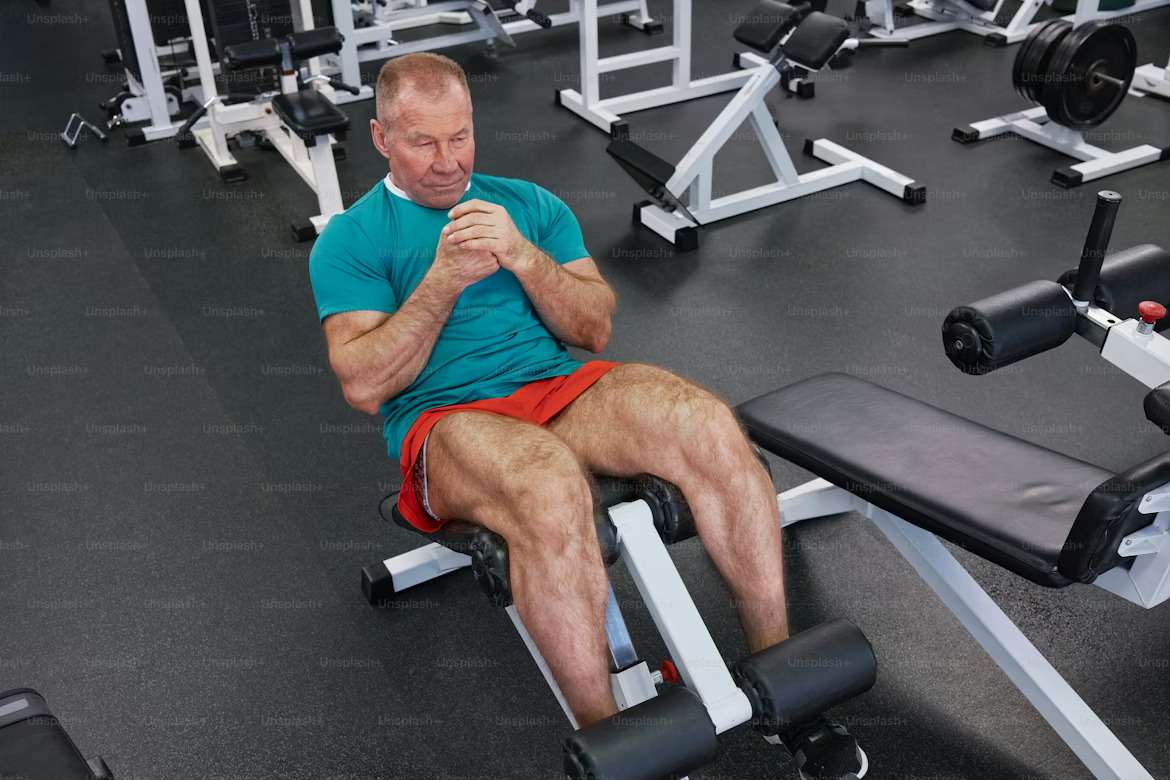
The best strength exercises after 40 are not exotic. They are the movements that help you keep standing up, lifting, carrying, climbing, bracing, reaching, and recovering well as the years pass.
Quick Take
- Muscle mass and strength tend to decline with age, but resistance training can slow that loss and improve function.
- The most useful strength exercises after 40 train squatting, hinging, pushing, pulling, lunging, carrying, and gripping.
- Two to three weekly strength sessions are enough for many adults when the work is consistent and progressively challenging.
- Choose variations that fit your joints, equipment, and current ability instead of forcing painful exercises.
- Progress slowly: better form, more range of motion, more reps, or slightly heavier loads all count.
Why Strength Exercises After 40 Matter More
After 40, training is not just about adding muscle or changing how you look. It becomes a practical investment in independence, joint capacity, balance, posture, and metabolic health.
Age-related muscle loss does not happen overnight, but it is real. A review on muscle tissue changes with aging notes that muscle mass can decrease by about 3–8% per decade after age 30, with faster decline later in life. Strength can decline even faster than muscle size because coordination, power, and nervous-system efficiency also change.
The solution is not to train recklessly or chase soreness. The CDC adult activity guidelines recommend muscle-strengthening work at least two days per week, alongside regular aerobic activity. For adults over 40, the sweet spot is usually simple: repeat the right movement patterns, progress gradually, and recover well enough to keep showing up.
If you want a broader weekly framework, BeeFit’s guide to strength training after 40 rules explains how to build consistency without overcomplicating your program.
The 7 Strength Exercises After 40 Worth Prioritizing
These are not the only exercises that work. They are seven high-value patterns that cover most of what your body needs: lower-body strength, hip power, upper-body pushing and pulling, trunk stability, grip, balance, and loaded movement.
1. Goblet Squat
The goblet squat trains your quads, glutes, hips, trunk, and upper back while reinforcing a movement you use every day: sitting down and standing up.
Holding a dumbbell or kettlebell at chest height often makes the squat easier to learn than a back squat. The front-loaded position encourages an upright torso and gives you a built-in counterbalance.
- Start with 2–3 sets of 6–12 controlled reps.
- Lower to a depth you can control without knee, hip, or back pain.
- Progress by adding reps first, then small weight increases.
2. Romanian Deadlift or Hip Hinge
A strong hinge helps protect one of the most common weak links after 40: the posterior chain. Romanian deadlifts train your hamstrings, glutes, spinal erectors, grip, and trunk control.
This pattern also teaches you to bend from the hips instead of rounding through the lower back when picking things up. That skill matters outside the gym, especially when lifting groceries, luggage, tools, or kids.
- Use dumbbells, a kettlebell, or a barbell if your form is solid.
- Keep the weight close to your legs and your spine neutral.
- Stop the lowering phase when your hamstrings limit the motion, not when your back starts to round.
3. Push-Up
Push-ups build chest, shoulder, triceps, and core strength without requiring much equipment. They also train the ability to brace your trunk while your arms produce force.
You do not need to start on the floor. Wall push-ups, countertop push-ups, bench push-ups, and knee push-ups are all valid. The right version lets you keep a straight line from head to hips while using a comfortable shoulder position.
- Choose a version that allows 6–12 clean reps.
- Keep elbows roughly 30–45 degrees from your torso.
- Make the exercise harder by lowering the surface, slowing the tempo, or adding reps.
4. Row
Rows train the upper back, lats, rear shoulders, biceps, and grip. They are especially useful if your day includes driving, desk work, phone use, or long periods of sitting.
A row does not “fix” posture by itself, but it strengthens the muscles that help you pull your shoulders back, support your spine, and balance out pressing work. Dumbbell rows, cable rows, chest-supported rows, and resistance-band rows can all work.
- Use 2–3 sets of 8–15 reps.
- Pull your elbow toward your hip rather than shrugging toward your ear.
- Pause briefly at the top without twisting your torso.
5. Split Squat or Lunge for Single-Leg Strength
Single-leg work is one of the most useful categories of strength exercises after 40 because daily life rarely happens with both feet perfectly planted. Stairs, hiking, stepping off curbs, and catching your balance all require one leg to stabilize while the other moves.
Start with a split squat before rushing into walking lunges. Keeping your feet in place reduces complexity while still training balance, hip control, and lower-body strength.
- Begin with bodyweight and use a wall, rail, or chair for light support if needed.
- Aim for 6–10 reps per side with a slow, controlled descent.
- If lunges bother your knees, shorten the range of motion or use step-ups instead.
6. Farmer’s Carry
Farmer’s carries are simple: pick up two weights, stand tall, and walk. That simplicity is the point. Carries train grip, traps, core stiffness, hips, gait, and breathing under load.
They also transfer well to ordinary life. Carrying groceries, moving boxes, hauling a suitcase, or walking with heavy bags all use the same basic pattern.
- Walk for 20–40 meters or 30–60 seconds.
- Keep ribs stacked over hips and avoid leaning back.
- Use loads that feel challenging but do not change your walking pattern.
7. Dead Hang or Supported Hang
Grip strength is more than a gym detail. Large observational studies, including the PURE study on grip strength and health outcomes, have found that lower grip strength is associated with higher risk of several adverse health outcomes. That does not mean hanging prevents disease, but it does make grip worth training.
A dead hang can build grip endurance and maintain overhead shoulder tolerance. Do not treat it as a cure for back pain or shoulder problems. If full hanging irritates your shoulders, keep your feet on a box or use a partial supported hang.
- Start with 5–15 seconds for 2–4 rounds.
- Keep shoulders gently active rather than collapsing completely.
- Skip or modify hangs if you have shoulder instability, recent surgery, or nerve symptoms.
How to Program Strength Training After 40
You do not need to perform all seven movements every session. A practical plan is to train two or three days per week and include one squat or lunge, one hinge, one push, one pull, and one carry or grip movement each time.
For most adults, 2–3 sets per exercise is enough to start. Work mostly in the 6–12 rep range for strength movements and 20–60 seconds for carries or hangs. Leave one to three good reps in reserve rather than grinding every set to failure.
Progression should be steady, not aggressive. Add a rep, improve depth, slow the lowering phase, reduce assistance, or add a small amount of weight. BeeFit’s 12-week strength plan after 40 gives a more structured example if you prefer a full program.
Safety Notes for Strength Training After 40
The right version of an exercise should feel challenging in the working muscles, not sharp in the joints. Mild muscular effort is expected. Pinching, radiating pain, numbness, dizziness, or pain that worsens as the set continues is a reason to stop and adjust.
If you are returning after a long break, begin below your ego. Use lighter loads for the first few weeks and treat the early phase as practice. Tendons, connective tissue, and skill often need more time than your motivation does.
Recovery also becomes more important after 40. Sleep, protein, total calories, and rest days influence whether training builds capacity or just adds fatigue. For nutrition support, BeeFit’s guide to protein after 40 explains practical intake targets for active adults.
FAQ
Can beginners do these strength exercises after 40?
Yes, as long as the variations match your current ability. Start with bodyweight, light dumbbells, machines, bands, or supported versions. A qualified coach or physical therapist can help if you have pain, balance concerns, or a history of injury.
How soon will strength training feel easier?
Many people notice better coordination and confidence within a few weeks. Visible muscle gain usually takes longer, often several months of consistent training, adequate protein, and enough recovery.
Should I still do cardio?
Yes. Strength training and cardio solve different problems. Keep strength work as a non-negotiable two to three days per week, then add walking, cycling, swimming, intervals, or other aerobic work based on your fitness and recovery.
The Practical Bottom Line
The most useful strength exercises after 40 are the ones you can repeat, progress, and recover from. Build your plan around squats, hinges, pushes, pulls, lunges, carries, and grip work, then adjust the details to your body.
Start with two focused sessions this week. Keep the loads manageable, write down what you did, and make one small improvement next time. That is how strength becomes something you maintain for decades, not something you restart every few months.
This article is for informational purposes only and is not a substitute for professional medical advice, diagnosis, or treatment. Always consult with a qualified healthcare provider before starting any new exercise or nutrition program, especially if you have cardiovascular disease, osteoporosis, balance problems, uncontrolled pain, recent surgery, or other medical conditions.
Discover more from BeeFit: Fitness & Wellness
Subscribe to get the latest posts sent to your email.
Share :