Quick Take
- Anti-rotation exercises activate the obliques at levels equal to or greater than traditional twisting movements, according to EMG research.
- The internal oblique’s most critical job is resisting unwanted spinal rotation, not producing it.
- Side plank variations that elevate the feet produce significantly higher oblique activation than floor-based holds.
- Weak obliques are directly linked to altered movement patterns, low back compensation, and increased injury risk.
You already know your core matters. But if your ab training stops at crunches and planks, you are leaving your spine largely unprotected.
The obliques are the most overlooked muscles in fitness. They flank your torso in two cross-layered sheets and do work your six-pack simply cannot: they resist the forces that twist, buckle, and shear your spine every day. Neglect them, and no amount of rectus abdominis training will keep you out of pain.
Here is what the research actually says about your obliques, what they do, how to train them, and why getting this right might be the most important thing you do for your long-term fitness.
Are Your Obliques Really Just “Side Abs”?
No. The obliques are a two-layer architectural system that controls rotation, resists lateral collapse, and stabilizes the entire torso under load.
The external oblique is the largest abdominal muscle and sits closest to the surface. Directly beneath it lies the internal oblique, with fibers running in the opposite direction. This cross-hatched design is not an accident.
“The obliques are more than just the side sections of your core, both in terms of their anatomy and function.”
This perpendicular fiber arrangement creates a web of tension capable of resisting force from multiple directions simultaneously. Training them with simple side-to-side bends ignores this architecture entirely.
Your Application
- Stop treating oblique training as an afterthought at the end of your session.
- Think of your obliques as a corset, not a crunch muscle.
- Train them in multiple planes: rotation, lateral stability, and anti-rotation.
Is Anti-Rotation More Important Than Rotation for Core Strength?
For spinal health and long-term athleticism, yes. The ability to resist unwanted movement is more protective than the ability to produce it.
Research from Gonzaga University used surface electromyography (EMG) to measure core activation during anti-rotational and rotational exercises. They found significant differences in internal and external oblique activation based on movement type, with anti-rotation work producing meaningful muscle engagement across the transverse plane.
“Strengthening the core musculature is essential due to the beneficial effects that highly trained trunk muscles have on strength, sports performance, and functional activities.” (Stephens et al., Gonzaga University)
The internal oblique, in particular, is built for this role. Its primary job is the eccentric deceleration of contralateral spinal rotation, which is the ability to slow and control forces that try to twist you. Without this capacity, the lumbar spine absorbs what the obliques should be handling.
Your Application
- Add the Pallof press to your weekly routine. It is the gold standard anti-rotation exercise.
- Perform 3 sets of 10-second holds on each side, focusing on keeping your hips and shoulders perfectly square.
- Progress by increasing resistance, not by rushing through reps.
Does Asymmetrical Loading Build More Core Strength Than Symmetrical Loading?
Yes. Uneven loads force the obliques to work harder and in the exact way they function in real life.
Symmetrical exercises like the goblet squat still challenge the obliques through anti-flexion bracing. But when you introduce an offset load, like a single-arm carry or a cable pull from one side, the obliques must fire to prevent your spine from rotating toward the load.
Research published in PMC on comprehensive core training in sports physical therapy confirms this relationship. The internal and external obliques function as eccentric controllers of range of motion, managing the forces applied to the spine during loaded, asymmetrical movements.
“The core structures can be characterized into stabilizers, such as the internal and external obliques, which eccentrically control range of motion.” (PMC, Journal of Sports Physical Therapy)
EMG studies consistently show that exercises combining stability demands with asymmetrical pull, such as the bear plank chest press or single-arm farmer carry, produce high and sustained oblique activation. This mirrors real-world demands: carrying groceries, changing direction on a playing field, or catching a stumble.
Your Application
- Add single-arm carries to your training once per week.
- Try the bear plank chest press: hold a quadruped position while a cable pulls you laterally. Resist it.
- Start light. The point is control, not load.
Is the Side Plank Actually Effective for Oblique Training?
It depends on the variation. Floor-based side planks are a starting point. Elevated versions are where real oblique development happens.
A study published in the Journal of Sports Science and Medicine used surface EMG to compare oblique activation across lateral trunk exercises. The lateral plank produced strong internal oblique activation (107% MVIC) and solid external oblique activation (72% MVIC). However, the feet-elevated side-supported variation drove internal oblique activation to 205% MVIC, nearly double the floor-based hold.
“We recommend the lateral plank task for independent exercise, unless arm or shoulder pathologies are present, whereby the feet-elevated side-supported task may be favorable.” (Barrios et al., surface EMG study on lateral trunk exercises)
The Copenhagen plank, which elevates the top foot on a bench while holding the bottom leg off the ground, takes this further. Research from 2013 by Serner and colleagues found it produced the highest external oblique activation of all eight adductor exercises tested, along with significant activation of the rectus abdominis. Adding a dynamic knee drive with the lower leg makes this a full lateral chain exercise that mirrors sprinting mechanics.
Your Application
- Progress your side plank from floor to bench over four to six weeks.
- Try the Copenhagen plank: top foot on a bench, bottom leg held off the ground, hold for 20 to 30 seconds per side.
- Add a lower-leg knee drive once you can hold the static version without compensating.
Can Weak Obliques Cause Low Back Pain?
Yes. Research consistently links oblique weakness to low back compensation, altered gait, and lumbar injury risk.
When the obliques cannot manage the rotational forces of everyday movement, the lumbar spine takes over. It is not built for that job. The result is tightness, stiffness, and eventually pain.
Research published in PMC found that core stability training was more effective than general exercise at reducing pain and improving back-specific function in patients with low back pain. The internal oblique, specifically, contributes to intra-abdominal pressure, which creates spinal stiffness and load-bearing capacity throughout the thoracolumbar fascia.
“Core stability training is important for maintaining the health of individuals who exercise and preventing lumbar spine disorders.” (PMC, core stability and muscle thickness study)
A separate review in PMC noted that low back pain affects up to 80% of American adults at some point in their lives, and that weak lateral stabilizers are a consistent contributing factor. If your obliques are not bracing your spine, something else is compensating. That something else is usually your lower back.
Your Application
- Include at least one anti-rotation and one lateral stability exercise each week.
- Watch for breath holding during simple movements. It is a sign your intrinsic core stability system is struggling.
- If you have existing low back pain, consult a physical therapist before adding loaded oblique work.
FAQ: Your Oblique Training Questions, Answered
Q: How often should I train my obliques?
A: Two to three times per week is sufficient for most people. The obliques recover quickly and are already activated during compound lifts like deadlifts, squats, and overhead presses. You do not need a dedicated daily session.
Q: Should I do high reps or low reps for obliques?
A: It depends on the exercise. Anti-rotation holds and plank variations respond well to time under tension: 20 to 45 seconds per set. Rotational movements can be trained with moderate reps (8 to 12) and controlled tempo. Avoid high-speed, high-rep side bends. They train the wrong quality.
Q: Can I build oblique strength without equipment?
A: Yes. The Copenhagen plank, side plank, and bodyweight bear plank require no equipment and produce high oblique activation based on EMG data. Add a resistance band for Pallof press variations to cover anti-rotation work.
Q: Will training my obliques make my waist look wider?
A: For most people, no. The obliques sit along the sides of the torso, and functional training rarely produces the bulk that causes waist widening. That concern is largely a myth. A strong, stable lateral core typically improves posture in a way that makes the waist appear more defined.
Q: Are side bends a good oblique exercise?
A: They are not optimal. Side bends train the obliques in a limited, single-plane motion and bypass their most important function: resisting unwanted movement. Anti-rotation and lateral stability exercises produce higher and more functional oblique activation according to EMG research.
The Bottom Line
Your obliques are not a vanity muscle or an afterthought. They are the structural anchors of your entire torso. They control rotation, resist lateral collapse, and protect your lumbar spine every time you lift, carry, or change direction.
Training them means going beyond crunches. It means adding Pallof presses, Copenhagen planks, and asymmetrical carries to your routine. Do that consistently, and you are not just building a stronger core. You are building a body that holds up for the long run.
For more on building a resilient, pain-free core, explore our guide to functional training at BeeFit.ai.
This article is for informational purposes only and is not a substitute for professional medical advice, diagnosis, or treatment. Always consult with a qualified healthcare provider before starting any new exercise or nutrition program.
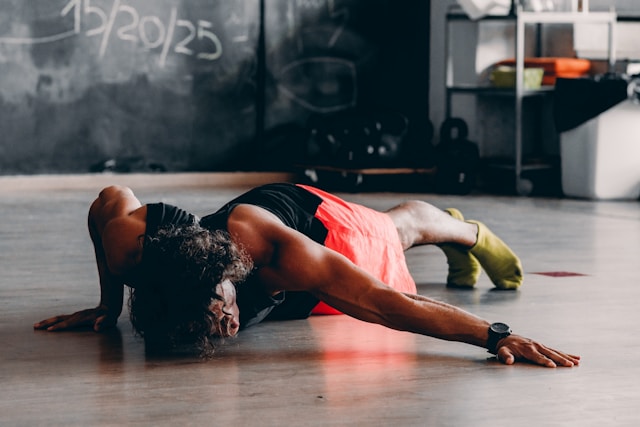
Photo: Edoardo Cuoghi / Unsplash
Discover more from BeeFit: Fitness & Wellness
Subscribe to get the latest posts sent to your email.
Share :