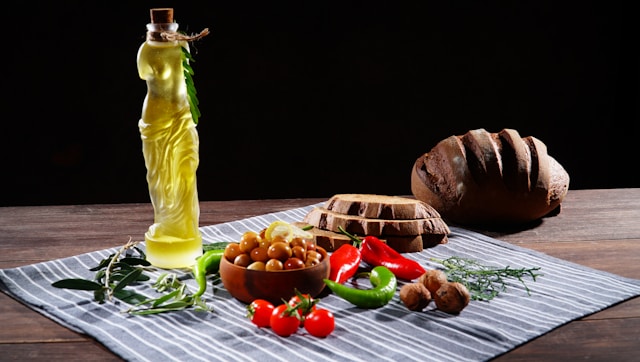
The Mediterranean diet works because it is built around whole foods, vegetables, beans, lentils, fruit, whole grains, fish, olive oil, nuts, seeds, and simple meals eaten consistently. It is not magic, and it is not just pasta, wine, and expensive olive oil. The real benefit comes from the full eating pattern, especially when ultra-processed foods stay low.
Quick Take
- The Mediterranean diet works not because olive oil contains magic molecules or red wine has resveratrol, but because it’s built almost entirely on whole foods with ultra-processed garbage kept to absolute minimum.
- Most people claiming to eat Mediterranean are actually eating Italian-American restaurant food (pasta drenched in cream sauce, garlic bread, tiramisu) and wondering why they’re not getting Blue Zone results.
- The 23% mortality reduction comes from eating beans, vegetables, and whole grains daily while avoiding processed foods—not from drinking wine or drizzling expensive olive oil on everything.
- Blue Zone populations ate this way by necessity and culture, not by reading longevity studies; trying to reverse-engineer centenarian diets ignores they also walked everywhere, had strong communities, and didn’t stress about their macros.
The Mediterranean diet is best understood as a long-term food pattern, not a short-term weight-loss trick.
Before we start: the Mediterranean diet isn’t special because it’s Mediterranean.
It’s special because it’s one of the few traditional eating patterns that didn’t get completely destroyed by industrial food processing. That’s it. That’s the magic.
The Greeks and Italians and Spaniards eating this way in the 1960s—when the original studies were done—weren’t shopping at Whole Foods. Their meals came from what was local and affordable, mostly plants, because meat was expensive. Home cooking was normal because restaurants were not on every corner, and olive oil was the everyday fat because that was what grew there.
Now everyone’s trying to bottle that into a “diet” you can follow while still eating 70% processed food from packages with Mediterranean-sounding names.
Spoiler: that’s not how this works.
What the Mediterranean Diet Really Means
You’re not eating Mediterranean. You’re eating American food with olive oil on top.
Real Mediterranean eating from the regions studied in longevity research:
- Vegetables at literally every meal
- Legumes (beans, lentils, chickpeas) almost daily
- Whole grains, not refined pasta
- Fish 2-3 times weekly, actual fish, not fried fish sticks
- Meat maybe once a week, in small amounts
- Olive oil as primary fat, but not drowning everything in it
- Fruit for dessert, not gelato
- Minimal processed foods because they barely existed
What Americans call Mediterranean:
- Pasta with heavy cream sauce
- Garlic bread (refined flour, butter)
- “Healthy” pizza because it has vegetables on it
- Red wine consumed as if it’s a longevity supplement
- Imported olive oil costing $30/bottle that you use so sparingly it defeats the purpose
- Greek yogurt loaded with honey and granola
- Occasional salad to “balance” everything else
See the difference?
The mortality reduction in the studies—23% for all-cause mortality, 27% for cardiovascular death—comes from populations eating mostly plants, minimal meat, zero ultra-processed foods. Not from people having pasta night twice a week and calling it Mediterranean.
“A 2024 meta-analysis of 28 studies covering 679,259 older adults found that high adherence to the Mediterranean diet reduced all-cause mortality by 23% and cardiovascular mortality by 27%.” (2024, PMC meta-analysis on Mediterranean diet and mortality)
Why Mediterranean Diet Adherence Matters
High adherence. Not “I eat hummus sometimes.”
If your diet includes protein bars, packaged snacks, frozen meals, regular restaurant food, and desserts—even if they’re “Mediterranean-inspired”—you’re not following the pattern that produced those results.
A true Mediterranean diet is built on daily plant foods, regular legumes, simple proteins, and home-cooked meals more than restaurant-style pasta or occasional hummus.
This is one reason the Mediterranean diet often works better as a whole pattern than as a list of isolated “superfoods.”
Do This Instead:
- Compare your weekly shopping cart to a traditional Mediterranean market: if half your cart is packaged foods, you’re not eating Mediterranean regardless of the olive oil budget
- Track what you actually eat for a week without changing behavior; if beans and legumes don’t appear 4+ times, vegetables aren’t at every meal, and processed foods show up daily, stop calling it Mediterranean
- Accept that following this pattern means cooking most meals at home from whole ingredients, which is exactly why most people fail—it requires more effort than they want to give
Why Fiber Matters More Than Olive Oil
Nobody dies from fiber deficiency. They die from what fiber deficiency leads to.
Heart disease. Colon cancer. Type 2 diabetes. Inflammatory conditions. All linked to chronically low fiber intake that most people ignore because fiber isn’t sexy.
The research is brutally clear: every 10 grams of additional fiber per day reduces mortality risk by roughly 10%. Linear relationship. More fiber, lower death risk.
A 2024 meta-analysis of 64 studies with 3.5 million participants found:
- 23% reduction in all-cause mortality with highest fiber intake
- 26% reduction in cardiovascular mortality
- 22% reduction in cancer mortality
The dose-response is consistent across studies. This isn’t correlation hiding confounders. This is mechanism: fiber feeds gut bacteria that produce anti-inflammatory compounds, slows glucose absorption, lowers cholesterol, improves satiety.
Yet the average adult eats 15-17 grams daily. The target is 25-30 grams minimum. Some researchers argue for 40+ grams based on Blue Zone populations.
Mediterranean Diet Foods That Close the Fiber Gap
You know what has fiber? Plants. Whole plants. Not juice. Not smoothies where you’ve obliterated the fiber matrix. Whole grains, legumes, vegetables, fruits, nuts, seeds.
You know what doesn’t have fiber? Meat. Dairy. Eggs. Fish. Oil. All the things people prioritize while treating vegetables like a garnish.
Do This Instead:
- Calculate actual fiber intake for 3 days using app that tracks it (most people wildly overestimate); if you’re below 25g daily, your diet is fundamentally broken regardless of other “healthy” choices
- Add one high-fiber food to every single meal: beans in breakfast burrito, lentils in lunch salad, roasted vegetables with dinner; supplements don’t work the same way because they lack the polyphenols and nutrients in whole foods
- Stop treating fiber like optional nutrition box to check; it’s as fundamental as protein but 10x more neglected in fitness culture that obsesses over macros
What Blue Zones Really Teach About Food
Everyone wants the Blue Zone secret. The one weird trick that makes you live to 100.
Here it is: they ate food. Actual food. Grown locally. Prepared simply. Shared with family. Repeated daily for decades.
That is the part most people miss. The pattern was built around ordinary meals, daily movement, and food that was grown, cooked, and eaten close to home.
Okinawans ate mostly sweet potatoes, vegetables, and small amounts of fish and pork. Sardinians ate sourdough bread, fava beans, pecorino cheese made from grass-fed sheep, and wine from their own vineyards. Costa Ricans ate rice, beans, corn tortillas, and tropical fruits.
The commonalities:
- 95%+ plant-based by volume (not by choice, by economics)
- Legumes appeared at almost every meal
- Meat was flavoring, not the entrée—maybe 5 times monthly
- Ultra-processed foods basically didn’t exist
- They stopped eating when 80% full (cultural practice, not diet hack)
- Physical activity was built into daily life, not gym sessions
Now here’s what the longevity influencers won’t tell you: these populations also had strong social connections, low stress, sense of purpose, and walked everywhere. You can’t extract the diet and ignore everything else.
Trying to recreate Blue Zone eating while working 60-hour weeks, sleeping 5 hours nightly, having zero community, and driving everywhere is missing the point.
But sure, let’s pretend buying the right beans will get you to 100.
The Mediterranean diet overlaps with Blue Zone eating because both patterns rely heavily on plants, beans, simple meals, movement, and consistency.
Do This Instead:
- If copying Blue Zone diets, copy the whole pattern: eat with others regularly, cook at home, walk daily, maintain social connections, find purpose beyond work
- Beans and legumes should appear 4-7 times weekly minimum if claiming Blue Zone-inspired eating; occasional hummus doesn’t count
- Stop looking for the “active ingredient” in centenarian diets and recognize it’s the systematic absence of processed garbage combined with active lifestyle and community
Protein, Aging, and the Longevity Diet
Here’s where it gets complicated and everyone has an opinion based on nothing.
Young adults can get away with moderate protein. Older adults need more. But “more” doesn’t mean carnivore diet. It means adequate protein from quality sources.
The research shows:
- Under 50: 0.8-1.2g per kg bodyweight adequate for most
- Over 65: 1.2-1.6g per kg recommended due to anabolic resistance
- Source matters: plant proteins (legumes) and lean animal proteins (fish, eggs, poultry) associated with better outcomes than processed meats
But here’s the nuance nobody discusses: the Mediterranean populations with exceptional longevity weren’t eating high-protein diets by modern fitness standards. They were getting maybe 15-20% of calories from protein, mostly from beans, fish, and small amounts of meat.
Yet they maintained muscle mass and function into very old age.
Why? Because they were walking 5+ miles daily. Using their bodies constantly. Not sitting 12 hours then doing 45 minutes of “exercise.”
The protein requirements we cite are for sedentary populations trying to preserve muscle while barely moving. Active older adults eating Mediterranean diets with moderate protein do fine.
Do This Instead:
- If over 65 and sedentary: yes, prioritize protein at every meal (30-40g) to combat muscle loss
- If over 65 and genuinely active (walking 8,000+ steps, resistance training 2-3x weekly): moderate protein from whole foods (beans, fish, eggs, Greek yogurt) is sufficient; don’t force-feed protein powder
- Focus on protein quality over quantity; 100g from legumes, fish, and eggs beats 150g from processed meats and protein bars
The practical way to follow the Mediterranean diet is to make whole foods the default, not to add olive oil to an otherwise processed diet.
Mediterranean Diet FAQ
Q: Is Mediterranean diet expensive?
A: Only if you’re buying the Instagram version. Canned sardines, dried beans, frozen vegetables, bulk oats, and local produce are dirt cheap. The expense comes from “artisanal” olive oil, imported cheese, and restaurant meals disguised as Mediterranean.
Q: Can I eat pasta on Mediterranean diet?
A: Traditional Mediterranean eating included pasta, but whole grain, in modest portions, not as the meal base. If your “Mediterranean” plate is 70% pasta, 20% sauce, 10% vegetables, that’s not the pattern that produced longevity results.
Q: What about the red wine?
A: The wine thing is overstated. Yes, some studies show association between moderate wine consumption and health outcomes. But those populations also ate minimal processed food, walked everywhere, and had strong social ties. Don’t start drinking for “health benefits.”
Q: Do I need expensive olive oil?
A: You need real extra virgin olive oil, not the fake stuff cut with seed oils. Mid-range quality is fine. Using good olive oil liberally beats buying expensive oil and using it sparingly. The benefits come from consumption, not price tag.
Q: How long until I see results?
A: Digestive improvements: 1-2 weeks. Weight changes: 4-8 weeks. Mortality risk reduction: accumulates over years and decades. If you’re asking this, you’re thinking about it wrong—this is a permanent pattern, not a diet phase.
Q: Is this just veganism with fish?
A: No, though it’s heavily plant-based. Mediterranean eating includes eggs, dairy, fish, and small amounts of meat. The difference from veganism: flexibility and inclusion of animal products in moderation. The difference from Standard American Diet: plants are the foundation, not the afterthought.
Bottom Line: Real Food Beats Diet Hype
This eating pattern works because it is built on foods people ate before industrial processing changed the modern diet. The advantage is not one ingredient. It is the repeated combination of vegetables, beans, fruit, whole grains, fish, olive oil, nuts, seeds, home cooking, and very little ultra-processed food.
It’s the systematic avoidance of packaged, processed, engineered food-like products that make up 70% of modern supermarkets.
You want the benefits? Cook from scratch. Eat mostly plants. Use real olive oil. Keep meat occasional. Avoid anything in a package with a health claim on it. Sit down for meals. Eat with other humans.
The research validates what was obvious all along: real food, prepared simply, eaten regularly, produces better outcomes than anything the food industry has engineered in the last 50 years.
For personalized approaches to structuring complete nutrition strategies that emphasize whole foods and longevity, explore What to Eat Before Your Workout to Burn Fat and Preserve Muscle at BeeFit.ai.
This article is for informational purposes only. Consult qualified healthcare providers before making dietary changes.
Photo: Seval Torun / Unsplash
Discover more from BeeFit: Fitness & Wellness
Subscribe to get the latest posts sent to your email.
Share :