You can build stronger muscles without giving your skeleton the same reason to adapt. That is why bone-strengthening exercise deserves its own attention, especially if you are training for long-term strength, aging well, or lowering osteoporosis risk.
Quick Take
- Muscle and bone both respond to training, but they do not adapt in exactly the same way.
- Walking is valuable, but walking alone is usually not a complete bone-building plan.
- Progressive resistance training is one of the most practical tools for supporting bone density and fall resilience.
- Impact exercise can add a useful skeletal signal when it matches your joints, balance, and medical history.
- Calcium, vitamin D, protein, and enough total food help your body respond to the training signal.
How Bone-Strengthening Exercise Differs From Muscle Training
Muscle adapts when it repeatedly produces enough force and gradually faces a greater challenge. Bone also responds to mechanical loading, but the stimulus is more specific than many people realize.
Bones adapt locally. Loading your legs does not automatically strengthen your wrists. Pressing, rowing, squatting, hinging, carrying, running, and landing all distribute force through different parts of the skeleton.
This is why cycling can build powerful legs without providing the same bone-loading stimulus as running or lifting. It is also why a strong upper body does not guarantee strong hips. A useful bone-strengthening exercise plan trains the areas that matter: hips, spine, legs, trunk, shoulders, and grip, while respecting your current ability.
The National Institute of Arthritis and Musculoskeletal and Skin Diseases describes bone-friendly training as a combination of weight-bearing exercise, resistance training, and balance work. That combination matters because bone density is only one part of fracture prevention. Strength, coordination, and fall resilience matter too.
Is Walking Enough for Stronger Bones?
Walking counts as weight-bearing activity, and it is worth keeping. It supports cardiovascular health, daily movement, balance, mood, and consistency. For many adults, walking is the foundation that makes harder training sustainable.
Still, walking alone is not usually enough if the goal is meaningful bone adaptation. Your skeleton responds best to loads that are greater, faster, or different from what it already handles. Once you are adapted to normal walking, the extra signal for bone may be modest.
That does not make walking useless. It means walking should not be asked to do every job. Keep your steps, but add targeted loading if your goal is stronger bones over time.
Why Resistance Training Matters for Bone-Strengthening Exercise
Resistance training gives muscle and bone a shared reason to become more capable. Squats, deadlift variations, step-ups, lunges, presses, rows, and loaded carries transfer force through the skeleton. They also strengthen the muscles that protect joints and help prevent falls.
The key is progression. A light routine can help beginners learn movement and build confidence, but doing the same easy exercises forever provides a weaker signal. Over time, increase the load, range of motion, control, number of sets, or exercise difficulty.
A systematic review and meta-analysis on resistance training and bone mineral density in older adults supports resistance exercise as a useful strategy. Results vary by program design, training intensity, site measured, and participant characteristics, so the details matter.
If you are new to lifting, start with movements you can control: goblet squats, hip hinges, supported rows, incline push-ups, step-ups, split squats, and farmer carries. BeeFit’s Strength Training After 40 guide gives a broader framework for progressing without turning every workout into a max-effort session.
Do You Need Heavy Loads or Impact?
Not on day one. But eventually, the training should become challenging enough to matter.
“Heavy” is relative. For a beginner, a controlled goblet squat may be a meaningful new stimulus. Months later, that same weight may be too easy. The goal is not to chase one-rep maximums; it is to move gradually from easy resistance toward loads that require focus, effort, and good technique.
Research on supervised high-intensity resistance and impact training, including the LIFTMOR randomized controlled trial, has reported improvements in bone mineral density and physical function in postmenopausal women with osteopenia or osteoporosis. That does not mean everyone should copy the same program unsupervised. It does suggest that appropriately coached, progressive loading can be more powerful than very cautious exercise that never becomes demanding.
Impact adds a different signal. Hopping, jumping, stair climbing, dancing, jogging, jump rope, and racquet sports create force when your body contacts the ground. A systematic review on jump training and bone mineral density found site-specific effects, which fits the broader principle that bones adapt where they are loaded.
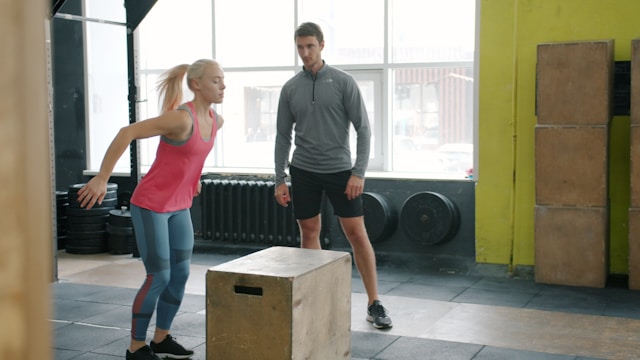
Impact does not need to mean hundreds of jumps. For the right person, a few sets of low hops, controlled step-downs, pogo hops, or lateral bounds may be enough to complement strength work. Quality landings matter more than height or fatigue.
High-impact work is not appropriate for everyone. If you have diagnosed osteoporosis, previous spinal or fragility fractures, a recent fracture, significant balance problems, severe joint pain, or a condition that increases fall risk, get individualized guidance before adding jumping, aggressive impact, heavy lifting, loaded spinal flexion, or loaded twisting. Lower-impact strength and balance training can still be valuable; the plan simply needs to match your risk.
Nutrition Supports the Bone-Training Signal
Exercise provides the signal. Nutrition supplies the materials. A smart bone-building plan works better when you are eating enough to support adaptation.
Calcium is a major structural mineral in bone, and vitamin D helps the body absorb calcium and maintain normal bone mineralization. The NIH Office of Dietary Supplements provides detailed guidance on calcium and vitamin D, including food sources, recommended intakes, and upper limits.
Protein also matters because bone is living tissue, not a mineral block. Adequate protein supports muscle repair, connective tissue, and the strength gains that help load the skeleton. Fruits, vegetables, and enough total calories round out the picture.
Chronic under-fueling is a common blind spot. Consistently eating too little for your training demands can impair hormonal function, recovery, performance, and bone health. The International Olympic Committee’s consensus work on Relative Energy Deficiency in Sport highlights low energy availability as a risk factor in both female and male athletes.
More exercise does not compensate for long-term under-eating. If you are losing weight rapidly, skipping meals, missing periods, feeling unusually fatigued, or dealing with repeated stress injuries, treat those as signs to reassess your plan with a qualified professional.
A Practical 12-Week Bone-Strengthening Exercise Plan
You do not need to begin with heavy squats and box jumps. The best starting point is the one you can repeat, recover from, and progress.
Weeks 1–2: Lift twice per week. Practice squats, hinges, rows, presses, step-ups, and carries with controlled tempo. Walk most days. Add simple balance work such as single-leg stands near support, heel-to-toe walking, or slow step-ups.
Weeks 3–6: Keep two or three full-body strength sessions per week. Gradually increase resistance when your form is consistent. Add stairs, brisk uphill walking, or slightly faster walking intervals. If appropriate, introduce low-level landing drills, such as controlled step-downs.
Weeks 7–12: Continue progressing your main lifts. Add small amounts of impact one or two days per week if your joints, balance, and medical history allow it. Options include low pogo hops, small two-foot hops, short jog intervals, or multidirectional movement.
The important part is not novelty. It is progressive loading without sudden jumps in risk. A useful bone-strengthening exercise routine should become more challenging over time while still leaving you able to train consistently.
Women navigating perimenopause or menopause may need extra attention to strength, protein, recovery, and medical screening because declining estrogen can accelerate bone loss. BeeFit’s Women’s Fitness After 40 guide covers the broader training and recovery picture.
The Bottom Line
Strong muscles are valuable, but not every muscle-building workout is automatically an optimal bone-building workout. Walking gives you movement. Resistance training gives your skeleton meaningful load. Impact can add a different signal when it is appropriate.
The safest path is not reckless training or endless caution. It is a progressive plan that fits your body, supports recovery, and gives your bones a reason to stay strong.
This article is for educational purposes only and is not a substitute for medical advice, osteoporosis evaluation, rehabilitation, or individualized exercise guidance. If you have osteoporosis, previous fractures, significant joint problems, or another condition affecting exercise safety, speak with a qualified healthcare professional before adding heavy resistance, loaded spinal flexion or twisting, or impact training.
Photo: Vitaly Gariev / Unsplash
Discover more from BeeFit: Fitness & Wellness
Subscribe to get the latest posts sent to your email.
Share :