A high-protein meal plan can make fat loss easier to manage while giving your body the amino acids it needs to maintain, repair, and build muscle. The goal is not to eat protein at the expense of everything else. It is to build balanced meals that keep you full, support training, and fit your calorie needs.
Quick Take
- Most active adults cutting fat or building muscle do well around 1.6–2.2 g of protein per kg of body weight, adjusted for size, training, and health status.
- This sample day provides roughly 155–175 g of protein from Greek yogurt, whey or plant protein, chicken, cottage cheese, salmon, and optional casein.
- Protein helps with fullness, lean-mass retention, and recovery, but calories, food quality, strength training, sleep, and consistency still matter.
- Carbs and fats are not the enemy; they support training performance, hormones, fiber intake, and meal satisfaction.
- If you have kidney disease, are pregnant, take glucose-lowering medication, or follow a medically prescribed diet, get clinician guidance before making major protein changes.
Why a High-Protein Meal Plan Works
Protein is useful during fat loss because it is filling, has a higher thermic effect than carbohydrate or fat, and helps preserve lean tissue when calories drop. Reviews of higher-protein diets show benefits for satiety and body composition, although results depend heavily on adherence and total calorie intake. The practical takeaway: protein gives your diet structure, but it does not override energy balance.
For muscle gain, protein works best when paired with progressive resistance training. A large systematic review and meta-analysis found that protein supplementation improved resistance-training gains, with benefits generally leveling off around 1.6 g/kg/day for many healthy adults. Some people may choose a higher target during a calorie deficit, intense training block, or body recomposition phase.
Meal timing matters less than total daily intake, but distribution still helps. The International Society of Sports Nutrition notes that resistance exercise and protein intake work together to stimulate muscle protein synthesis. Regular protein feedings across the day can also be useful for active people. BeeFit’s guide to protein per meal and muscle growth explains how to spread intake without overthinking every gram.
How Much Protein Should a High-Protein Meal Plan Include?
A reasonable target for active adults is 1.6–2.2 g/kg of body weight per day. For a 70 kg person, that is about 112–154 g daily. Larger bodies, aggressive calorie deficits, older adults, and people training hard may land toward the upper end. Smaller or less active people may not need as much.
If you prefer pounds, divide your body weight in pounds by 2.2 to estimate kilograms. Then multiply by your target. For example, 180 lb is about 82 kg. At 1.8 g/kg, that person would aim for roughly 148 g of protein per day.
A high-protein meal plan should also leave room for vegetables, fruit, starches, healthy fats, and foods you enjoy. If you are constantly bloated, thirsty, constipated, or struggling to finish meals, the plan may be too protein-heavy or too low in fiber and fluid for you.
Daily High-Protein Meal Plan: About 160 g Protein
This sample day is built for someone who trains regularly and wants fat loss with muscle maintenance or gradual muscle gain. Portions are estimates. Adjust calories up or down based on body size, hunger, training volume, and progress.
Breakfast: Greek Yogurt and Berry Parfait
- 1 cup non-fat Greek yogurt: about 20 g protein
- 1/2 cup mixed berries
- 1 tablespoon chia or ground flaxseed
- Optional: cinnamon or a small drizzle of honey
Estimated macros: 25 g protein, 15–25 g carbs, 4–8 g fat. This meal is simple, high in protein, and easy to prepare in advance. The berries and seeds add fiber, which helps fullness more than protein alone.
Snack 1: Protein Smoothie
- 1 scoop whey, casein, soy, pea, or blended plant protein: about 20–25 g protein
- 1 cup unsweetened milk or fortified plant milk
- 1 cup spinach
- 1/2 banana
- 1 tablespoon almond or peanut butter
Estimated macros: 25–35 g protein, 20–30 g carbs, 8–14 g fat. A smoothie works well when appetite is low or mornings are rushed. If you prefer whole foods, swap it for eggs, cottage cheese, tofu scramble, or one of BeeFit’s quick high-protein meals.
Lunch: Chicken, Quinoa, and Vegetable Bowl
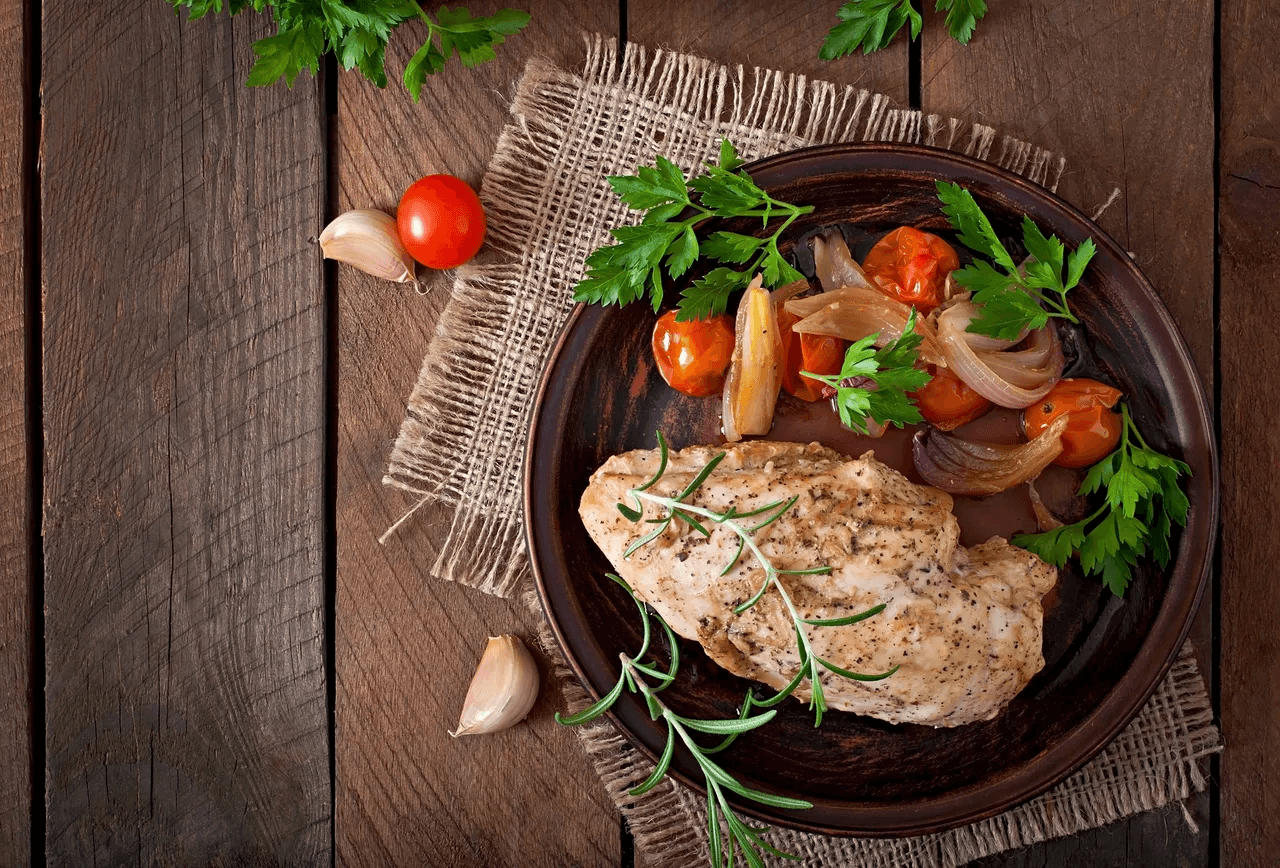
- 4–5 oz grilled chicken breast: about 30–38 g protein
- 1/2 cup cooked quinoa
- 2 cups salad greens and colorful vegetables
- 1 tablespoon olive oil vinaigrette
- Optional: salsa, lemon juice, herbs, or Greek yogurt sauce
Estimated macros: 35–45 g protein, 30–40 g carbs, 12–18 g fat. This is the most flexible meal in the day. Replace chicken with turkey, tuna, lean beef, tofu, tempeh, seitan, or lentils depending on preferences and dietary needs.
Snack 2: Cottage Cheese and Pineapple
- 1 cup low-fat cottage cheese: about 25 g protein
- 1/2 cup pineapple, peaches, or berries
- Optional: sunflower seeds or walnuts if calories allow
Estimated macros: 25 g protein, 15–25 g carbs, 2–10 g fat. Cottage cheese is rich in casein, a slower-digesting dairy protein. If you do not tolerate dairy, use soy yogurt, edamame, a plant-protein shake, or a tofu snack bowl.
Dinner: Salmon, Sweet Potato, and Broccoli
- 5 oz baked salmon: about 30–35 g protein
- 1 medium sweet potato
- 1–2 cups steamed or roasted broccoli
- Herbs, lemon, garlic, pepper, or a small amount of olive oil
Estimated macros: 35–40 g protein, 35–45 g carbs, 12–20 g fat. Salmon provides high-quality protein plus omega-3 fats. The sweet potato supports training fuel, and the broccoli adds fiber and micronutrients without many calories.
Optional Evening Snack: Casein or Greek Yogurt
- 1 scoop casein protein or 3/4 cup Greek yogurt: about 15–25 g protein
Estimated macros: 15–25 g protein, with carbs and fat depending on the product. Use this only if it helps you hit your protein target or manage evening hunger. It is not mandatory if your daily intake is already adequate.
Total day estimate: 155–175 g protein, 120–160 g carbs, 45–65 g fat, and roughly 1,800–2,200 calories. That calorie range may be too low for larger, highly active people and too high for smaller sedentary people. Treat it as a template rather than a prescription.
Adjust Protein, Carbs, and Calories for Your Goal
For fat loss, keep the protein target steady and adjust calories mostly through portions of fats and carbs. You do not need to remove carbs completely. In fact, whole-food carbs such as oats, potatoes, rice, beans, fruit, and quinoa can make training feel better and the plan easier to follow.
To gain muscle, increase calories gradually. Add an extra serving of rice, oats, olive oil, avocado, nuts, or fruit before pushing protein far above your target. Once protein is adequate, more total food and better training usually matter more than another shake.
During body recomposition, use a modest calorie deficit or maintenance calories, lift progressively, and be patient with the scale. BeeFit’s guide to body recomposition covers how to lose fat and build muscle without swinging between aggressive bulks and cuts.
Vegetarian and vegan versions can work well, but they require planning. Build meals around tofu, tempeh, edamame, lentils, beans, seitan, soy milk, pea-rice protein blends, Greek yogurt, cottage cheese, or eggs depending on your diet. If lunch is your hardest meal to plan, BeeFit’s high-protein vegetarian lunches offer practical options.
High-Protein Meal Prep Tips That Make It Sustainable
- Cook two proteins at once. Grill chicken and bake salmon, or prepare tofu and turkey so meals do not feel repetitive.
- Pre-portion breakfast and snacks. Yogurt bowls, cottage cheese cups, and smoothie packs remove decision fatigue.
- Keep carbs ready. Batch-cook rice, potatoes, quinoa, or oats so you can adjust portions quickly around workouts.
- Add vegetables by default. Frozen broccoli, salad kits, peppers, spinach, and mixed vegetables make fiber easier.
- Drink to thirst and activity level. More protein does not mean everyone needs a fixed three liters of water. Sweat rate, climate, body size, sodium intake, and medical conditions all matter.
- Track briefly, not forever. A food log for one or two weeks can teach portion awareness. After that, many people can maintain structure with repeated meals and simple adjustments.
Common Questions About a High-Protein Meal Plan
Is a high-protein diet bad for your kidneys?
Healthy adults generally tolerate higher protein intakes when the overall diet stays balanced. People with chronic kidney disease, reduced kidney function, or medical restrictions should not increase protein without professional guidance.
Do I need protein powder?
No. Protein powder is convenient, not required. Whole foods should carry most of the diet, while powders can help when appetite, schedule, travel, or total protein targets make food-only intake difficult.
Will extra protein turn into body fat?
Body fat gain comes from a sustained calorie surplus, not protein alone. Excess calories from protein, carbs, fat, or alcohol can contribute to weight gain, so keep the full day in view.
Final Takeaway
A high-protein meal plan works best when it is structured but not rigid. Start with a realistic protein target, spread it across three to five meals, include carbs and fats that support training, and adjust portions based on your results every two to four weeks.
If the plan feels too restrictive, simplify it before quitting: repeat two easy breakfasts, prep one protein for lunches, and keep dinner flexible. The best plan is the one you can follow long enough for your training, recovery, and body composition to respond.
This article is for informational purposes only and does not constitute medical advice. Consult a qualified healthcare professional before starting a new diet or exercise program, especially if you have kidney disease, diabetes, cardiovascular disease, a history of disordered eating, are pregnant, take medication, or follow a medically prescribed diet.
Discover more from BeeFit: Fitness & Wellness
Subscribe to get the latest posts sent to your email.
Share :