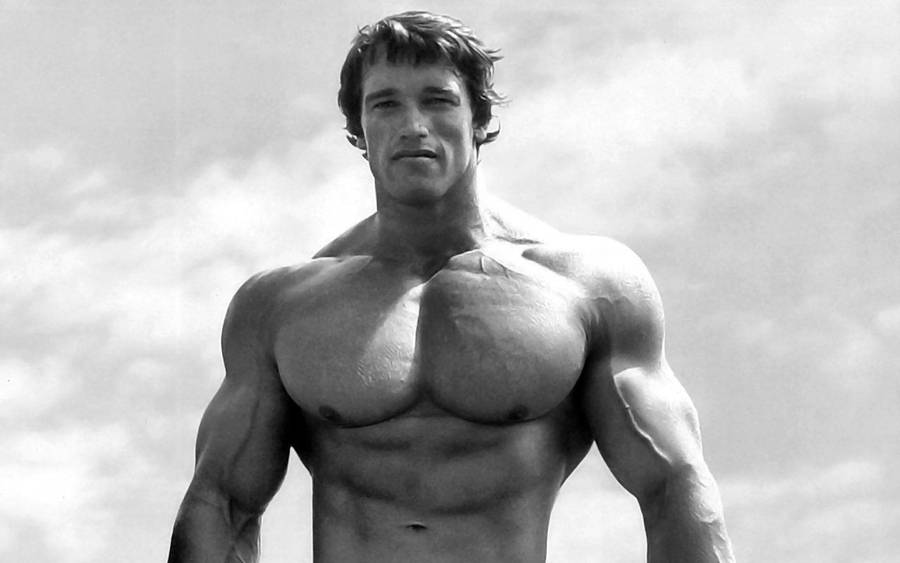
Arnold Schwarzenegger training is often treated like a blueprint, but the real lesson is more complicated than copying his workouts, diet, or bodybuilding routine.
Quick Take
- The Arnold Schwarzenegger training story includes his admission to using 100mg testosterone weekly and 15mg Dianabol daily during competition, performance-enhancing drugs that were legal but unregulated in the 1970s when tested compounds offer dramatically different results.
- His training volume of 702 weekly sets across 6 days with twice-per-week frequency per muscle group is sustainable only with pharmaceutical support, superior genetics, and full-time dedication that modern natural lifters rarely match.
- Natural lifters can steal Arnold’s training principles—compound focus, high frequency, progressive overload—but not his volume, which would cause overtraining without the drug-enhanced recovery his doses provided.
- The lifestyle mythology (discipline, consistency, clean eating) is real and transferable; the physique mythology (achievable through training and diet alone) is false, and Arnold himself now warns young bodybuilders against the drug abuse required to replicate his results.
Everyone wants to know Arnold’s secrets.
They watch Pumping Iron, read his autobiography, download his training splits, mimic his diet. The implication is clear: follow what Arnold did and you’ll look like Arnold.
Except you won’t.
Not because you lack discipline. Not because his program is wrong. But because you’re missing the critical component: the pharmaceutical cocktail that made everything else possible.
Arnold did not completely hide this part of his career. In a 2018 Men’s Health interview, he said his competitive-era use included 100 mg of testosterone per week and three Dianabol tablets per day, which he described as 15 mg daily. That comes to roughly 205 mg per week across those two compounds combined.
Here’s what actually made Arnold legendary, what you can actually steal from him, and what you need to accept you’ll never replicate naturally.
What Arnold Schwarzenegger Training Can and Cannot Teach You
Let’s start with uncomfortable honesty: Arnold Schwarzenegger is the greatest bodybuilder in history because he had superior genetics and pharmaceutical advantages the average lifter will never access.
In 2018, Arnold told Men’s Health specifically what he took at his competitive peak:
“One hundred milligrams a week of testosterone and three Dianabol a day, so that was 15 milligrams a day.” (Arnold Schwarzenegger, Men’s Health 2018)
For health context, the National Institute on Drug Abuse explains that anabolic-androgenic steroids are appearance- and performance-enhancing drugs, while Mayo Clinic warns that nonmedical steroid use can carry serious health risks.
The exact number matters less than the bigger lesson: Arnold’s recovery environment was not natural. His training volume, frequency, appetite, recovery, and adaptation were supported by genetics, full-time bodybuilding, and pharmaceutical enhancement that today’s natural lifter should not try to copy.
When asked if he’d change anything knowing what he knows now, Arnold answered directly: “I have no regrets about it.”
But here’s the part the fitness industry doesn’t want you to hear:
“Bodybuilding always, always was considered a safe sport. But now it’s not. Now people are dying—they’re dying because of overdoses of drugs and they don’t know what the f— they’re doing. They’re listening to charlatans.” (Arnold Schwarzenegger, Men’s Health 2022)
Modern bodybuilders aren’t taking what Arnold took. They’re taking 2-3x what Arnold took, stacking multiple compounds, using pharmaceutical-grade counterfeits of unknown purity, and doing it without medical supervision.
The point: Arnold’s advantage wasn’t just the drugs. It was the specific doses, the medical oversight, the era where less knowledge meant less extreme dosing, and the genetic foundation that made him respond extraordinarily well to pharmaceutical enhancement.
What This Means for Your Growth and Motivation
Accept the pharmaceutical reality and stop using it as an excuse to quit. Yes, Arnold had advantages you don’t have. So what? He also demonstrated something far more valuable than any specific physique: he showed that relentless focus, systematic application of principles, and refusal to accept limitations produces extraordinary results within whatever constraints you have.
Arnold came to America as a poor Austrian kid with nothing. Arnold came to America as a poor Austrian kid with nothing. Modern nutrition science was not available to him. Internet programs and coaching apps did not exist. What he did have was barbells, determination, and a willingness to train harder than everyone else. He also took the pharmaceutical advantage available in his era, but he still outworked every competitor regardless of access.
Your constraint is no pharmaceutical enhancement. That’s fine. Your competitive advantage can be consistency and intensity that modern enhanced bodybuilders lack because they rely on pharmaceutical recovery rather than perfect discipline and nutrition.
Build your physique within your constraints. Don’t romanticize the pharmaceutical advantage. Don’t let it destroy motivation. Arnold didn’t achieve Mr. Olympia status because of drugs alone—he achieved it because he combined pharmaceutical advantage with exceptional training focus, nutritional discipline, and mental toughness.
You can replicate the training discipline, nutritional excellence, and mental toughness. You’ll build an impressive natural physique doing it. That’s worth pursuing even if you never match his specific size.
Arnold Schwarzenegger Training Volume: The 702-Set Reality
Here’s what people focus on when they talk about Arnold Schwarzenegger training: he trained 6 days per week, trained each muscle group twice weekly, and performed an absurd amount of volume.
According to Marty Gallagher’s analysis of Arnold’s documented training from his autobiography, Arnold’s peak competition training volume looked roughly like this:
| Training block | Focus | Approximate volume |
|---|---|---|
| Monday, Wednesday, Friday morning | Chest, back, legs | ~140 sets |
| Monday, Wednesday, Friday evening | Calves, forearms | ~140 sets |
| Tuesday, Thursday, Saturday morning | Shoulders, arms | ~94 sets |
| Tuesday, Thursday, Saturday evening | Calves, forearms | ~140 sets |
That adds up to an extreme weekly workload that most natural lifters should not copy directly. The useful lesson is not the total number. It is that Arnold treated training like a full-time system: high frequency, detailed tracking, and relentless consistency.
That’s not a typo. Seven hundred and two individual working sets across one week.
For context, modern science suggests natural lifters optimize around 10-20 sets per muscle group per week for hypertrophy. Arnold was doing 2-3x that volume per session, multiple sessions per week.
How is that possible without destroying your central nervous system?
Pharmaceutical support.
The testosterone and Dianabol he was using didn’t just accelerate muscle growth. They enhanced:
- Neurological recovery between sessions
- Systemic adaptation to high-frequency training
- Glycogen replenishment speed
- Cortisol management (steroids suppress cortisol)
- Work capacity and training intensity maintenance
Remove the drugs and his 702-set program becomes a recipe for:
- Accumulated fatigue
- Declining performance session-to-session
- Overuse injuries
- CNS burnout
- Poor recovery adaptation
A natural lifter performing 702 weekly sets would experience diminishing returns by week 3-4, not the consistent progression Arnold achieved because his nervous system was chemically enhanced to recover.
What Arnold’s Volume System Reveals About Motivation
The real insight isn’t the specific number of sets. It’s that Arnold was obsessive about tracking his training. He logged every set, every rep, every weight. He reviewed his progress constantly.
This obsession with data created motivation through visibility. Arnold could see his progression. He could compare this week to last week. He could feel his capacity expanding. That’s psychologically powerful—you’re not training blind hoping for results. You’re seeing tangible improvement weekly.
Modern natural lifters can apply this obsession with tracking without copying the volume. Track your compound lifts religiously:
- How much weight on the bar
- How many reps completed
- Rest times between sets
- Subjective difficulty rating
When you see yourself add 5 pounds to your squat for the third consecutive week, or complete 2 additional reps on your deadlift, that’s motivationally powerful. You’re accumulating evidence of progress.
The volume itself (702 sets) is unachievable naturally. But the tracking obsession that drove Arnold to maintain perfect consistency is absolutely transferable and powerful for motivation.
Train each muscle group twice weekly at achievable volume (15-20 sets per session), but make those sets count. Track everything. Review your progress weekly. Build the psychological momentum from visible progression, not from matching Arnold’s impossible volume.
Arnold Schwarzenegger Training Principles Natural Lifters Can Actually Use
Despite the pharmaceutical reality, Arnold’s training philosophy contains principles that work for any lifter.
His approach emphasized:
Arnold’s training philosophy still contains useful principles for natural lifters, but they need to be scaled correctly.
| Arnold principle | What it means | Natural-lifter version |
|---|---|---|
| Compound lifts first | Big movements created the foundation | Prioritize squats, presses, rows, hinges, and pull patterns |
| Higher frequency | Muscles were trained more than once per week | Train most muscles 2 times per week with recoverable volume |
| Progressive overload | Progress was tracked and pushed over time | Add reps, load, sets, or control gradually |
| Exercise variation | Angles and tools changed across phases | Rotate variations when progress stalls or joints need relief |
| Mind-muscle connection | Sets were performed with intent | Use control and tension instead of just moving weight |
The point is not to copy the exact split. The point is to keep the principles and reduce the dose.
But beyond the technical principles, Arnold embodied a growth mindset that’s more valuable than any specific program:
Belief in continuous improvement: Arnold genuinely believed he could improve for decades. He didn’t accept plateaus as permanent. He cycled programs, adjusted volume, experimented with methods. When something stopped working, he changed it rather than surrendering to “genetics.”
Competitive drive channeled productively: Arnold viewed every training session as an opportunity to compete against his previous performance. He wasn’t just going through motions. He was trying to add a rep, increase weight, or improve form. That intensity—the mental competition with yourself—drives consistent improvement regardless of pharmaceutical status.
Willingness to work unglamorous hours: Arnold’s legend isn’t built on one brilliant program. It’s built on 6 AM to 10 PM training days, day after day, year after year. Nobody wants to hear that. They want the secret program. The real secret was working when he didn’t feel like it, training when tired, maintaining discipline when motivation faded.
Your Growth Mindset Framework Inspired by Arnold
- Track everything obsessively. Create a simple training log. Record weights, reps, sets. Review weekly. This obsession creates motivation through visible progression.
- Embrace high frequency. Train each muscle group twice weekly at moderate intensity rather than once weekly at maximum intensity. This creates more practice opportunities and consistent stimulus.
- Pursue continuous small improvements. Don’t expect massive jumps. Add 2.5-5 pounds every 2-3 weeks. Add 1-2 reps per set monthly. Build compound small improvements into extraordinary long-term growth.
- Accept plateaus as temporary. When progress stalls, it’s not permanent. Change variables: exercise selection, rep ranges, rest periods, intensity techniques. Arnold adjusted constantly. Plateaus are just signals to adjust, not signs of failure.
- Separate motivation from feelings. Train when motivated. Train when unmotivated. Arnold trained whether he felt like it or not. That’s the competitive mindset that builds physiques—commitment independent of daily mood.
Arnold Schwarzenegger Training Nutrition: What Natural Lifters Should Keep
Arnold’s nutrition was simple, high-calorie, and protein-forward. The exact numbers fit his size, training volume, era, and pharmaceutical context, not the needs of a modern natural lifter.
| Arnold-era approach | What it meant | Modern natural-lifter adjustment |
|---|---|---|
| High protein | Around 1 g per pound of body weight | Most lifters can start around 1.6–2.2 g/kg/day |
| Very high calories | Often 3,800–5,000 calories daily | Use a small surplus for muscle gain or a moderate deficit for fat loss |
| Frequent meals | 5–6 meals per day | Use 3–5 protein feedings per day if that fits your schedule |
| Whole-food base | Eggs, meat, fish, potatoes, oats, rice | Keep the same idea, but match portions to your actual goal |
| Flexible eating | Mostly disciplined, with some enjoyable foods | Use consistency, not perfection, as the standard |
The transferable lesson is not “eat like Arnold.” It is to build a nutrition system that supports your training instead of fighting it.
The specific foods:
- 3-4 whole eggs daily (including yolks)
- 8-12 oz of meat per meal (beef, chicken, fish, pork)
- Rice, potatoes, and oats for carbs
- Minimal processed foods
- Cheat meals on weekends (pizza, burgers)
The nutrition was honestly boring: “Eat meat and potatoes, lots of it, consistently.”
What’s interesting is what Arnold didn’t do:
- No macronutrient perfection
- No meal timing precision
- No supplements beyond protein powder (which barely existed in the 70s)
- No obsessive calorie counting
- No elimination diets or “clean eating” cultism
He just ate massive quantities of whole foods, prioritized protein, and stayed consistent.
The Reality Check: Arnold could eat 5,000 calories daily because:
- He was training 702 weekly sets (astronomical calorie expenditure)
- He was on steroids (which increase caloric requirements and metabolic rate)
- His job literally was to be a bodybuilder (full-time focus)
A modern natural lifter training sensibly would need roughly 2,800-3,200 calories daily, not 5,000. The volume and pharmaceutical support created the caloric need.
What’s Transferable: The Lifestyle Philosophy
Arnold didn’t treat nutrition as punishment or deprivation. He ate food he enjoyed—whole foods primarily, but also cheat meals on weekends without guilt. He understood that sustainable nutrition requires consistency, not perfection.
His lifestyle wasn’t monastic asceticism. He trained hard, ate well, lived his life, and competed at the highest level. He balanced discipline with enjoyment.
Modern fitness culture often treats nutrition as either perfect clean eating or complete indulgence with no middle ground. Arnold’s approach was practical: eat whole foods 80-90% of the time, prioritize protein, maintain consistent calorie surplus or deficit for your goal, include foods you actually enjoy, and move on.
He also built his entire lifestyle around training:
- He woke early to train
- He structured his day around meal timing
- He surrounded himself with training partners and competitors who elevated his standards
- He viewed training not as obligation but as competitive opportunity
Your Nutritional and Lifestyle Strategy Arnold-Inspired
- Prioritize protein at every meal. You don’t need 250g daily like Arnold. You need 0.8-1.0g per pound of bodyweight. Include protein at breakfast, lunch, dinner, and snacks. This drives satiety and muscle protein synthesis.
- Eat whole foods primarily, not exclusively. Build your nutrition around meat, eggs, fish, rice, potatoes, oats, vegetables. Include cheat meals you enjoy without guilt. Sustainability beats perfection.
- Maintain consistent caloric surplus or deficit matching your goal. For muscle building: 300-500 calories above maintenance. For fat loss: 300-500 calories below. Arnold ate massive surplus because he needed massive calories. You don’t. Adjust to your actual needs.
- Build your lifestyle around training, not training around lifestyle. Wake early to train. Structure meals around training. Choose activities complementing recovery. Spend time with people elevating your standards rather than dragging you down.
- Track consistency more than perfection. Did you eat protein at most meals this week? Did you maintain your caloric target? Did you hydrate adequately? These matter more than exact macronutrient ratios or meal timing precision.
- Create a healthy lifestyle as foundation, not afterthought. Arnold’s training success was built on adequate sleep, consistent nutrition, stress management, and social support. Modern life chaos (poor sleep, processed foods, isolation) will undermine even perfect training. Prioritize sleep 7-9 hours, minimize processed foods, maintain social connection, and manage work stress.
Can You Actually Achieve Arnold’s Physique Naturally? (And Should You Care?)
When people study Arnold Schwarzenegger training, this is the question they usually ask, and the answer is blunt: no.
Not because natural training doesn’t work. Not because his methods are flawed. But because the physiological ceiling for muscle building differs dramatically with vs. without pharmaceutical enhancement.
Research on testosterone and muscle tissue shows:
A natural male with typical testosterone levels (400-700 ng/dL) can build approximately 20-25 pounds of muscle in their first year of training, then 5-10 pounds annually after that.
A male on pharmaceutical testosterone (1,000-2,000+ ng/dL) can build 40-50+ pounds in the first year, then 20-30+ pounds annually, with accelerated recovery.
Arnold built nearly 100 pounds of muscle across his career. At 250 pounds bodyweight at 5’10”, he achieved roughly 8% body fat at competition. This physique is simply outside natural capacity, not because of bad genetics or insufficient effort, but because the muscle ceiling is defined by hormonal levels.
You can build a genuinely impressive physique naturally—someone who looks clearly trained, athletic, muscular. But the specific “Mr. Olympia” extreme conditioning and mass requires the pharmacology.
The uncomfortable truth Arnold now acknowledges:
“I have seen people getting kidney transplants, and suffering tremendously from it. Any time you abuse the body, you’re going to regret it later on.” (Arnold Schwarzenegger, Men’s Health 2022)
This is the informed consent piece: Arnold achieved the greatest natural bodybuilding physique through pharmaceutical support. The cost included long-term health consequences he’s now dealing with in his 70s.
The Real Question: Why Are You Training?
If your answer is “to look exactly like 1975 Arnold,” you’ll be disappointed and likely chasing steroids to get there.
If your answer is “to build a strong, muscular, healthy physique that commands respect and reflects discipline,” then Arnold’s principles and mindset are profoundly valuable.
Building 40-50 pounds of muscle naturally over 5-10 years of consistent training is extraordinary. Getting to single-digit body fat is impressive. Having the strength to bench press 365 pounds, squat 495, and deadlift 585 is genuinely elite for a natural lifter.
That physique requires the same principles Arnold used: compound training focus, high frequency, progressive overload obsession, protein priority, caloric surplus, consistent nutrition, adequate sleep, and mental toughness to train when unmotivated.
You won’t be Mr. Olympia. You’ll be a genuinely impressive athlete who built his physique through discipline, consistency, and intelligent training.
That’s worth pursuing.
Arnold Schwarzenegger Training Legacy: Mindset Over Physique
The most valuable part of Arnold Schwarzenegger training is not his specific program or pharmaceutical protocol. It’s his unshakeable belief that through systematic effort and relentless consistency, you can achieve extraordinary things.
He came from nothing. Over time, he learned a new language, built a world-class physique, became a movie star, and later became governor of California. None of that came from one shortcut. It came from working harder than competitors, staying consistent for decades, and refusing to accept limitations as permanent.
That mindset is available to you regardless of pharmaceutical access.
Apply Arnold Schwarzenegger training principles: train compounds primarily, maintain high frequency at moderate intensity, obsess about progressive overload, prioritize protein and consistent nutrition, build a healthy lifestyle as foundation, and maintain competitive intensity in your training.
You can build an impressive physique. Along the way, you will develop strength and resilience. That discipline can transfer to every area of life.
You won’t be 1975 Arnold. You’ll be a better version of yourself, which is the only meaningful competition anyway.
For evidence-based training principles derived from Golden Era bodybuilding without pharmaceutical assumptions, explore Strength Training: 5 Research-Backed Ways to Build Muscle After 40, Old-School Lifting: 5 Forgotten Rules That Still Build Muscle, and Rest Between Sets: 5 Things You’re Overthinking at BeeFit.ai.
This article discusses historical and current pharmaceutical use in bodybuilding for informational and educational purposes only. It is not medical advice, does not encourage performance-enhancing drug use, and is not a substitute for professional medical guidance. Anabolic steroid use carries documented health risks including cardiovascular complications, liver damage, hormonal disruption, and psychological effects. Arnold Schwarzenegger himself now warns against modern steroid abuse and recommends consulting qualified healthcare providers before using any performance-enhancing substances. Anyone considering pharmaceutical enhancement should consult qualified physicians and understand risks thoroughly.
Discover more from BeeFit: Fitness & Wellness
Subscribe to get the latest posts sent to your email.
Share :