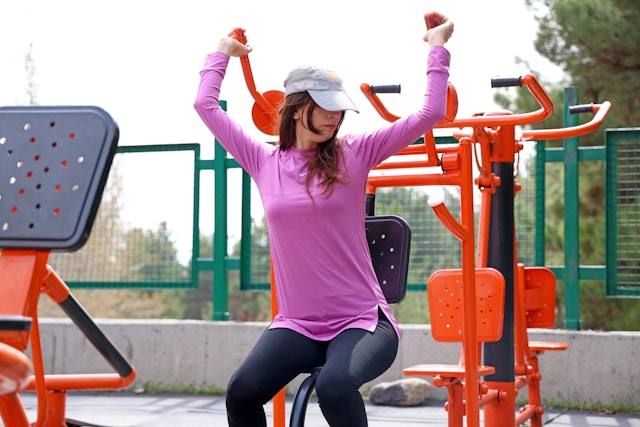
Perimenopause fitness should not be built around punishment. It should be built around strength, recovery, steady energy, bone health, and workouts you can repeat through hormonal ups and downs.
During perimenopause, estrogen and progesterone can fluctuate unpredictably. Some weeks you may feel strong and steady. Other weeks, sleep, mood, hunger, hot flashes, joint comfort, or motivation may shift without warning. That does not mean your body is broken. It means your fitness plan needs more flexibility.
The best approach is simple: lift weights, walk often, train your heart, protect your joints, eat enough protein, and adjust intensity when your body gives clear feedback.
Quick Take
- Perimenopause fitness should prioritize strength training, walking, cardio, mobility, balance, and recovery.
- Resistance training is one of the most important habits because it supports muscle, bone health, balance, and metabolic function.
- Exercise may help some menopause symptoms, but results vary by symptom and person.
- A good starting target is 2–3 strength sessions weekly plus regular walking or moderate cardio.
- More intense training is not always better if sleep, stress, and recovery are already poor.
- Track energy, mood, sleep, hot flashes, cycle changes, strength, and joint comfort to personalize your plan.
The goal is not to outwork perimenopause. The goal is to train in a way that keeps you strong, capable, and consistent.
Why Perimenopause Fitness Needs a Smarter Plan
Perimenopause can change how training feels.
You may notice:
- Less predictable energy
- More sleep disruption
- Hot flashes or night sweats
- More joint stiffness
- More belly fat
- Mood changes
- Lower motivation
- Longer recovery
- More sensitivity to stress
- Changes in menstrual cycle timing or flow
Exercise is still one of the best tools you have, but the plan needs to be realistic. If you respond to every change by cutting calories harder and adding more cardio, you may end up more tired, hungrier, and less consistent.
A smarter perimenopause fitness plan focuses on what protects you most:
| Fitness priority | Why it matters |
|---|---|
| Strength training | Supports muscle, bones, metabolism, and balance |
| Walking | Helps energy, mood, recovery, and fat-loss consistency |
| Cardio | Supports heart health and endurance |
| Mobility | Helps joints and movement quality |
| Balance | Supports confidence and fall prevention |
| Recovery | Helps training adaptation and symptom management |
| Protein | Supports muscle repair and appetite control |
This is not about doing everything perfectly. It is about building a routine that still works on imperfect weeks.
Does Exercise Reduce Perimenopause Symptoms?
Exercise can help, but it is not a guaranteed cure for every symptom.
A 2024 overview of systematic reviews found that physical activity may help some menopause-related symptoms, but the evidence is not strong enough to recommend one exact exercise type over every other option for symptom management: BMC Women’s Health overview of reviews.
That is important because perimenopause advice often becomes too confident. Strength training, walking, cardio, yoga, and mobility can all be useful, but your response may be individual.
Exercise may support:
- Mood
- Sleep quality
- Body composition
- Bone health
- Muscle strength
- Blood pressure
- Glucose control
- Confidence
- Joint function
- Stress regulation
Hot flashes and night sweats may improve for some women, but not everyone. Track symptoms instead of assuming one workout style will fix everything.
Strength Training Is the Foundation of Perimenopause Fitness
Strength training is the most important part of perimenopause fitness because it directly targets the areas most likely to change with age and hormonal transition: muscle, bone, strength, balance, and body composition.
A 2024 study of women aged 40–60 found that a 12-week low-impact resistance exercise program improved strength and balance, and benefits were seen regardless of menopause status: low-impact resistance training study.
That is the message most women need to hear: you can still get stronger during perimenopause.
Strength training should include:
| Movement pattern | Examples |
|---|---|
| Squat | Goblet squat, box squat, leg press |
| Hinge | Romanian deadlift, hip thrust, kettlebell deadlift |
| Push | Push-up, dumbbell press, chest press |
| Pull | Row, lat pulldown, assisted pull-up |
| Single-leg | Step-up, split squat, reverse lunge |
| Core | Dead bug, side plank, Pallof press |
| Carry | Farmer’s carry, suitcase carry |
| Balance | Single-leg stand, heel-to-toe walk |
Start with 2 days per week if you are new. Build to 3 days when recovery is good.
Read more: Women’s Fitness After 40 and Strength Training After 40.
How Hard Should You Train?
Perimenopause does not mean you need to train gently forever. It does mean you should train hard with a plan, not randomly.
For strength training, most working sets should feel challenging but controlled. A useful target is finishing most sets with 1–3 reps still available. You should not need to train to failure on every set.
Use this intensity guide:
| Effort level | What it feels like | Best use |
|---|---|---|
| Easy | Could do many more reps | Warm-ups, recovery |
| Moderate | Working, but comfortable | Beginners, technique |
| Challenging | 1–3 reps left | Main strength work |
| Max effort | No reps left | Rare, not every session |
A review of resistance training in postmenopausal women suggests that training variables such as intensity, volume, and frequency matter for strength and muscle outcomes, and very low-intensity work may not be enough for meaningful adaptation: resistance training after menopause review.
The practical rule: lift weights that require focus, but do not turn every workout into a stress test.
How Often Should You Exercise During Perimenopause?
A good perimenopause fitness plan includes both strength and cardio.
The CDC recommends adults get at least 150 minutes of moderate-intensity aerobic activity weekly plus at least 2 days of muscle-strengthening activity: CDC adult activity guidelines.
A realistic weekly target:
| Training type | Weekly target |
|---|---|
| Strength training | 2–3 sessions |
| Walking | Most days |
| Moderate cardio | 2–3 sessions |
| Mobility | 5–10 minutes most days |
| Balance | 2–4 short practices |
| Recovery | 1–2 easier days |
This is enough for most women to improve fitness without overloading recovery.
Sample Weekly Perimenopause Fitness Plan
Use this as a flexible template. Move days around based on sleep, work, symptoms, and recovery.
| Day | Workout |
|---|---|
| Monday | Full-body strength |
| Tuesday | 30–45 minute walk + mobility |
| Wednesday | Zone 2 cardio or brisk walk |
| Thursday | Full-body strength |
| Friday | Mobility + easy walk |
| Saturday | Full-body strength or longer outdoor activity |
| Sunday | Rest, stretching, or gentle movement |
If symptoms are worse, reduce intensity but keep the habit alive. A 20-minute easier workout is still a win.
Full-Body Strength Plan
Do this 2–3 times per week on nonconsecutive days.
| Exercise | Sets | Reps |
|---|---|---|
| Goblet squat or leg press | 3 | 8–10 |
| Romanian deadlift or hip thrust | 3 | 8–10 |
| Dumbbell chest press or incline push-up | 3 | 8–12 |
| Seated row or one-arm row | 3 | 10–12 |
| Step-up or reverse lunge | 2 | 8 each side |
| Lat pulldown or assisted pull-up | 2–3 | 8–12 |
| Dead bug or Pallof press | 2 | 8–10 each side |
| Farmer’s carry | 2–3 | 30–45 seconds |
Progress slowly. Add reps first, then weight. If joints feel irritated, adjust range of motion, tempo, or exercise selection.
Cardio for Energy, Heart Health, and Mood
Cardio is still important during perimenopause, but it should not replace strength training.
The best cardio is the type you can do consistently without beating up your joints or draining recovery.
Good options include:
- Walking
- Cycling
- Swimming
- Hiking
- Rowing
- Elliptical
- Dance
- Low-impact intervals
Zone 2 cardio is a good starting point. It should feel like steady work, but you should still be able to speak in short sentences.
A simple cardio plan:
| Goal | Session |
|---|---|
| Recovery | 20–30 minute easy walk |
| Heart health | 30–45 minute Zone 2 session |
| Fitness boost | 6–8 short intervals |
| Mood support | Outdoor walk or hike |
| Joint-friendly conditioning | Bike, swim, elliptical |
If sleep is poor or hot flashes are worse, choose easier cardio rather than forcing high intensity.
Mobility and Balance Matter More Than You Think
Mobility is not just stretching. It helps you keep access to the positions you need for strength training and daily life.
Balance training also matters because muscle, vision, joint sensitivity, and reaction time can change with age. You do not need long balance workouts. Short, consistent practice is enough.
Try this 8-minute routine:
| Move | Time |
|---|---|
| Cat-cow | 60 seconds |
| Hip flexor stretch | 60 seconds each side |
| Ankle rocks | 60 seconds |
| Thoracic rotation | 60 seconds each side |
| Single-leg stand | 30 seconds each side |
| Heel-to-toe walk | 60 seconds |
| Bodyweight squat | 60 seconds |
Do this after walks, before strength training, or on recovery days.
Protein and Recovery for Perimenopause Fitness
Training is only half the plan. Recovery is where your body adapts.
Protein becomes more important because muscle is harder to build and easier to lose with age, especially if you diet aggressively or skip strength training.
For many active women, the International Society of Sports Nutrition supports a daily protein range around 1.4–2.0 grams per kilogram of body weight: ISSN protein position stand.
Practical protein targets:
| Body weight | Daily protein target |
|---|---|
| 130 lb | 85–120 g |
| 150 lb | 95–135 g |
| 170 lb | 110–155 g |
| 190 lb | 120–170 g |
Spread protein across meals rather than saving most of it for dinner.
Read more: Protein for Muscle Growth.
Bone Health During Perimenopause
Perimenopause is a good time to think about bones before bone loss becomes a bigger concern.
Strength training, weight-bearing exercise, protein, calcium, vitamin D, and balance work all matter. ACOG notes that weight-bearing exercise can help keep bones strong, and strength training helps strengthen muscles and bones: ACOG menopause years guide.
Bone-supportive habits:
| Habit | Why it helps |
|---|---|
| Strength training | Loads muscles and bones |
| Walking or hiking | Weight-bearing movement |
| Protein | Supports muscle and bone structure |
| Calcium-rich foods | Supports bone mineral needs |
| Vitamin D | Supports calcium absorption |
| Balance training | Helps reduce fall risk |
| Avoid smoking | Protects bone and heart health |
| Limit heavy alcohol | Supports recovery and bone health |
If you have a family history of osteoporosis, early menopause, low body weight, steroid use, or fracture history, ask your clinician about bone density screening.
Adjusting Workouts During Hard Weeks
Perimenopause symptoms can fluctuate. Your plan should have built-in adjustments.
Use this guide:
| If you feel… | Try this |
|---|---|
| Poor sleep | Reduce load or volume that day |
| Hot flashes worse | Avoid overheated rooms and intense late workouts |
| Joint aches | Use machines, slower tempo, shorter range |
| Low mood | Do a walk plus short strength session |
| High stress | Keep workout moderate, avoid max effort |
| Heavy bleeding | Use lighter movement and check with a clinician if persistent |
| Strong and recovered | Progress weight or add a set |
Flexibility is not inconsistency. It is intelligent training.
Common Perimenopause Fitness Mistakes
Doing only cardio
Cardio helps, but strength training is the foundation for muscle, bone, and body composition.
Training too hard on poor sleep
A hard workout is not always the right answer. Sometimes the best move is a moderate session you can recover from.
Under-eating protein
Low protein makes it harder to maintain muscle and manage hunger.
Ignoring hot flashes and sleep disruption
Symptoms are feedback. Adjust training time, temperature, caffeine, alcohol, and recovery.
Avoiding weights because of joint fear
You may need smarter exercise selection, not no resistance training.
Expecting exercise to fix every symptom
Exercise helps health, but severe perimenopause symptoms may need medical support.
Perimenopause Fitness FAQ
What is the best exercise during perimenopause?
Strength training is the foundation because it supports muscle, bone, balance, metabolism, and body composition. Walking, cardio, mobility, and balance work should also be included.
How often should I strength train during perimenopause?
Start with 2 sessions per week if you are new. Build toward 3 sessions per week if recovery is good.
Can exercise reduce hot flashes?
It may help some women, but evidence is mixed. Track your own response for 4–8 weeks rather than assuming one result.
Can I still build muscle during perimenopause?
Yes. You may need consistent strength training, enough protein, and better recovery, but muscle and strength gains are still possible.
Should I do HIIT during perimenopause?
HIIT can be useful if sleep and recovery are good. If you feel wired, exhausted, or sore for days, reduce frequency and prioritize strength plus Zone 2 cardio.
Is walking enough during perimenopause?
Walking is excellent, but it is not enough by itself for muscle and bone. Add resistance training.
Should I train differently during my cycle?
Perimenopause cycles can be irregular, so rigid cycle-based training may not work well. Use daily feedback from energy, sleep, bleeding, pain, and performance.
What should I eat to support perimenopause fitness?
Build meals around protein, vegetables, fiber-rich carbs, healthy fats, and enough total calories to recover from training.
Final Thoughts on Perimenopause Fitness
Perimenopause fitness is not about pushing harder through every symptom. It is about building a strong, flexible plan that supports your body through change.
Lift weights 2–3 times per week. Walk often. Add cardio for heart health. Use mobility and balance work to protect movement quality. Eat enough protein. Prioritize recovery. Adjust intensity when sleep, stress, or symptoms demand it.
You do not need the perfect workout.
You need a plan you can keep repeating.
For a personalized strength, cardio, nutrition, and recovery plan based on your goals and schedule, try the BeeFit AI Calculator.
Related BeeFit Guides
- Women’s Fitness After 40
- Strength Training After 40
- Protein for Muscle Growth
- Fat Loss After 40
- Women’s Daily Vitamins
- Supplements That Actually Matter
- BeeFit AI Calculator
This article is for informational purposes only and is not medical advice. Talk with a qualified healthcare professional before starting a new exercise, nutrition, or supplement plan, especially if you have heart disease, osteoporosis, pelvic health symptoms, heavy bleeding, severe hot flashes, dizziness, joint pain, injury, diabetes, or take prescription medication.
Photo: Babak Eshaghian / Unsplash
Discover more from BeeFit: Fitness & Wellness
Subscribe to get the latest posts sent to your email.
Share :