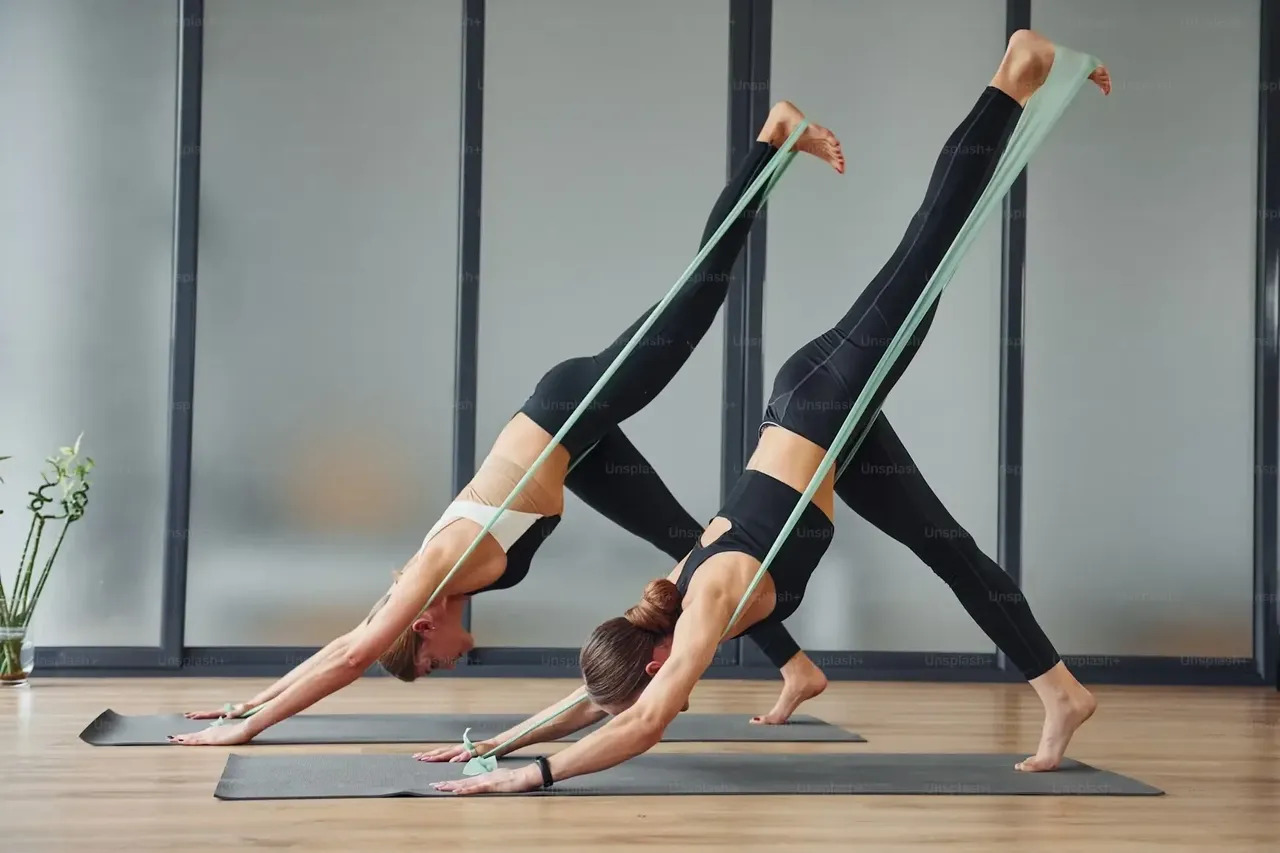
A beginner resistance band workout plan is one of the simplest ways to start strength training at home. Bands are affordable, portable, and easy to scale, but they still require good setup, controlled reps, and steady progression if you want real results.
Quick Take
- Train with bands 2–3 days per week, leaving at least one recovery day between harder sessions.
- Use a light or medium band first; the last 2 reps should feel challenging without changing your form.
- Anchor bands securely, inspect them for cracks, and avoid pulling toward your face.
- Progress by adding reps, sets, slower tempo, or a stronger band—not by rushing through movements.
- Stop if you feel sharp pain, dizziness, chest discomfort, or joint pain that changes your technique.
This guide is for generally healthy beginners who want practical home strength training without weights. If you have a recent injury, significant joint pain, heart disease, uncontrolled blood pressure, osteoporosis, or another medical condition, get clearance from a qualified healthcare professional before starting.
Why Resistance Bands Work for Beginners
Resistance bands create elastic resistance: the farther the band stretches, the harder the exercise becomes. That feels different from dumbbells, where gravity determines the challenge. However, both tools can build strength when the exercise is hard enough and repeated consistently.
Research comparing elastic resistance with conventional resistance has found that bands can improve strength in many populations. Programs work best when they use progressive overload and enough weekly training volume. Bands are not magic, and they are not always better than weights, but they are a legitimate training tool. For the evidence base, see this systematic review and meta-analysis on elastic resistance training.
Bands are especially useful if you train in a small space, travel often, or feel intimidated by a gym. They also let you practice core movement patterns—squat, hinge, push, pull, and brace—without needing a rack, bench, or heavy plates. If you prefer no equipment at all, BeeFit’s beginner bodyweight workout plan is a good companion option.
What You Need for This Beginner Resistance Band Workout Plan
You do not need a large kit. A tube band with handles, one mini loop band, and a safe anchor point are enough for this beginner resistance band workout plan. If possible, choose a set with light, medium, and heavy options so you can match resistance to each exercise.
- Tube bands with handles: Best for rows, chest presses, curls, shoulder presses, and deadlifts.
- Mini loop bands: Useful for glute bridges, lateral walks, warm-ups, and hip stability work.
- Long loop bands: Helpful later for assisted pull-ups, heavier rows, squats, and hinges.
- Door anchor: Convenient, but only if the door closes securely away from you and the anchor is designed for band training.
Before every session, check the band for small tears, thinning, or sticky spots. Replace damaged bands immediately. If anchoring to a door, avoid the handle itself and position the anchor so the door cannot open toward you during the exercise.
Resistance Band Form, Tempo, and Rest Before You Start
Good band training feels controlled, not frantic. Use a smooth 2-second lifting phase and a 2- to 3-second lowering phase on most exercises. Pause briefly where the band is most stretched, then return without letting the band snap back.
Rest 45–90 seconds between sets. For beginners, that is usually enough to keep the workout efficient without turning strength training into sloppy cardio. Adults are generally advised to include muscle-strengthening activity at least 2 days per week. This plan fits that target while giving you room to recover. The CDC summarizes the broader adult physical activity guidelines.
Start each session with 5 minutes of easy movement: marching in place, arm circles, hip circles, bodyweight squats, and light band pull-aparts. A short warm-up will not prevent every ache, but it helps you practice the movement before adding tension.
The 3-Day Beginner Resistance Band Workout Plan
Use this beginner resistance band workout plan on nonconsecutive days, such as Monday, Wednesday, and Friday. If three sessions feels like too much, start with Day 1 and Day 2 for two weeks, then add Day 3.
Day 1: Full-Body Resistance Band Foundation
- Band squat: 3 sets of 10–12 reps. Stand on the band with feet hip-width apart and handles near your shoulders. Sit down and back, keep your chest tall, then stand by pressing through your midfoot.
- Band chest press: 3 sets of 8–12 reps. Anchor the band behind you at chest height. Press forward until your arms are nearly straight, then return with control.
- Band row: 3 sets of 10–12 reps. Anchor the band in front of you. Pull elbows back toward your ribs and squeeze your shoulder blades without shrugging.
- Standing band rotation: 2 sets of 8–10 reps per side. Anchor at chest height. Turn through your upper back and hips while keeping your ribs down.
Day 2: Lower Body and Glutes
- Mini-band glute bridge: 3 sets of 12–15 reps. Place the band above your knees. Press knees gently outward, lift your hips, pause, then lower slowly.
- Band Romanian deadlift: 3 sets of 8–12 reps. Stand on the band and hold the handles. Push your hips back, keep your spine neutral, then stand tall by squeezing your glutes.
- Lateral band walk: 2–3 sets of 8–10 steps each direction. Keep the band above your knees or around your ankles. Stay low and step without letting the knees cave in.
- Band calf raise: 3 sets of 12–15 reps. Stand on the band, hold the handles at your sides or shoulders, rise onto the balls of your feet, pause, and lower slowly.
Day 3: Upper Body and Core
- Band shoulder press: 3 sets of 8–10 reps. Stand on the band and press overhead. Keep your ribs stacked over your pelvis instead of arching your lower back.
- Band biceps curl: 3 sets of 10–12 reps. Pin elbows near your sides and curl without leaning backward.
- Band triceps pressdown or extension: 3 sets of 10–12 reps. Use a high anchor for pressdowns or a safe behind-the-back setup for extensions. Move only at the elbows.
- Dead bug with mini band: 2 sets of 6–8 reps per side. Place the band around your feet or hands if appropriate, keep your lower back gently connected to the floor, and move slowly.
If an exercise feels awkward or painful, adjust the angle, reduce resistance, or swap it for a simpler version. For example, a band chest press can become an incline push-up. A band deadlift can become a bodyweight hip hinge until the pattern feels natural.
How to Progress This Beginner Resistance Band Workout Plan
The most reliable way to make a beginner resistance band workout plan work is to progress slowly. For the first two weeks, keep 1–3 reps “in reserve” on most sets. You should finish feeling like you trained, not like you survived.
When you can complete all sets at the top of the rep range with steady form, choose one progression:
- Add 1–2 reps per set.
- Add one extra set to one or two exercises.
- Slow the lowering phase to 3–4 seconds.
- Step farther from the anchor to increase band tension.
- Move to the next band only when control stays clean.
Do not change everything at once. If you add reps, keep the same band. If you increase band tension, keep the same sets and reps for a week. This makes progress easier to track and reduces the chance of irritated elbows, shoulders, knees, or lower back.
Recovery matters too. Sleep, protein, and rest days influence whether your body adapts to training. If you are also working on body composition, BeeFit’s guide to body recomposition for beginners explains why resistance training and nutrition need to work together.
Common Resistance Band Mistakes to Avoid
The first mistake is using a band that is too heavy. If the band pulls you out of position, shortens your range of motion, or makes you rush the return phase, it is too much for that exercise.
Another common problem is treating every band exercise like a burnout set. Strength improves when you repeat quality reps and gradually increase the challenge. Fatigue can be useful, but it should not be the only measure of a good workout.
Finally, avoid comparing band tension to dumbbell numbers. A “medium” band can feel easy in one movement and very hard in another because resistance changes with stretch length, body position, and anchor angle. Track the band, setup, reps, and effort instead.
FAQ: Resistance Band Training for Beginners
Can beginners build muscle with resistance bands?
Yes, beginners can build muscle and strength with bands if the exercises are challenging enough. Perform them through a controlled range of motion and progress over time. Bands are not a shortcut, but they can be effective resistance training.
How long should I follow this plan?
Run this beginner resistance band workout plan for 4–6 weeks. After that, you can repeat it with stronger bands, add a set to key exercises, or move to a more complete strength plan such as BeeFit’s strength training after 40 guide if your goals include long-term muscle and joint support.
Can resistance bands replace weights?
For many people training at home, bands can cover general strength, muscle endurance, posture support, and basic fitness. If your goal is maximal strength or advanced hypertrophy, weights and machines may eventually offer easier loading and more precise progression.
A Simple Way to Start Getting Stronger
You do not need a full gym to begin strength training. You need a repeatable plan, safe setup, enough resistance to challenge your muscles, and the patience to improve one variable at a time.
Use this plan for the next month, track your reps and band choices, and pay attention to how your joints feel. When the basics become smooth, stronger bands and more advanced variations will be much easier to use well.
This article is for educational purposes only and does not replace medical advice. Consult your physician or a qualified fitness professional before beginning a new exercise program, especially if you have pain, injuries, chronic disease, or concerns about exercise safety.
Discover more from BeeFit: Fitness & Wellness
Subscribe to get the latest posts sent to your email.
Share :