Women’s fitness for healthy aging should do more than burn calories. A strong plan builds bone, preserves muscle, improves cardiovascular fitness, and supports balance and brain health without making every workout maximal.
Quick Take
- Jumping and other impact exercises can support hip bone density, but they are not appropriate for every woman.
- HIIT may improve fitness and temporarily raise BDNF, yet lactate is only one possible mechanism.
- “High intensity” does not always mean all-out effort; HIIT and sprint interval training are different methods.
- Resistance training is the foundation for maintaining muscle, strength, and bone through menopause.
- Protein supports adaptation, but 1.0–1.1 grams per pound is unnecessarily high for most women.
Exercise advice for women often focuses on weight loss and appearance while overlooking stronger bones, more muscle, cardiovascular capacity, and confident movement. A useful program combines resistance training, weight-bearing activity, optional impact work, and cardio at more than one intensity.
1. How Can Jump Training Support Bone Density and Healthy Aging in Women?
Bone responds to mechanical loading. Fast, weight-bearing impacts such as jumps can create a stronger bone-building signal than non-weight-bearing activities such as cycling or swimming.
In one randomized jump-training trial, premenopausal women performed either 10 or 20 jumps twice daily with 30 seconds between jumps. After 16 weeks, both groups improved hip bone mineral density compared with controls.
A later meta-analysis of jump training also found small, site-specific benefits, particularly around the femoral neck and hip.
These findings do not mean every woman should copy the protocol. The trial involved premenopausal women, while safety considerations differ with osteoporosis, previous fractures, joint pain, balance limitations, or pelvic-floor symptoms.
Add Impact Gradually
Women already comfortable with impact can begin with a small number of controlled jumps two or three times per week. Use a stable surface, quiet landings, and enough rest to keep each repetition crisp.
Lower-impact options include:
- Brisk hill walking
- Stair climbing
- Low step-ups
- Heel drops
- Faster sit-to-stands
- Light skipping when appropriate
Do not intentionally land “with force.” The goal is meaningful loading with control, not the hardest possible impact.
Women with osteoporosis or a fracture history should obtain individualized guidance first. Supervised high-intensity resistance and impact programs have benefited selected postmenopausal women with low bone mass, but that does not make unsupervised plyometrics automatically safe.
2. How Does HIIT Fit Into Women’s Fitness for Healthy Aging?
High-intensity interval training can improve cardiovascular fitness and may acutely increase circulating brain-derived neurotrophic factor, or BDNF. BDNF is involved in neuroplasticity, learning, and memory.
Lactate produced during harder exercise can cross the blood-brain barrier and may participate in signaling related to cognition.
A systematic review of HIIT and BDNF found that HIIT performed well for acutely increasing peripheral BDNF levels. However, circulating BDNF is not the same as directly measuring long-term changes inside the brain.
Current evidence also does not prove that lactate is the central mechanism, that HIIT prevents Alzheimer’s plaques, or that it provides more long-term brain protection than every form of moderate exercise.
Aerobic activity across a range of intensities supports cardiovascular and brain health. HIIT is one efficient option, not mandatory preventive treatment.
Use HIIT as One Part of the Plan
One weekly interval session is enough for many beginners. A practical bike or rowing workout might include:
- Warm up for five minutes.
- Complete four to six one-minute intervals at a hard but controlled effort.
- Recover easily for one to two minutes.
- Cool down for five minutes.
Beginners do not need to sprint all-out. Add a second session only when sleep, joints, energy, and strength workouts remain stable.
BeeFit’s HIIT vs. LISS guide explains how to balance interval training with easier cardio.
3. What Counts as High-Intensity Training?
HIIT is an umbrella term rather than one exact protocol. Many studies use intervals lasting one to four minutes at roughly 80–95% of maximum heart rate, separated by easier recovery.
Sprint interval training is different. It uses very short, near-maximal or all-out bursts with longer recovery.
Therefore, greater than 80% of maximum heart rate does not always mean maximum effort. Recovery also does not need to be passive or fixed at two to three minutes. The appropriate ratio depends on the exercise, interval duration, fitness level, and goal.
Group classes can still include vigorous intervals. What matters is whether the session can be performed safely, progressed logically, and recovered from.
Choose the Right Intensity
Use moderate cardio for building weekly volume and HIIT for a smaller dose of vigorous work. A balanced week may include two moderate sessions and one interval session.
Reduce intensity when technique deteriorates, dizziness occurs, or recovery feels abnormal. Anyone with cardiovascular disease, uncontrolled blood pressure, concerning symptoms, or a long period of inactivity should seek medical guidance before vigorous intervals.
4. Why Is Resistance Training Essential for Women’s Fitness for Healthy Aging?
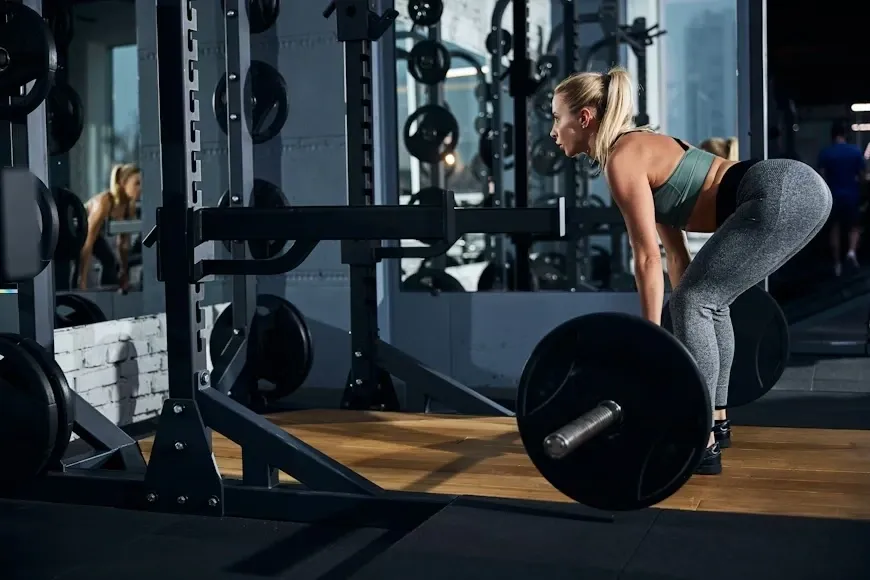
The menopausal transition can accelerate bone loss, while age-related muscle loss can reduce strength, balance, and independence. Resistance training makes women’s fitness for healthy aging more effective by loading bone and giving muscle a reason to adapt.
A major meta-analysis of exercise and bone density supports exercise for preserving or improving bone mineral density in postmenopausal women, although results vary by skeletal site and program.
Higher-load programs may be useful when taught and supervised appropriately. The LIFTMOR trial found that brief, supervised high-intensity resistance and impact training improved bone and functional outcomes in postmenopausal women with low bone mass.
That does not mean every woman must lift at 85% of her maximum. Beginners can progress with lighter loads while learning technique, then increase resistance gradually.
Build Around Major Movement Patterns
Train two or three times per week using:
- Squat or leg press
- Hip hinge or hip thrust
- Row or pulldown
- Chest or overhead press
- Step-up or split squat
- Carry and balance work
Aim for challenging sets that leave one to three controlled repetitions available. Add resistance or repetitions when technique remains consistent.
Protein supports recovery, but 1.0–1.1 grams per pound equals approximately 2.2–2.4 grams per kilogram and is more than most women need.
Many active adults do well within approximately 1.4–2.0 grams per kilogram per day, adjusted for body size, calorie intake, health status, and goals. BeeFit’s Protein for Muscle Growth guide provides a more complete explanation.
For menopause-specific programming, read Build Muscle After Menopause.
Women’s Fitness for Healthy Aging FAQ
Is Jump Training Safe With Osteopenia?
It may be appropriate for some women, but fracture history, balance, joint health, technique, and medical conditions also matter.
Begin with professional guidance and use lower-impact loading when jumping is unsuitable. A diagnosis of osteopenia should not automatically lead someone to begin unsupervised box jumps.
Is HIIT Better Than Moderate Cardio?
Not universally. HIIT is time-efficient and can improve aerobic fitness, while moderate cardio is often easier to repeat and recover from.
A combination usually provides more flexibility than choosing only one. Moderate activity can build aerobic volume, while occasional intervals provide a higher-intensity stimulus.
How Should a Beginner Start?
Begin with two full-body strength sessions, regular walking, and one optional short interval session each week.
Add impact work only after establishing basic strength, balance, and landing control. BeeFit’s Women’s Fitness After 40 and Strength Training After 40 guides provide safer starting frameworks.
How to Build a Women’s Fitness for Healthy Aging Plan
Women’s fitness for healthy aging should build the ability to lift, move quickly, climb, carry, recover, and remain independent.
Impact exercise can support bone, HIIT can improve fitness, and resistance training protects muscle and strength. None of these methods needs to dominate the week.
Start with consistent strength training and weight-bearing movement. Then add jumps or vigorous intervals when they fit your health, experience, and recovery.
Related BeeFit Guides
- Women’s Fitness After 40
- Strength Training After 40
- HIIT vs. LISS
- Build Muscle After Menopause
- Protein for Muscle Growth
This article is for informational and educational purposes only and is not a substitute for medical advice, diagnosis, or individualized exercise programming. Consult a qualified healthcare professional before beginning impact or vigorous exercise if you have osteoporosis, previous fractures, cardiovascular disease, pelvic-floor symptoms, joint pain, or other medical concerns.
Discover more from BeeFit: Fitness & Wellness
Subscribe to get the latest posts sent to your email.
Share :