British oatmeal is less about a secret ingredient and more about a better method: use oats with different textures, cook them gently, season them early, and finish the bowl with enough protein and fat to make breakfast actually last.
Quick Take
- Mixing steel-cut and rolled oats gives porridge a creamier base with a chewy bite, so it feels more substantial than instant oatmeal.
- A milk-and-water blend keeps the bowl creamy without making it heavy or prone to scorching.
- Adding salt at the start improves flavor, which can reduce the need for extra sugar later.
- For better satiety, top your bowl with protein, fiber-rich fruit, and a small amount of healthy fat.
Why British Oatmeal Feels More Satisfying
The biggest difference between a forgettable bowl of oats and a satisfying one is structure. Instant oats cook fast because they are more processed, thinner, and quicker to hydrate. That convenience creates a softer, more uniform texture that many people read as mushy.
Steel-cut oats are chopped oat groats. Rolled oats are steamed and flattened. When you combine them, the rolled oats soften and thicken the liquid while the steel-cut oats keep some chew. The result is closer to British porridge: creamy, but not gluey.
Processing also matters nutritionally. In a randomized clinical trial on oat processing, less processed oats produced lower glycemic and insulin responses than more processed oat products, even when portions were matched for available carbohydrate. That does not mean steel-cut oats are magic, but it does support choosing less processed oats when you want steadier energy from breakfast. oat processing and glycemic response
For most people, the practical advantage is simple: British oatmeal takes longer than instant oats, but it usually tastes better, has more texture, and gives you a stronger base for a balanced meal.
The Best Oat Ratio for British Oatmeal Texture
Start with a 1:1 mix of steel-cut oats and old-fashioned rolled oats. For one generous serving, use 1/4 cup steel-cut oats and 1/4 cup rolled oats. For two servings, double it.
This ratio works because the two oats do different jobs. Steel-cut oats bring bite and a slower-cooking texture. Rolled oats break down enough to thicken the pot. If you use only steel-cut oats, breakfast takes longer and may feel more grain-like. If you use only rolled oats, the bowl can become soft quickly.
Avoid quick oats or instant oats for this particular method. They can still be useful when you need breakfast in two minutes, but they will not create the same layered texture. If instant oatmeal is your only option, improve it with Greek yogurt, nuts, berries, or seeds rather than trying to simmer it longer.
If your breakfast goal is more protein rather than just better oat texture, BeeFit’s guide to high-protein breakfast ideas can help you build the rest of the meal around your oats.
Use Milk and Water, Not One or the Other
British-style porridge often uses a blend of water and milk. A good starting point is 1 cup water plus 1 cup milk for 1/2 cup total oats. The water helps the oats hydrate evenly. The milk adds body, flavor, and a little protein, depending on the type you use.
Cooking oats entirely in milk can taste rich, but it is easier to scorch, especially if you are multitasking. Cooking them entirely in water is cleaner and lighter, but it can taste flat unless you are careful with salt and toppings. The half-and-half liquid approach is the middle ground.
Dairy milk, soy milk, oat milk, and cashew milk can all work. If you want more protein, dairy milk and soy milk are usually stronger choices than almond or oat milk. If you prefer plant-based options, choose unsweetened versions so the sweetness of the final bowl stays under your control.
Bring the liquid to a gentle simmer before adding the oats. Stir as the oats go in so they disperse instead of clumping at the bottom. Once the pot returns to a light simmer, reduce the heat and let time do the work.
Salt Early and Cook Gently
A pinch of salt belongs in the pot, not only on top. Added early, it seasons the oats as they hydrate and makes the finished bowl taste rounder. You should not taste obvious saltiness; you should taste less blandness.
For one to two servings, use about 1/8 to 1/4 teaspoon of kosher or sea salt, depending on your taste and sodium needs. If a clinician has advised you to limit sodium, use the smaller amount or ask what fits your plan.
Cook the oat mixture for about 12 to 18 minutes over low to medium-low heat. Stir occasionally, not constantly. The rolled oats should soften into the liquid, and the steel-cut oats should become tender with a slight chew.
If the pot thickens before the steel-cut oats are ready, add a splash of water or milk. If it looks too loose near the end, keep it uncovered for another minute or two. Then turn off the heat, cover the pot, and let it stand for two minutes. That short rest improves thickness without overcooking.
Build a Bowl That Keeps You Full
Plain porridge is still mostly a carbohydrate-rich breakfast. That is not a problem, but it explains why some people feel hungry again quickly after a large bowl. Oats bring fiber and slow-digesting carbohydrate; toppings can add the protein and fat that make the meal more complete.
Oats are also known for beta-glucan, a soluble fiber associated with heart-health benefits when eaten regularly as part of an appropriate diet. The FDA allows certain oat products to carry a heart-health claim when they provide enough beta-glucan soluble fiber and fit the broader dietary criteria. FDA oat beta-glucan health claim
To make the bowl more filling, use a simple three-part topping rule:
- Protein: Greek yogurt, cottage cheese, milk, soy milk, hemp seeds, or a protein powder stirred in after cooking.
- Fiber and color: berries, sliced apple, pear, banana, chia seeds, or ground flaxseed.
- Fat and crunch: walnuts, almonds, peanut butter, almond butter, pumpkin seeds, or tahini.
Protein is especially useful at breakfast because higher-protein morning meals tend to improve fullness compared with lower-protein options. Reviews of breakfast research suggest that meals with roughly 30 grams of protein can produce stronger satiety responses than skipping breakfast or eating lower-protein meals, though individual appetite and calorie needs vary. breakfast protein and satiety research
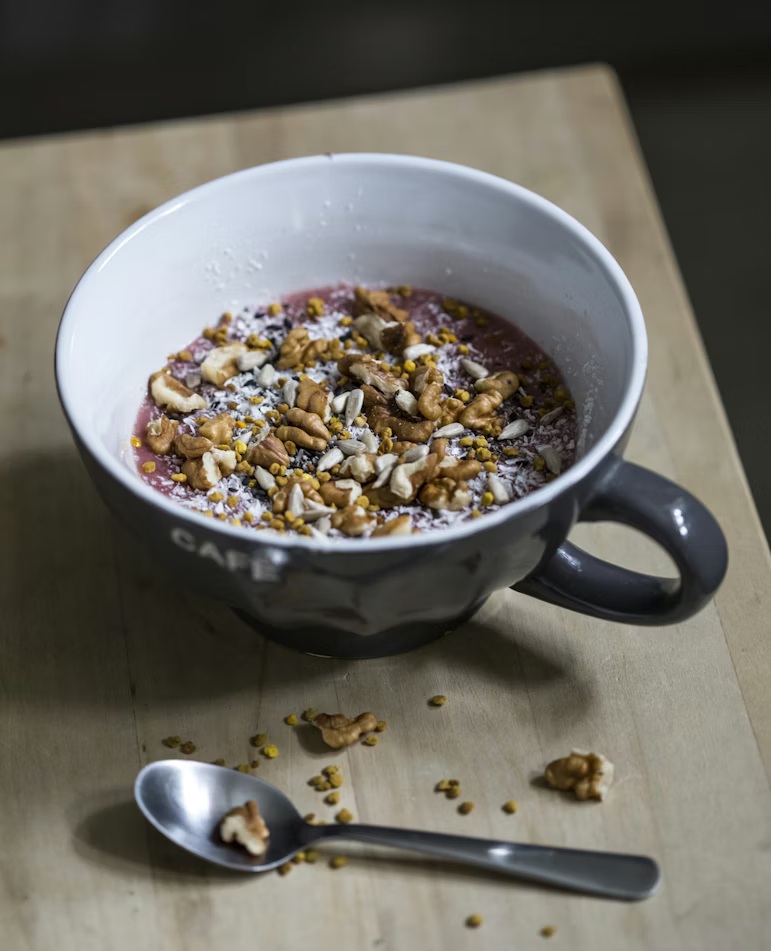
A practical bowl might use oats cooked with dairy or soy milk, then topped with Greek yogurt, blueberries, and walnuts. Another option is banana, peanut butter, cinnamon, and hemp seeds. For more help spacing protein across the day, see BeeFit’s guide to protein timing.
Make-Ahead Tips and Common Mistakes
British oatmeal reheats well, but it thickens in the refrigerator. Cook a larger batch, cool it, and store it in a sealed container for up to four days. Reheat with a splash of milk or water, stirring until creamy again.
The most common mistake is using too much heat. Oats foam, stick, and boil over when the pot is too hot or too small. Use a larger saucepan than seems necessary and keep the simmer gentle. A few bubbles are enough.
Another mistake is adding protein powder while the oats are still aggressively hot. That can make some powders clump or turn gritty. Let the pot cool for a minute, then stir the powder in with extra liquid until smooth.
If you have celiac disease or a significant gluten sensitivity, choose oats labeled gluten-free and follow your healthcare provider’s guidance. Oats are naturally gluten-free, but cross-contact with wheat, barley, or rye can happen during growing, transport, or processing. The FDA’s gluten-free labeling rule sets standards for products using that claim. FDA gluten-free labeling guidance
FAQ
Can I make British oatmeal overnight?
You can soak the oats overnight to shorten cooking time, but this method is best cooked, not eaten cold. Soaking the steel-cut oats in the milk-water mixture can reduce morning simmering by a few minutes.
What if I only have rolled oats?
Use them. Cook rolled oats gently with the same milk-water blend and salt. The texture will be softer, but the bowl can still be satisfying if you add protein, fruit, and nuts or seeds.
How do I make British oatmeal higher in protein without powder?
Cook it with dairy or soy milk, then top it with Greek yogurt or cottage cheese. Hemp seeds, chia seeds, and chopped nuts add smaller amounts of protein plus texture and fat.
The Bottom Line
British oatmeal works because it improves the parts of porridge that matter most: texture, flavor, and staying power. Mix steel-cut and rolled oats, cook them with milk and water, salt the pot early, and finish with toppings that bring protein, fiber, and fat. It is still a simple breakfast, just built with more care.
This article is for informational purposes only and is not a substitute for professional medical advice, diagnosis, or treatment. If you have diabetes, celiac disease, kidney disease, food allergies, or a medically prescribed diet, ask your physician or registered dietitian how oatmeal fits your needs.
Discover more from BeeFit: Fitness & Wellness
Subscribe to get the latest posts sent to your email.
Share :