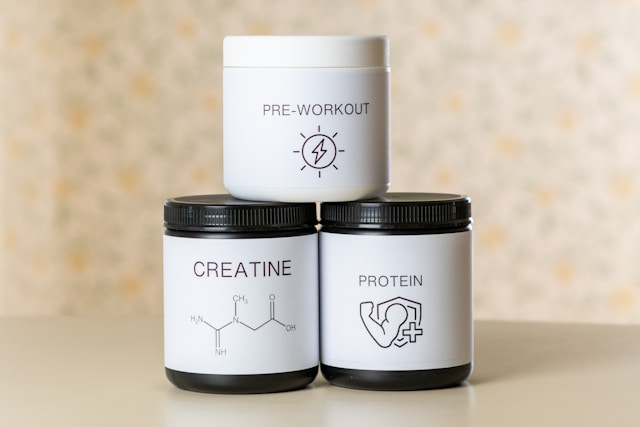
Beginner supplements can help, but they are not the foundation of progress. If you are new to lifting, your first priorities are still training consistently, eating enough protein and total calories for your goal, sleeping well, and recovering between sessions. Supplements only deserve your money when they solve a real problem.
Quick Take
- Protein powder is convenient, not mandatory. Use it when whole foods do not get you to your protein target.
- Creatine monohydrate is the strongest first performance pick for most healthy beginners who strength train.
- Omega-3s make sense if you rarely eat fatty fish, but they are general health support rather than a guaranteed muscle-building tool.
- A basic multivitamin can help cover small diet gaps, but it will not compensate for poor nutrition.
- Skip fat burners, test boosters, detox products, and mystery blends unless there is a specific, evidence-based reason.
What Beginner Supplements Can and Cannot Do
The supplement aisle makes every tub feel urgent: pre-workout, BCAAs, greens powders, fat burners, testosterone boosters, recovery blends, sleep formulas, and more. That pressure is strongest when you are new, because you may not yet know which products matter and which mostly sell hope.
A better rule is simple: do not buy a supplement until you can name the problem it solves. “I am not reaching my protein target” is a real problem. “I want faster results” is too vague to justify a cart full of products.
For most beginners, the useful shortlist is small: protein powder if needed, creatine monohydrate, omega-3s if fish intake is low, and possibly a basic multivitamin. Even then, these beginner supplements work best alongside a repeatable training plan and a diet you can sustain.
Protein Powder: Buy It When Food Falls Short
You do not need protein powder to build muscle. You need enough total protein. The International Society of Sports Nutrition’s protein and exercise position stand suggests that 1.4–2.0 grams of protein per kilogram of body weight per day is enough for most exercising people who want to build or maintain muscle.
For a 70 kg person, that range is about 98–140 grams per day. Many beginners can hit that with eggs, Greek yogurt, chicken, fish, tofu, tempeh, lean meat, lentils, or higher-protein dairy. Others struggle because they skip breakfast, rely on low-protein convenience foods, train while dieting, or simply have a busy schedule.
That is where protein powder earns its place. One scoop usually provides about 20–30 grams of protein with little prep. Whey is a strong option if you tolerate dairy. Soy, pea, rice, or blended plant proteins can also work well, especially if you prefer plant-based eating.
Use protein powder practically:
- Build meals around whole-food protein first.
- Use a shake when breakfast, lunch, or post-workout food is not realistic.
- Choose a product with a simple ingredient list and enough protein per serving to match your goal.
- Remember that protein still counts toward your total daily calories.
If fat loss is your goal, protein may matter even more because it helps preserve lean mass during a calorie deficit. BeeFit’s high-protein meal plan for fat loss and muscle gain gives you a food-first way to plan your day before leaning on shakes.
Creatine Monohydrate: The First Performance Supplement to Consider
If you buy only one performance supplement, creatine monohydrate is usually the best starting point. It helps your muscles rapidly recycle energy during short, hard efforts — the kind used in lifting, sprinting, jumping, and repeated high-intensity sets.
The benefit is not dramatic in one workout. You might complete one extra rep, keep bar speed slightly higher, or recover a little better between hard sets. Over months of consistent training, that small edge can support better strength and muscle gain.
Creatine monohydrate is also one of the most researched supplements for strength training. The International Society of Sports Nutrition’s creatine position stand describes it as effective for high-intensity exercise performance and generally safe for healthy people when used appropriately.
Simple use beats complicated loading plans:
- Take 3–5 grams of creatine monohydrate daily.
- Timing is not important; consistency is.
- Mix it into water, coffee, a smoothie, or a protein shake.
- Skip expensive forms unless you have a specific reason. Monohydrate is the standard.
Some people gain a small amount of scale weight from extra water stored inside muscle. That is not the same as gaining body fat. If you have kidney disease, are pregnant, take medications that affect kidney function, or have a medical condition, ask a qualified clinician before using creatine or any other supplement.
Omega-3s and Multivitamins: Useful Only in the Right Context
Omega-3 supplements are often oversold as recovery products. EPA and DHA, the main long-chain omega-3 fats in fish oil and algae oil, play roles in normal health and inflammation regulation. However, they should not be presented as a guaranteed soreness fix or strength booster.
The best first move is food. Fatty fish such as salmon, sardines, trout, herring, and mackerel provide EPA and DHA along with protein and other nutrients. The NIH Office of Dietary Supplements notes that seafood as part of a balanced diet is associated with heart-health benefits, especially when it replaces less healthy foods.
If you rarely eat fish, an omega-3 supplement may be reasonable. Look at the EPA plus DHA amount, not just “fish oil” on the front label. People taking blood thinners, preparing for surgery, managing bleeding disorders, or using high-dose omega-3s should check with a clinician first.
A multivitamin belongs in the same “maybe useful, not magic” category. It can help cover small gaps if your diet is inconsistent, your food variety is low, or you avoid major food groups. It will not make you stronger, replace vegetables, or rescue a poor recovery routine.
The NIH’s multivitamin and mineral supplement fact sheet is a helpful reminder that these products vary widely. Choose a basic formula close to daily values rather than a mega-dose product that gives huge amounts of several nutrients without a clear need.
If you are specifically struggling with soreness, do not expect omega-3s or a multivitamin to solve it. Training volume, sleep, hydration, total calories, and protein matter more. BeeFit’s guide to muscle recovery supplements that actually work can help you separate recovery basics from optional add-ons.
Beginner Supplements: Buy First, Maybe, or Skip
A short comparison can save more money than a long shopping list. Use this filter before you start building a stack.
| Category | Best fit | What to watch |
|---|---|---|
| Buy first if needed | Protein powder when food intake falls short; creatine if you lift consistently. | Do not let shakes replace balanced meals or assume creatine works without training effort. |
| Maybe useful | Omega-3s if fatty fish intake is low; a basic multivitamin if diet variety is limited. | These support gaps; they are not direct muscle-building shortcuts. |
| Usually skip | Fat burners, test boosters, detox products, BCAAs, and under-labeled pre-workouts. | Many are underdosed, stimulant-heavy, unnecessary, or hard to evaluate. |
Proprietary blend pre-workouts deserve extra caution. Caffeine can improve alertness and workout energy, but you should know exactly how much you are taking. If the label hides the dose, skip it. If you use caffeine, start low and avoid taking it late in the day.
BCAAs are another common beginner purchase that usually adds little when protein intake is already adequate. Whole protein provides BCAAs plus the other essential amino acids your body needs for muscle repair. For a deeper breakdown, see BeeFit’s guide on why many BCAA recovery supplements are incomplete.
Fat burners and testosterone boosters are rarely smart first purchases. Fat loss still comes from a sustainable calorie deficit, adequate protein, strength training, and time. If you have symptoms of low testosterone, get medical testing rather than guessing with an over-the-counter blend.
How to Buy Beginner Supplements Without Getting Burned
Quality matters because manufacturers do not need prescription-drug-style approval before supplements reach the shelf. A clean label, exact doses, and third-party testing are more useful than aggressive branding.
Look for certifications such as NSF Certified for Sport, Informed Sport, or USP Verified when possible. NSF explains that its Certified for Sport program helps reduce the risk that a sports supplement contains substances banned by many major athletic organizations.
Use this buying filter before spending money:
- Can you identify the exact ingredient and dose?
- Does the supplement solve a real diet, performance, or recovery gap?
- Is there credible evidence for that ingredient, not just brand marketing?
- Has the product been third-party tested?
- Can you afford it without cutting into food quality, gym access, or sleep habits?
If the answer is no, wait. The most useful beginner supplements are usually boring, affordable, and easy to explain.
FAQ: Beginner Supplement Questions
What supplement should a beginner buy first?
Start with the gap. If you cannot reach your protein target with food, buy protein powder first. If protein is already handled and you strength train consistently, creatine monohydrate is the best performance add-on.
Can I take protein, creatine, omega-3s, and a multivitamin together?
Many healthy adults can, but you do not need to start everything at once. Add one product at a time so you can tell whether it helps, whether it causes side effects, and whether it is worth keeping.
Do I need supplements before my first month in the gym?
No. Train consistently for two to four weeks, track your meals loosely, and see what is actually missing. Supplements should support your routine, not become the routine.
Bottom Line
The best beginner supplements are the ones that solve a specific problem: protein powder for missed protein, creatine for a small strength and power edge, omega-3s when fatty fish intake is low, and a basic multivitamin when diet variety is limited.
Do not buy the whole stack on day one. Start with training consistency, food quality, and sleep. Then add one supplement only when the reason is clear.
This article is for informational purposes only and is not a substitute for professional medical advice, diagnosis, or treatment. Always consult with a qualified healthcare provider before starting any new supplement regimen, especially if you have pre-existing health conditions, are pregnant or nursing, or are taking medications.
Discover more from BeeFit: Fitness & Wellness
Subscribe to get the latest posts sent to your email.
Share :