CGMs for healthy people promise something nutrition advice has rarely been able to offer: real-time information about how your own body responds to meals, exercise, sleep, and stress.
That information can be useful. It can also be easy to misinterpret. A temporary glucose rise does not automatically make a food unhealthy, and a smooth glucose graph does not prove that a diet is nutritionally complete.
The real question is not whether the technology works. It is whether the data helps you make better decisions.
Quick Take
- People can have different glucose responses to the same meal.
- FDA-cleared over-the-counter CGMs are available to people who do not use insulin.
- The long-term health value of CGMs for healthy people remains uncertain.
- No smartwatch or smart ring is FDA-authorized to measure glucose independently without piercing the skin.
- AI nutrition apps may identify useful patterns, but their recommendations should be treated as experiments—not prescriptions.
- Sleep, food quality, activity, protein, fiber, and sustainable eating habits still matter more than achieving a perfectly flat glucose graph.
How Do CGMs for Healthy People Predict Food Responses?
To a meaningful extent, yes.
A landmark 2015 study published in Cell followed approximately 800 adults while collecting glucose readings, meal information, physical-activity data, blood measurements, body characteristics, and gut-microbiome samples.
Researchers used this information to build a machine-learning model that predicted individual post-meal glucose responses. The results showed substantial variation: two people could eat the same meal and experience noticeably different glucose patterns.
A small dietary-intervention phase also suggested that personalized meal recommendations could reduce post-meal glucose responses. The study helped establish the scientific basis for precision nutrition.
But it did not prove that general nutrition advice is obsolete.
Vegetables, whole fruit, minimally processed foods, adequate protein, fiber, and appropriate calorie intake remain valuable even when individuals respond differently to specific meals. Personal data can refine those principles; it does not replace them.
For a broader eating framework that does not depend on constant tracking, read BeeFit’s Best Diets guide.
Are CGMs for Healthy People Actually Useful?
They can be useful for answering specific questions, but they are not essential for everyone.
The original article stated that CGMs were FDA-approved only for people with diabetes. That is no longer accurate.
The FDA has cleared over-the-counter systems for people who do not use insulin. Abbott’s Lingo system, for example, is intended for adults who want to understand how food, exercise, and daily behavior affect glucose. In June 2026, the FDA also expanded Dexcom Stelo clearance to people age two and older who do not use insulin.
That does not mean every healthy person needs one.
CGMs measure glucose in interstitial fluid rather than directly from a blood sample. The readings are useful for identifying trends, but they can lag when glucose is changing quickly and should not be interpreted as a standalone medical diagnosis.
Research published in 2025 found that CGM metrics were strongly associated with HbA1c in people with type 2 diabetes but showed much weaker associations in people with prediabetes or normal glucose levels. In people without diabetes, a seemingly good or bad CGM score may therefore tell you less about long-term metabolic health than marketing suggests.
Another study found poor agreement among expert clinicians when they were asked to interpret challenging CGM reports from people without diabetes. That uncertainty shows how difficult it can be for consumers to assign meaning to every rise and fall.
When Are CGMs for Healthy People Worth Trying?
A short, focused trial may be useful when you have a clear question, such as:
- Does the same breakfast repeatedly produce an unusually large response?
- Does poor sleep change your glucose pattern the following day?
- Does walking after dinner affect your response?
- Does pairing a carbohydrate with protein or fiber change the pattern?
- Do certain meal times consistently produce different results?
The goal should be to learn something specific—not to optimize every minute of the day.
What Should Healthy People Avoid With CGM Data?
Do not label a food “bad” because of one reading.
Whole fruit, oats, beans, potatoes, and whole grains can raise glucose while still providing fiber, vitamins, minerals, and other beneficial compounds. The nutritional value of a food cannot be judged from one glucose curve.
For example, removing fruit simply because it creates a temporary rise may reduce diet quality without producing a meaningful health benefit. BeeFit’s guide to fruit and weight loss explains why whole fruit should not be treated like refined sugar.
Also avoid trying to maintain a completely flat glucose line. Glucose is expected to rise after eating carbohydrates. The more useful questions are whether patterns are repeated, whether readings align with validated laboratory results, and whether the changes you make improve your overall diet.
If your main issue is frequent added sugar rather than a diagnosed glucose disorder, BeeFit’s 30-Day Eat Less Sugar Challenge is a more practical and less expensive place to start.
Can a Smartwatch or Smart Ring Measure Blood Sugar?
Not independently.
The FDA has not authorized, cleared, or approved any smartwatch or smart ring that claims to measure or estimate glucose on its own without piercing the skin.
Products making those claims may provide inaccurate readings that could lead to inappropriate food, medication, or medical decisions.
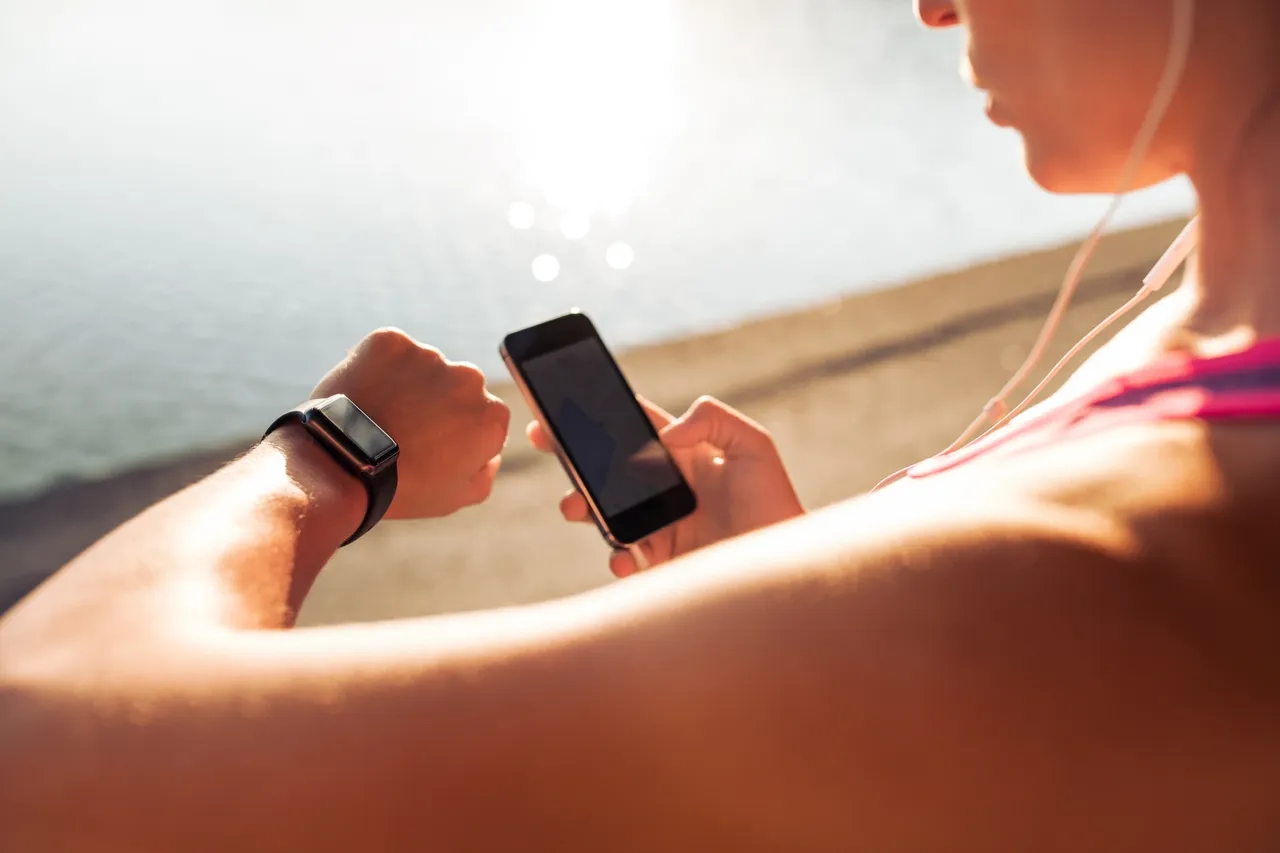
A smartwatch can display data transmitted by an FDA-authorized CGM. In that situation, the sensor inserted under the skin generates the glucose reading; the watch simply displays the information.
That distinction matters:
- Authorized CGM connected to a watch: legitimate glucose sensor with watch display
- Watch or ring claiming direct non-invasive glucose measurement: not FDA-authorized
Do not rely on marketplace labels such as “medical grade,” “FDA registered,” or “health monitoring” as proof that a device is authorized to measure glucose.
Do AI Nutrition Apps Know What You Should Eat?
They can identify patterns, but they cannot determine the perfect diet for you.
AI nutrition apps may combine:
- CGM readings
- Meal logs
- Exercise and step data
- Sleep information
- Heart-rate data
- Body measurements
- In some cases, microbiome information
The software can then look for associations that would be difficult to notice manually. It might find that one breakfast produces different results after poor sleep, or that walking after a meal consistently changes the glucose curve.
That can be useful. But the recommendation is only as reliable as the data, algorithm, and assumptions behind it.
An app may also focus too heavily on glucose while overlooking:
- Protein adequacy
- Fiber
- Vitamins and minerals
- Total calorie intake
- Satiety
- Training performance
- Food enjoyment
- Long-term sustainability
A meal that creates a smaller glucose rise is not automatically the healthier meal.
Use AI nutrition tools to generate questions you can test. Do not treat their scores as medical diagnoses or rigid food rules.
How Can Healthy People Use CGMs Without Becoming Obsessed?
Keep the experiment narrow.
Choose one or two behaviors to examine over a limited period. Compare repeated patterns rather than individual readings, and avoid changing several variables at once.
A sensible approach might look like this:
- Eat your usual meals for several days.
- Identify one repeated pattern worth examining.
- Change one variable, such as portion size, meal order, protein, fiber, or post-meal movement.
- Repeat the meal more than once.
- Decide whether the change is useful, realistic, and nutritionally sensible.
Do not repeatedly restrict foods to chase a better app score. The FDA specifically advises people with a history of disordered eating or eating disorders to speak with a healthcare professional before using certain OTC CGMs.
Sleep and stress can also influence eating behavior and glucose patterns. BeeFit’s Sleep and Fitness guide explains why recovery data should be considered alongside nutrition and training.
CGMs for Healthy People FAQ
Can CGMs for Healthy People Detect Diabetes?
No. CGM readings can reveal patterns, but diabetes diagnosis should be based on validated clinical testing such as fasting plasma glucose, HbA1c, or an oral glucose-tolerance test.
Speak with a healthcare professional if your readings repeatedly appear unusual or you have symptoms or risk factors.
Are Over-the-Counter CGMs Safe?
FDA-cleared systems are generally safe when used according to their instructions. Possible problems include skin irritation, discomfort, local infection, sensor detachment, and readings that do not match how you feel.
Follow the manufacturer’s instructions and seek medical guidance before acting on unexpected results.
Should I Stop Eating a Food That Spikes My Glucose?
Not based on one reading.
Consider the portion, food combination, activity, sleep, time of day, and the food’s overall nutritional value. Repeat the meal before assuming the result is meaningful.
Do I Need to Pair Every Carbohydrate With Protein or Fat?
No. Pairing foods can sometimes change digestion, fullness, and the glucose response, but it should not become another rigid eating rule.
Focus first on balanced meals, adequate protein, fiber-rich foods, and portions that fit your needs.
Can AI Nutrition Replace a Dietitian or Doctor?
No. An app can organize information and identify possible patterns. It cannot diagnose a medical condition, understand your complete clinical history, or replace individualized care.
The Bottom Line on CGMs for Healthy People
CGMs for healthy people are neither a miracle nor automatically a scam.
They can reveal interesting patterns and may help some users understand how meals, exercise, sleep, and daily routines affect glucose. However, the long-term health meaning of those patterns is still less established in people without diabetes.
Use CGM and AI data to investigate specific questions—not to divide foods into good and bad or chase a perfectly flat graph.
The foundation remains the same: eat enough protein and fiber, choose mostly nutrient-dense foods, stay active, sleep consistently, and follow an eating pattern you can maintain.
For a broader plan built around your fitness goals, lifestyle, nutrition preferences, and schedule, use the BeeFit AI Fitness Planner.
Related BeeFit Guides
- Best Diets: What Actually Works for Long-Term Health
- 30-Day Eat Less Sugar Challenge
- Fruit and Weight Loss: Does Sugar in Fruit Make You Fat?
- Nutrition After 40
- Sleep and Fitness
- BeeFit AI Fitness Planner
Research Sources
- Personalized Nutrition by Prediction of Glycemic Responses
- FDA Clearance of OTC Continuous Glucose Monitors
- FDA Warning About Smartwatches and Smart Rings
- CGM Metrics and HbA1c in People Without Diabetes
- Expert Interpretation of CGM Reports in People Without Diabetes
This article is for informational purposes only and does not constitute medical or nutritional advice. Consult a qualified healthcare professional before using CGM results to make significant dietary, medication, or health decisions.
Discover more from BeeFit: Fitness & Wellness
Subscribe to get the latest posts sent to your email.
Share :