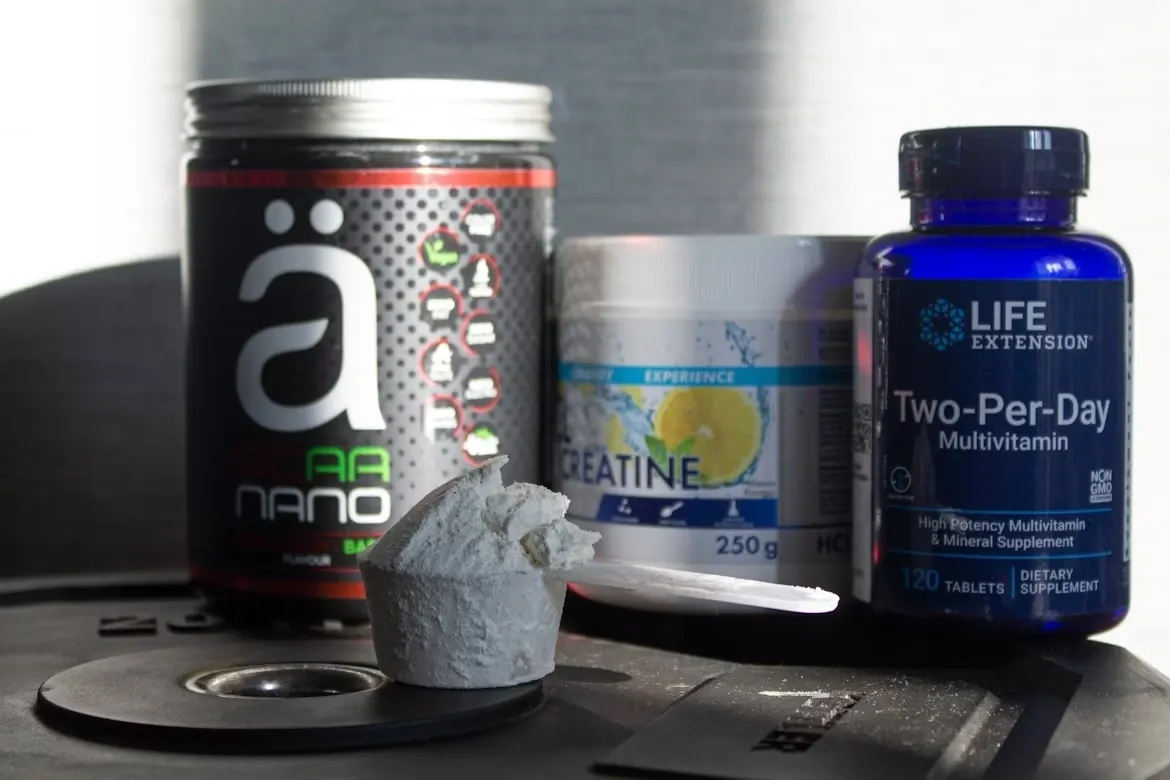
The debate over BCAAs vs EAAs often makes amino-acid supplements sound more complicated than they need to be. BCAAs can influence muscle-building signals, but EAAs and complete proteins provide a fuller set of materials for repair and adaptation.
Quick Take
- BCAAs are leucine, isoleucine, and valine—three of the nine essential amino acids.
- BCAAs alone generally stimulate a smaller muscle-protein-synthesis response than EAAs or complete protein.
- EAAs are the more complete amino-acid supplement, but whole protein is sufficient for most people.
- Evidence that BCAAs protect muscle during fasted training is limited.
- Daily protein intake and resistance training matter more than choosing the perfect amino-acid powder.
BCAAs vs EAAs: What Is the Difference?
Essential amino acids are the nine amino acids the body cannot produce in sufficient amounts. BCAAs are a subgroup containing only three: leucine, isoleucine, and valine.
Leucine helps activate signaling involved in muscle-protein synthesis. However, building new muscle protein requires access to all essential amino acids.
| Comparison | BCAAs | EAAs | Complete protein |
|---|---|---|---|
| Amino acids included | Three | All nine essentials | Essentials plus nonessentials |
| Muscle-building response | Limited alone | More complete | Strong and practical |
| Calories | Usually low | Usually low | Higher |
| Fullness | Minimal | Minimal | Usually greater |
| Best use | Limited situations | Low-appetite or low-calorie situations | Daily foundation |
A 2024 review found that BCAAs can temporarily stimulate muscle-protein synthesis, but the response is smaller than after consuming a complete protein source. The problem is not that the body immediately stops building muscle; it is that isolated BCAAs provide a less complete nutritional stimulus.
Are EAAs Better Than BCAAs for Muscle Recovery?
When comparing isolated amino-acid products, EAAs are generally the more rational choice because they provide all nine essential amino acids.
However, “better” depends on the outcome. EAAs can stimulate muscle-protein synthesis, but evidence does not establish that every EAA supplement improves soreness, strength, or long-term muscle growth.
Resistance training, total calories, and daily protein intake remain more important.
For most exercising adults, complete protein sources such as dairy, eggs, fish, meat, soy, tofu, or an appropriately formulated plant blend already provide EAAs and BCAAs.
BeeFit’s Protein for Muscle Growth explains how much daily protein matters more than buying a specific amino-acid formula.
Do BCAAs Help During Fasted Training?
The proposed benefit is that BCAAs may provide amino acids during training when no meal has recently been consumed. Some studies have reported changes in soreness or markers of muscle damage, but results for performance, muscle preservation, and long-term adaptation are inconsistent.
BCAAs should not be treated as proven protection against muscle loss during fasted exercise. They also contain amino acids and therefore do not preserve a strict zero-calorie or metabolic fast.
When fasted training is followed by a normal protein-containing meal, most recreational athletes are unlikely to gain a meaningful advantage from an intra-workout BCAA drink.
When training is prolonged, appetite is poor, or calories must remain low, EAAs may offer a more complete option. Otherwise, water followed by a balanced meal is usually sufficient.
Do You Need BCAAs, EAAs, or Protein Powder?
Most people eating enough protein do not need isolated amino acids.
A supplement may be useful when:
- Appetite is low
- Solid food is difficult around training
- Calorie intake is tightly restricted
- Meals are separated by long periods
- A clinician recommends an EAA product
- A convenient protein source is needed
Protein powder usually offers more nutrition and fullness than an amino-acid drink. Whey, soy, pea blends, and other complete powders can all be effective when the dose and total daily intake are appropriate.
Plant proteins should not automatically be described as incomplete. Most contain all essential amino acids but may provide lower amounts of one or more. Eating varied foods across the day—or using soy, pea, or blended plant protein—can provide an effective amino-acid profile.
Read BeeFit’s Plant vs. Animal Protein comparison for a deeper analysis.
How Should You Choose a Recovery Supplement?
Start with the underlying need.
Choose complete protein when you need help meeting your daily protein target.
Consider EAAs when you need a low-calorie, easily digested amino-acid source and cannot tolerate or access a protein-containing meal.
Choose BCAAs only when you understand that the product offers three amino acids rather than a complete recovery formula.
For many active adults, approximately 20–40 grams of complete protein at a meal is a practical range. This is not a strict absorption limit. Total daily intake, body size, age, goals, and meal frequency all affect the appropriate amount.
Timing is also flexible. Eating protein within a few hours before or after training is generally sufficient. Consuming it sooner becomes more useful after fasted training or when the previous meal was several hours earlier.
BeeFit’s Protein Timing guide explains how to plan intake without chasing a narrow anabolic window.
BCAAs vs EAAs FAQ
Are BCAAs Useless?
No. They are essential amino acids naturally found in protein and may influence signaling and some recovery measures. The concern is paying for isolated BCAAs when complete protein or EAAs would provide a broader benefit.
How Much EAA Should You Take?
There is no universal dosage. Many products provide approximately 8–15 grams, but the right amount depends on formulation, leucine content, diet, age, and purpose. Follow the label and avoid treating the largest dose as automatically better.
Can EAAs Replace Meals?
No. EAAs provide amino acids but little or no carbohydrate, fat, fiber, vitamins, or minerals. They are a supplement rather than a complete meal.
The Bottom Line on BCAAs vs EAAs
In the BCAAs vs EAAs comparison, EAAs provide the more complete amino-acid profile. Complete protein remains the stronger everyday foundation because it supplies all essential amino acids alongside additional nutrition.
BCAAs are not useless, but their benefits are often overstated. Before buying either product, confirm that resistance training, total calories, and daily protein are already in place.
For a recovery strategy based on your training, food preferences, and schedule, use the BeeFit AI Fitness Planner.
Related BeeFit Guides
Research Sources
- BCAAs and Muscle-Protein Synthesis: 2024 Review
- Essential Amino-Acid Supplementation Review
- ISSN Position Stand on Protein and Exercise
- Plant-Protein Amino-Acid Composition
This article is for informational purposes only and is not a substitute for medical or nutrition advice. Consult a qualified professional before using amino-acid supplements if you have kidney or liver disease, are pregnant or nursing, take medication, or have a medical condition affecting protein metabolism.
Discover more from BeeFit: Fitness & Wellness
Subscribe to get the latest posts sent to your email.
Share :