GLP-1 weight loss can be powerful, but it does not automatically make people more active, stronger, or healthier in every way. New wearable-data research suggests some people actually move less after starting GLP-1 medications.
That matters because weight loss is not just about seeing a smaller number on the scale. The real goal is better body composition: more fat lost, more muscle preserved, and more physical function protected.
Quick Take
- GLP-1 weight loss can reduce appetite and body weight, but some of that weight loss may include lean mass.
- New ENDO 2026 research found that adults starting GLP-1 medications became less physically active after treatment began.
- Daily steps and moderate-to-vigorous activity both decreased in the wearable-data study.
- Resistance training cannot be an afterthought during GLP-1 weight loss.
- Protein, strength training, walking, hydration, and recovery are the core muscle-preservation tools.
- The goal is not just to lose weight. It is to lose fat while keeping strength, muscle, and mobility.
If you read BeeFit’s new guide on Strength Training After 40 Rules, this is the next layer: strength training becomes even more important when weight is dropping quickly.
Why GLP-1 Weight Loss Needs a Muscle Plan
GLP-1 receptor agonists are medications that affect appetite, blood sugar, and digestion. Some are used for type 2 diabetes, and some are prescribed for obesity or weight management. Cleveland Clinic explains that GLP-1 agonists can help manage blood sugar, and some can also help treat obesity: Cleveland Clinic GLP-1 overview.
But weight loss has a hidden question:
What kind of weight are you losing?
Ideally, most of the loss should come from body fat. But during any major weight-loss phase, the body can also lose lean mass. Lean mass includes muscle, water, connective tissue, and organ tissue. Muscle is the part you can most directly protect with training and nutrition.
That is why GLP-1 weight loss should not be treated like a medication-only project.
It needs a muscle-preservation plan.
You want to protect:
- Strength
- Muscle tissue
- Bone support
- Walking capacity
- Daily energy
- Balance and function
- Metabolic health
- Long-term weight maintenance
A smaller body is not automatically a stronger body. The best outcome is losing fat while keeping the muscle that helps you move, train, and age well.
Why Muscle Loss Can Happen During GLP-1 Weight Loss
Muscle loss can happen during weight loss for several reasons. GLP-1 medications are not the only cause. The bigger issue is that rapid or large weight loss often comes with lower food intake, lower protein intake, less training fuel, and sometimes less movement.
Common reasons muscle is at risk:
| Factor | Why it matters |
|---|---|
| Lower appetite | Protein and calories may drop too low |
| Nausea or fullness | Meals become smaller and less balanced |
| Less movement | Muscles receive less daily stimulus |
| No strength training | The body has less reason to preserve muscle |
| Rapid weight loss | Lean mass loss risk can rise |
| Low protein | Muscle repair and retention become harder |
| Poor sleep | Recovery and training quality decline |
| Fatigue | Workouts and steps may decrease |
A 2025 review on lean soft tissue preservation during weight loss notes that weight loss interventions can reduce lean soft tissue and that resistance training and protein are central tools for preserving it: lean soft tissue preservation review.
This does not mean GLP-1 medications are “bad.” It means the plan around them matters.
Medication may reduce appetite.
Strength training tells your body what tissue to keep.
Protein provides building blocks.
Walking helps preserve daily activity.
Recovery makes the plan sustainable.
The New ENDO 2026 Wearable-Data Study
The new concern is not just muscle loss. It is movement loss.
At ENDO 2026, researchers presented a study using data from the NIH All of Us Research Program, linking electronic health records with Fitbit activity data. Among 1,950 adults with obesity who started a GLP-1 medication, 753 had enough wearable data for analysis.
The results were important:
| Activity marker | Before GLP-1 | After GLP-1 |
|---|---|---|
| Average daily steps | 5,047 | 4,487 |
| Moderate-to-vigorous activity | 28 min/day | 22 min/day |
The Endocrine Society summary states that adults losing weight with GLP-1 medications significantly decreased physical activity, and the study lead emphasized that exercise cannot be optional alongside obesity treatment: ENDO 2026 GLP-1 activity study.
This is the key BeeFit takeaway:
Weight loss does not automatically create a more active lifestyle.
Some people may lose weight and move less.
That is a problem because activity is one of the strongest signals for preserving muscle, function, and long-term health.
Why Activity May Decrease on GLP-1s
The study did not prove exactly why activity decreased, but there are practical reasons this can happen.
First, some people feel fatigue, nausea, fullness, or lower motivation when appetite and digestion change. If meals get smaller and protein drops, workouts may feel harder.
Second, people may assume weight loss itself is the goal and unconsciously reduce effort around exercise. When the scale is moving, the urgency to walk, lift, or train may feel lower.
Third, lower body weight can sometimes make people feel better, but that does not always translate into new habits. A smaller appetite is not the same as a stronger routine.
Fourth, joint or muscle pain may limit movement. The ENDO summary noted that the largest activity declines were seen in men and in people with joint or muscle pain.
Common reasons activity drops:
- Low energy from eating too little
- Nausea or digestive discomfort
- Lower protein intake
- Less training fuel
- Feeling “the medication is doing the work”
- Joint pain or fear of movement
- No structured exercise plan
- Loss of routine
- Poor sleep
- Rapid weight change
The fix is not guilt.
The fix is structure.
The GLP-1 Muscle Preservation Checklist
If you are using GLP-1 medication under medical supervision, the goal is not to out-train the medication. The goal is to support the weight loss with habits that protect muscle and function.
Use this checklist:
| Muscle-preservation habit | Target |
|---|---|
| Strength training | 2–3 full-body sessions weekly |
| Protein | 1.4–2.0 g/kg/day for many active adults |
| Steps | Build gradually toward 7,000–10,000/day if appropriate |
| Cardio | 2–4 easy/moderate sessions weekly |
| Recovery | 7+ hours sleep when possible |
| Hydration | Daily fluids, especially if appetite is low |
| Progress tracking | Strength, steps, waist, energy, not just scale weight |
Do not try to perfect everything at once.
Start with the big three:
- Lift weights.
- Eat enough protein.
- Walk daily.
That alone changes the quality of GLP-1 weight loss.
Protein Recommendations During GLP-1 Weight Loss
Protein matters because it supports muscle repair, satiety, and lean-mass preservation.
The International Society of Sports Nutrition states that an overall protein intake of about 1.4–2.0 grams per kilogram of body weight per day is sufficient for most exercising individuals: ISSN protein position stand.
During weight loss, especially if food intake is low, protein may need to be planned more intentionally.
A practical range:
| Person | Protein target |
|---|---|
| Beginner, not lifting yet | Start with protein at each meal |
| Active adult | 1.4–2.0 g/kg/day |
| Strength training during weight loss | Often closer to the higher end |
| Very low appetite | Use smaller, protein-dense meals |
| Kidney disease or medical condition | Ask a clinician or dietitian |
Protein-dense options:
- Greek yogurt
- Eggs
- Chicken
- Turkey
- Fish
- Lean beef
- Cottage cheese
- Tofu
- Tempeh
- Lentils
- Protein shakes
- Whey or plant protein powder
GLP-1 weight loss can make large meals harder. That means protein may need to be distributed across smaller meals.
Simple approach:
| Time | Example |
|---|---|
| Breakfast | Greek yogurt + berries |
| Lunch | Chicken or tofu bowl |
| Snack | Protein shake |
| Dinner | Fish, eggs, lean meat, or legumes |
| Optional | Cottage cheese or high-protein snack |
For a deeper guide, read Protein for Muscle Growth.
Strength Training During GLP-1 Weight Loss
Strength training is the most important exercise tool for preserving muscle.
You do not need a complicated plan. You need a repeatable one.
Start with 2–3 full-body sessions per week. Use machines, dumbbells, cables, or bodyweight exercises. The tool matters less than the signal: muscles need to work against resistance.
A simple 2-day plan:
Workout A
| Exercise | Sets | Reps |
|---|---|---|
| Leg press or squat | 3 | 6–10 |
| Chest press or push-up | 3 | 8–12 |
| Seated row | 3 | 8–12 |
| Romanian deadlift | 2–3 | 8–10 |
| Plank or dead bug | 2 | 30–45 sec |
Workout B
| Exercise | Sets | Reps |
|---|---|---|
| Hip thrust or hinge | 3 | 8–10 |
| Lat pulldown | 3 | 8–12 |
| Dumbbell press | 3 | 8–12 |
| Split squat or step-up | 2 | 8–10 each side |
| Farmer carry | 3 | 30–45 sec |
Use the new BeeFit guide for the full framework: Strength Training After 40 Rules.
The rules are simple:
- Stop most sets with 1–3 reps in reserve.
- Add reps before adding weight.
- Use machines if they help you train safely.
- Prioritize form over ego.
- Track your lifts.
- Do not let fatigue turn every workout into a grind.
During GLP-1 weight loss, strength maintenance is a win. If your body weight is dropping and your lifts are stable, you are doing something right.
Walking Goals During GLP-1 Weight Loss
Walking matters because it protects daily activity.
The ENDO 2026 study found daily steps dropped by about 560 steps per day after GLP-1 medication started. That may not sound huge, but over weeks and months, lower movement can add up.
Start where you are.
If you currently average 4,000 steps, do not jump to 10,000 overnight. Add 500–1,000 steps per day and build gradually.
A simple step progression:
| Current average | First target |
|---|---|
| Under 4,000/day | Add 500/day |
| 4,000–6,000/day | Build toward 7,000/day |
| 6,000–8,000/day | Build toward 8,000–10,000/day |
| 10,000+/day | Maintain and add strength |
Easy ways to add walking:
- 10 minutes after meals
- 15 minutes after dinner
- Walking calls
- Park farther away
- Short morning walk
- Weekend longer walk
- Treadmill incline walk
- Walk before scrolling at night
Walking is not just calorie burn. It is a signal to your body that movement still matters.
Recovery: The Missing GLP-1 Muscle Tool
Recovery matters because GLP-1 weight loss can change food intake, energy, digestion, sleep, and training tolerance.
If you are eating less, you may not recover from the same training volume you handled before. That does not mean you should stop training. It means you should train with smarter dosing.
Watch for these signs:
| Signal | What to adjust |
|---|---|
| Persistent soreness | Reduce sets |
| Dizziness | Talk to your clinician; check food and hydration |
| Weak workouts | Add protein/carbs around training |
| Poor sleep | Reduce intensity temporarily |
| Nausea | Use smaller meals and ask your clinician |
| Joint pain | Switch exercises or use machines |
| Low motivation | Shorten workouts but keep the habit |
A good GLP-1 fitness plan should feel sustainable. If you are losing weight but feeling weaker every week, your plan needs adjustment.
For more support, read Sleep and Fitness and Muscle Building Fundamentals.
The GLP-1 Muscle Preservation Plan
Here is the simple version.
Weekly Plan
| Day | Plan |
|---|---|
| Monday | Full-body strength |
| Tuesday | 20–30 min walk |
| Wednesday | Full-body strength |
| Thursday | Walk + mobility |
| Friday | Optional full-body strength or machines |
| Saturday | Longer walk, bike, or hike |
| Sunday | Rest or gentle movement |
Daily Non-Negotiables
| Habit | Goal |
|---|---|
| Protein | Include at each meal |
| Steps | Hit your personal target |
| Hydration | Drink regularly |
| Strength | 2–3 weekly sessions |
| Sleep | Protect bedtime consistency |
| Symptoms | Track nausea, fatigue, dizziness, constipation |
| Medical support | Stay in touch with your prescriber |
The goal is not to become a bodybuilder.
The goal is to prevent weight loss from quietly becoming strength loss.
GLP-1 Weight Loss FAQ
Does GLP-1 Weight Loss Cause Muscle Loss?
GLP-1 weight loss can include lean mass loss, especially if weight drops quickly, protein intake is low, and resistance training is absent. Not all lean mass is muscle, but muscle is the part you can help protect with strength training and protein.
Can You Build Muscle While Taking a GLP-1?
Some people can build muscle, especially beginners or people returning to training. However, if calories are very low and weight loss is rapid, the more realistic goal may be preserving strength and muscle while losing fat.
How Much Protein Should I Eat on a GLP-1?
Many active adults do well around 1.4–2.0 grams per kilogram of body weight per day, but needs vary. People with kidney disease or medical conditions should ask a clinician or dietitian before increasing protein.
What Is the Best Workout on GLP-1 Medication?
The best workout is a repeatable strength plan: 2–3 full-body sessions per week, using machines, dumbbells, cables, or bodyweight movements. Add walking and easy cardio around it.
Why Am I Less Active After Starting a GLP-1?
Possible reasons include nausea, fatigue, lower calorie intake, lower motivation, joint pain, disrupted routines, or assuming weight loss means exercise is less necessary. The fix is a simple activity plan, not guilt.
Should I Do Cardio or Strength Training First?
For muscle preservation, strength training should be the priority. Cardio and walking are still important, but lifting gives your body the clearest signal to keep muscle.
Are Machines Okay During GLP-1 Weight Loss?
Yes. Machines can be excellent because they are stable, easy to progress, and safer for training close to fatigue. Free weights are useful too. The best plan often uses both.
When Should I Call My Doctor?
Call your healthcare professional if you have severe nausea, vomiting, dehydration, dizziness, fainting, rapid weakness, persistent constipation, chest pain, severe abdominal pain, or symptoms that interfere with eating, hydration, or daily function.
Bottom Line: Do Not Let GLP-1 Weight Loss Become Strength Loss
GLP-1 weight loss can help people lose significant weight, but the medication does not lift weights for you. Muscle protection still depends on resistance training, enough protein, and daily movement. Steps can also drop if you do not plan for them. A stronger routine has to be built on purpose.
That part still comes from training.
The ENDO 2026 wearable-data study is a warning: when people start GLP-1 medications, activity may decrease instead of increase. That makes the basics more important, not less.
Lift 2–3 times per week. Eat enough protein. Walk daily. Recover seriously. Track strength, not just scale weight.
The goal is not just to become lighter.
The goal is to become stronger, healthier, and more capable in the body you are changing.
For more support, read BeeFit’s guides on Strength Training After 40, Strength Training After 40 Rules, Muscle Building Fundamentals, Protein for Muscle Growth, Sleep and Fitness, and the BeeFit AI Calculator.
This article is for informational purposes only and is not medical advice. GLP-1 medications should be used only under the care of a qualified healthcare professional. Talk with your clinician before starting or changing medication, exercise, or nutrition plans, especially if you have diabetes, kidney disease, heart disease, dizziness, dehydration, severe nausea, recent surgery, pregnancy, eating-disorder history, or a medical condition.
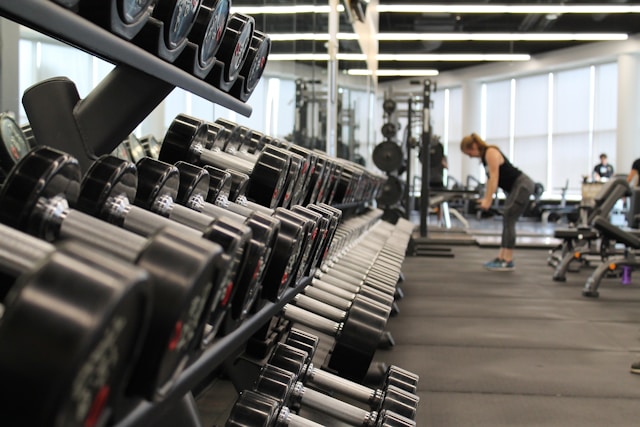
Photo: Danielle Cerullo / Unsplash
Discover more from BeeFit: Fitness & Wellness
Subscribe to get the latest posts sent to your email.
Share :