Functional core training has moved ab workouts beyond endless sit-ups and crunches. If you want a stronger midsection, better lifting mechanics, more athletic movement, or visible definition, your core needs to do more than flex your spine on the floor.
Quick Take
- Your abs are part of your core, but your core also includes deeper trunk muscles, obliques, spinal stabilizers, hips, and glutes.
- Modern ab training emphasizes bracing, resisting movement, carrying load, and transferring force.
- Sit-ups and crunches are not automatically dangerous, but they are limited and may not suit people with back sensitivity.
- A smart core plan includes anti-extension, anti-rotation, anti-lateral flexion, loaded carries, and controlled rotation.
- Visible abs depend mostly on overall body composition, not how many ab exercises you do.
From Sit-Ups to Functional Core Training
For decades, ab training mostly meant isolation: sit-ups, crunches, leg raises, and high-rep floor work. Those exercises can train the rectus abdominis, the muscle group most people associate with a six-pack. They are not useless. They are simply incomplete.
Your core does not work like a single muscle in real life. It coordinates your rib cage, pelvis, spine, hips, and shoulders so you can lift, carry, run, throw, brace, and change direction. The rectus abdominis flexes the trunk, but the transverse abdominis, internal and external obliques, spinal erectors, diaphragm, pelvic floor, lats, glutes, and hip muscles all contribute to trunk control.
That shift changes the goal. Instead of asking, “How many crunches can I do?” a better question is, “Can my trunk stay strong while my arms and legs move?” This approach answers that question more directly.
There is also a safety reason to be selective. Repeated spinal flexion under fatigue may irritate some people, especially those with existing low back symptoms, but it is too simplistic to say sit-ups cause back pain for everyone. Back pain is multifactorial. Exercise choice should match your body, history, technique, and tolerance. Research on core stability exercises for nonspecific low back pain suggests stabilization work can be useful, though no single exercise category is a cure-all.
What Your Core Is Actually Built to Do
A useful core program trains three broad qualities: stiffness when you need it, controlled movement when you choose it, and relaxation when the task is over. Constantly gripping your abs is not the goal. Neither is letting your spine collapse under load.
Think about a heavy suitcase carry. One side of your body wants to dip. Your obliques, quadratus lumborum, glutes, and deep trunk muscles resist that side bend while you walk. That is core strength with a real-world job.
Now think about a deadlift, sprint, tennis swing, or push-up. Your core helps transfer force between the lower and upper body. If your trunk leaks tension, the rest of the movement becomes less efficient. This is why modern core work often appears inside broader strength programs, not only at the end of a workout. BeeFit’s beginner bodyweight workout plan uses core stability as part of full-body movement, which is a good starting point if you are rebuilding fundamentals.
Four Functional Core Training Patterns Worth Training
Modern core training does not require complicated exercises. It requires choosing movements that challenge the trunk in different directions and progressing them gradually.
Anti-extension
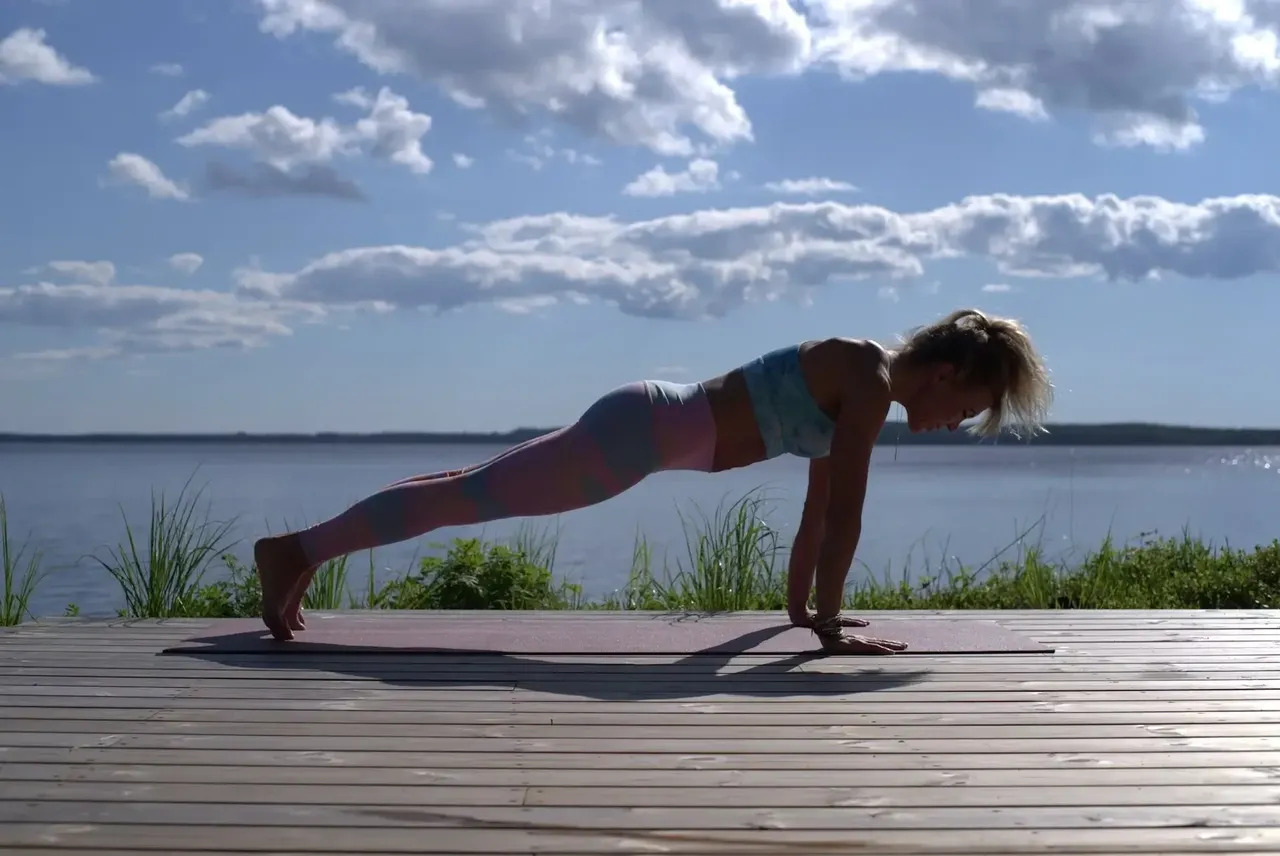
Anti-extension exercises train your trunk to resist excessive arching through the lower back. These are especially useful for push-ups, overhead pressing, running, and lifting.
- Front plank
- Deadbug
- Hollow body hold
- Ab wheel rollout, if you can keep your ribs and pelvis controlled
Start with positions where you can breathe normally. If your lower back pinches, your ribs flare, or you cannot control the return, reduce the range or choose a simpler variation.
Anti-rotation
Anti-rotation work teaches your core to resist unwanted twisting. This matters during rows, carries, running, contact sports, and everyday tasks like lifting a child or moving furniture.
- Pallof press
- Bird-dog
- Renegade row from an elevated surface
- Single-arm cable or band holds
For more detail on side-core training, BeeFit’s guide to oblique exercises for core stability breaks down anti-rotation, side planks, carries, and common technique mistakes.
Anti-lateral flexion
This pattern trains your trunk to resist side bending. It is one of the most practical forms of core work because life is rarely perfectly balanced.
- Suitcase carry
- Side plank
- Single-arm farmer carry
- Offset front rack carry
Keep your ribs stacked over your pelvis. If the weight pulls you into a lean, use a lighter load and make the walk smoother before going heavier.
Controlled rotation
Rotation is not bad. The issue is earning it. Once you can stabilize well, controlled rotational training can help with athletic power, coordination, and force control.
- Cable woodchop
- Half-kneeling cable rotation
- Medicine ball rotational throw
- Landmine rotation
Use rotation as a skill, not a punishment. Move through the hips and upper back, keep the range controlled, and avoid yanking through the lower spine.
How to Progress Functional Core Training
The best core routine is not the hardest one you can survive. It is the one you can repeat with clean technique while gradually increasing the challenge. The CDC physical activity guidelines recommend muscle-strengthening activity at least two days per week for adults, and core work fits well as part of that broader strength plan.
Use this simple progression:
- Level 1: Control. Deadbugs, bird-dogs, front planks, and side planks. Aim for smooth breathing and no pain.
- Level 2: Resistance. Pallof presses, carries, longer lever planks, and rollout regressions. Add load only when position stays clean.
- Level 3: Movement. Cable rotations, med ball throws, loaded carries with direction changes, and sport-specific patterns.
Most people do well with two to four short core blocks per week. That might mean 8–12 minutes after strength training, or one focused core circuit on a lighter day. If you already lift, squat, hinge, press, row, and carry, your core is being trained indirectly. Direct core work should fill gaps, not wreck your recovery.
Progression does not always mean adding more reps. You can increase load, slow the tempo, lengthen the lever, reduce support, add a carry, or move from a stable position to a more dynamic one. BeeFit’s 5-phase muscle-building workout plan is a useful example of how training stress and recovery can be organized instead of constantly pushing harder.
A Practical Functional Core Training Routine
Use this routine two or three times per week after a warm-up or at the end of a strength session. Keep the first round conservative so you can judge how your back, hips, and shoulders respond.
- Deadbug: 2–3 sets of 6–10 controlled reps per side
- Side plank: 2–3 sets of 20–40 seconds per side
- Pallof press: 2–3 sets of 8–12 reps per side
- Farmer carry: 3 carries of 20–40 meters or 30–45 seconds
- Cable woodchop or half-kneeling rotation: 2 sets of 8–10 controlled reps per side
Rest 30–60 seconds between exercises or longer if your form drops. The goal is crisp control, not rushing. If you feel the work mostly in your lower back, hip flexors, or neck, regress the exercise and rebuild from better positions.
This routine pairs well with full-body strength sessions. Put higher-skill moves, such as rollouts or rotational throws, earlier in the workout when you are fresh. Save simpler holds and carries for the end.
What About Six-Pack Abs?
Visible abs come from having enough abdominal muscle and low enough body fat for that muscle to show. Ab exercises can build and strengthen the area, but they do not selectively burn belly fat. That is why functional core training should sit inside a broader plan that includes resistance training, adequate protein, sleep, daily movement, and a sustainable calorie deficit when fat loss is the goal.
Cardio can help, but it should not replace strength work if you want better body composition. BeeFit’s comparison of HIIT and LISS for fat loss explains how to choose conditioning that supports recovery instead of competing with it.
Be patient with the visual side. Genetics influence where you store fat, how your abdominal muscles are shaped, and how quickly definition appears. Training can improve the muscle and the way your body performs. Nutrition determines how much of that muscle becomes visible.
Common Ab Training Mistakes
Training abs hard every day. Your core muscles need recovery like any other muscle group. Daily low-intensity mobility or breathing work may be fine, but hard loaded core sessions are usually better limited to a few days per week.
Only doing planks. Planks are useful, but they are one pattern. Add carries, anti-rotation work, and controlled rotation so your core can handle different demands.
Chasing burn instead of control. A burning sensation does not prove an exercise is effective. Better markers include stable breathing, clean alignment, progressive overload, and transfer to lifting or daily movement.
Ignoring pain signals. Muscle effort is normal. Sharp pain, nerve symptoms, or back pain that worsens during or after training is a reason to stop, modify, and consider help from a qualified clinician.
Final Takeaway
The evolution of ab training is not about banning crunches or making every core workout complicated. It is about matching your exercises to what your body actually needs: stability, force transfer, controlled movement, and enough strength to handle real tasks.
Start with clean positions, progress slowly, and use functional core training as part of a complete strength plan. Your midsection will be better prepared for lifting, sport, daily movement, and, with the right nutrition context, visible definition.
This article is for informational purposes only and is not a substitute for professional medical advice, diagnosis, or treatment. Consult your healthcare provider before starting a new exercise routine, especially if you have back pain, injury history, or a medical condition.
Discover more from BeeFit: Fitness & Wellness
Subscribe to get the latest posts sent to your email.
Share :