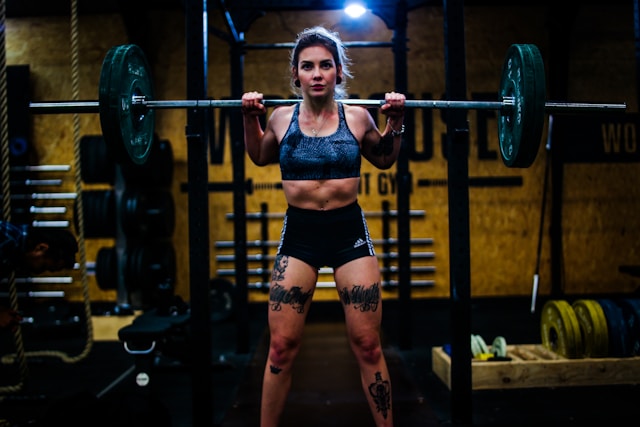
For decades, women’s fitness was often marketed around one goal: get smaller. Burn more calories. Lose weight. Tone without “bulking.” Avoid heavy weights. That message is changing, and women strength training is becoming less of a niche gym identity and more of a normal way to measure fitness.
Quick Take
- More women are tracking and booking strength-based workouts, but the data is platform-specific trend evidence, not proof that everyone trains this way.
- The useful shift is not from thin to bulky; it is from training only to shrink toward training for capability, loading tolerance, and independence.
- Building substantial muscle does not happen accidentally. It requires progressive training, food, protein, recovery, and time.
- Beginners can start with two weekly full-body sessions built around simple movement patterns.
- Cardio still matters. Strength should broaden your fitness plan, not replace every other form of movement.
More women are lifting, tracking strength, celebrating pull-ups and deadlifts, and thinking about muscle as something worth building—not hiding. Strength supports body composition, muscle retention, daily function, and skeletal loading. It also gives progress markers that do not depend on a bathroom scale.
Are More Women Really Choosing Women Strength Training?
The trend is measurable, although it comes mostly from platforms that already attract active users.
Strava’s 2025 Year in Sport Trend Report, based on activities recorded from September 1, 2024 through August 30, 2025, reported that women were 21% more likely than men to record weight training on the platform. Strava’s 2024 report had also identified weight training as its fastest-growing sport type among women.
ClassPass showed a broader rise in booked fitness experiences. Its 2025 Look Back Report, based on reservations from January 1 through October 10, 2025, reported that global fitness reservations rose 36% year over year, with strength training remaining among the major workout categories on the platform.
That does not mean thinness culture disappeared overnight. It has not. But the definition of a “fit” female body is getting wider. Muscle, competence, and physical capability are becoming more visible goals alongside appearance.
Why Strength Is More Useful Than Just Being Smaller
Scale weight tells you surprisingly little about what your body can do. Two women can weigh the same while having very different levels of muscle, strength, bone health, balance, and capacity.
Resistance training can help women build or preserve muscle, increase strength, improve body composition, and make everyday activities easier. It also provides mechanical loading that can support bone health, especially with appropriate nutrition, recovery, and medical care when needed. It does not guarantee bone density gains for every person, and it is not a stand-alone fix for osteoporosis or metabolic health.
That distinction matters. Strength is not a new beauty standard with heavier dumbbells. It is a more durable measure of fitness because it asks better questions: Can you lift, carry, climb, brace, recover, and keep doing the activities your life requires?
Does Women Strength Training Make Women Bulky?
For most women, not accidentally.
Building substantial muscle requires progressive training, enough food and protein, adequate recovery, and months or years of consistency. Women also generally have substantially lower testosterone concentrations than men.
A few weeks of lifting will not suddenly create a bodybuilding physique. What women commonly notice first is different: exercises become easier, posture may improve, weights increase, and muscles begin to feel firmer.
The goal also does not have to be appearance. Getting your first pull-up, carrying heavier groceries, squatting your body weight, or feeling physically capable can become its own source of motivation.
Why Strength Matters More With Age
This trend becomes more meaningful through midlife and beyond. Muscle and strength become harder to preserve when resistance training disappears from your routine. Bone health also deserves more attention around perimenopause and menopause.
The answer is not to stop loading the body. It is to load it more intelligently: controlled resistance training, gradual progression, enough recovery, and exercise choices that match your joints, balance, and experience level.
BeeFit’s Women’s Fitness After 40 guide connects strength with cardio, nutrition, recovery, bone health, and changing midlife priorities. For a simpler framework, Strength Training After 40 Rules explains repeatable progression instead of maximal-effort workouts.
Protein Helps, But Training Gives the Signal
You do not need to turn every meal into a protein challenge. But resistance training works better when protein intake is adequate.
For active adults, total daily intake matters more than chasing a perfect post-workout window. Build meals around reliable protein sources that fit your diet.
The key point is simple: protein provides amino acids for repair, but protein alone cannot tell muscle to grow. Training provides that signal. BeeFit’s guide to building muscle after menopause explains why lifting and protein need to work together.
What Women Strength Training Looks Like for Beginners
You do not need six gym days, complicated programming, or heavy barbells on day one. A beginner women strength training plan can start with two full-body sessions per week and a few movement patterns you repeat long enough to improve.
Coach insight: the first goal is not exhaustion. It is to leave the gym with cleaner reps, a repeatable structure, and one or two clear ways to progress next time.
- Frequency: two non-consecutive full-body sessions per week.
- Movements: squat or sit-to-stand, hip hinge, push, pull, carry, and core stability.
- Effort: use a weight or variation you can control for roughly 8–12 repetitions, usually stopping with 1–3 good reps left.
- Progression: when reps become comfortable, add a little resistance, a few reps, a longer range of motion, or better control.
If the gym feels intimidating, BeeFit’s Beginner Bodyweight Workout Plan provides a four-week starting point before heavier resistance.
Seek coaching or medical clearance if you have osteoporosis, recent injury, significant joint pain, balance problems, cardiovascular risk factors, or any condition that could affect exercise safety.
Does Strength Mean Cardio No Longer Matters?
No.
Replacing “thin at all costs” with “muscle at all costs” would simply create another narrow fitness ideal. Walking, running, cycling, swimming, Pilates, sports, and other movement still contribute to cardiovascular health, endurance, mobility, mental health, and enjoyment.
The better shift is from training only to shrink your body toward training to make your body more capable. Current U.S. physical activity guidelines still recommend both aerobic activity and muscle-strengthening activity for adults. Women strength training should add capacity to your life, not remove every activity you enjoy.
The Bottom Line
Women are not abandoning fitness goals around appearance. But strength is becoming a bigger part of what “fit” means, and that is progress.
Muscle supports movement. Strength protects independence. Resistance training supports bone loading. Getting stronger also gives you progress that cannot be measured by a bathroom scale.
You do not have to choose between looking good and being strong. But if your entire fitness plan is still designed around becoming smaller, it may be time to give your body something more useful to chase:
Become harder to weaken.
This article is for educational purposes only and is not a substitute for individualized medical or exercise advice. If you have osteoporosis, a recent injury, significant joint pain, or another condition affecting exercise safety, speak with a qualified healthcare professional before beginning a new resistance-training program.
Discover more from BeeFit: Fitness & Wellness
Subscribe to get the latest posts sent to your email.
Share :