To build muscle after menopause, protein matters. But protein by itself is not the main driver of stronger arms, firmer legs, better balance, or a more capable body.
The main driver is progressive resistance training.
Protein gives your body the building blocks. Strength training gives your body the reason to use them.
Quick Take
- To build muscle after menopause, protein helps—but lifting is the primary stimulus.
- Menopause can make muscle, strength, bone density, sleep, and recovery harder to maintain.
- Research suggests protein supplementation works best when combined with resistance training.
- Progressive strength training gives your muscles the signal to adapt.
- Most women do well with 2–4 strength sessions per week, depending on recovery.
- Protein timing can help, but total daily protein and consistency matter more.
- Creatine may support strength training, but it works best as part of a full plan.
If you read BeeFit’s new guide on Strength Training After 40 Rules, this is the women’s midlife version: protein is important, but the plan still has to include progressive lifting.
Why It Gets Harder to Build Muscle After Menopause
Menopause is not just a reproductive transition. It can change the way your body handles muscle, fat, bone, sleep, recovery, and training stress.
Postmenopause begins after 12 consecutive months without a menstrual period, and it lasts for the rest of life. Cleveland Clinic notes that people in postmenopause are at increased risk for osteoporosis and heart disease: Cleveland Clinic postmenopause overview.
For muscle, the biggest issue is not that your body suddenly stops responding. It is that the system becomes less forgiving.
Common changes include:
| Change | Why it matters for muscle |
|---|---|
| Lower estrogen | May affect muscle, tendon, bone, and recovery environment |
| Lower muscle mass with age | Makes strength training more important |
| Higher fat gain risk | Can hide muscle loss on the scale |
| Lower sleep quality | Makes recovery harder |
| Bone density concerns | Increases the value of loaded exercise |
| More joint sensitivity | Requires smarter exercise selection |
| Lower training tolerance during stress | Makes recovery planning more important |
This is why “just eat more protein” is incomplete.
Protein supports the process. Resistance training starts the process.
What Protein Actually Does
Protein gives your body amino acids, which are the raw materials used to repair and build muscle tissue. That is important after menopause because muscle maintenance becomes a bigger priority.
But protein does not create muscle by itself.
Think of it this way:
| Tool | Role |
|---|---|
| Protein | Building material |
| Strength training | Construction signal |
| Sleep | Repair window |
| Calories | Energy supply |
| Creatine | Performance support |
| Consistency | The multiplier |
If you eat more protein but do not train, your body has more building material but no strong reason to build new muscle.
If you train but under-eat protein, your muscles get the signal but may not get enough raw material.
The best plan combines both.
The International Society of Sports Nutrition states that many exercising individuals do well around 1.4–2.0 grams of protein per kilogram of body weight per day, depending on training, body composition, age, calorie intake, and goals: ISSN protein position stand.
That range is a useful starting point for women trying to build muscle after menopause.
What the Studies Found
The newer evidence is not saying protein is useless. It is saying protein is not enough without resistance training.
A 2022 systematic review and meta-analysis on whey protein in postmenopausal women found that whey protein combined with resistance training improved body composition and lower-limb lean mass compared with placebo controls. Without resistance training, whey protein did not show meaningful benefits for muscle strength or lean mass: whey protein and postmenopausal women review.
That is the key point.
Protein supports training adaptations.
Training drives the adaptation.
Another study on middle-aged women found that resistance training improved strength, and the authors noted that postmenopausal women may need enough weekly training volume to achieve hypertrophy and body-composition changes: resistance training in middle-aged women.
That does not mean postmenopausal women cannot improve. It means the plan needs to be structured, progressive, and repeated long enough to matter.
The BeeFit takeaway:
Protein is necessary.
Progressive resistance training is non-negotiable.
Why Lifting Helps You Build Muscle After Menopause
Muscle responds to mechanical tension. That means your muscles need to work against resistance hard enough to send a clear signal: keep this tissue, strengthen it, and adapt.
That resistance can come from:
- Dumbbells
- Barbells
- Machines
- Cables
- Resistance bands
- Bodyweight movements
- Weighted carries
- Tempo training
The tool matters less than the stimulus.
To build muscle after menopause, your workouts should include:
- Progressive overload
- Clean technique
- Enough weekly sets
- Hard but controlled effort
- Recovery between sessions
- Protein across the day
- Patience
You do not need to destroy yourself. You do need to challenge your muscles.
A good effort target is stopping most sets with 1–3 good reps left in the tank. That is hard enough to create adaptation without turning every session into a recovery problem.
Read BeeFit’s practical framework: Strength Training After 40 Rules.
Best Weekly Plan to Build Muscle After Menopause
The best weekly plan is the one you can recover from and repeat.
For many women, the sweet spot is 2–4 strength sessions per week.
Beginner Plan: 2 Days Per Week
Use this if you are new, returning after a break, or dealing with low energy.
| Day | Plan |
|---|---|
| Monday | Full-body strength |
| Tuesday | Walk |
| Wednesday | Rest or mobility |
| Thursday | Full-body strength |
| Friday | Walk |
| Saturday | Longer walk or easy cardio |
| Sunday | Rest |
Intermediate Plan: 3 Days Per Week
Use this if you already train and recover well.
| Day | Plan |
|---|---|
| Monday | Full-body strength |
| Tuesday | Zone 2 cardio or walk |
| Wednesday | Full-body strength |
| Thursday | Mobility or easy cardio |
| Friday | Full-body strength |
| Saturday | Walk, bike, or hike |
| Sunday | Rest |
Advanced Plan: 4 Days Per Week
Use this if your sleep, nutrition, and joints are solid.
| Day | Plan |
|---|---|
| Monday | Upper body |
| Tuesday | Lower body |
| Wednesday | Walk or mobility |
| Thursday | Upper body |
| Friday | Lower body |
| Saturday | Easy cardio |
| Sunday | Rest |
The goal is not to train the most days possible.
The goal is to train enough to progress without accumulating so much fatigue that you stop.
The Best Exercises to Build Muscle After Menopause
A strong plan should train major movement patterns.
| Pattern | Exercise options |
|---|---|
| Squat | Goblet squat, leg press, box squat |
| Hinge | Romanian deadlift, hip thrust, back extension |
| Push | Dumbbell press, machine chest press, push-up |
| Pull | Seated row, lat pulldown, dumbbell row |
| Single-leg | Step-up, split squat, reverse lunge |
| Core | Dead bug, Pallof press, plank |
| Carry | Farmer carry, suitcase carry |
A simple full-body workout:
| Exercise | Sets | Reps |
|---|---|---|
| Leg press or goblet squat | 3 | 8–10 |
| Dumbbell bench press | 3 | 8–12 |
| Seated row | 3 | 8–12 |
| Romanian deadlift | 3 | 8–10 |
| Lat pulldown | 2–3 | 8–12 |
| Pallof press | 2 | 10–12 each side |
A second full-body workout:
| Exercise | Sets | Reps |
|---|---|---|
| Hip thrust | 3 | 8–12 |
| Machine chest press | 3 | 8–12 |
| Step-up or split squat | 2–3 | 8–10 each side |
| Cable row | 3 | 8–12 |
| Leg curl | 2–3 | 10–15 |
| Farmer carry | 3 | 30–45 seconds |
Use machines if they help you train safely and consistently. Use free weights if they feel good and match your goals. The best plan often includes both.
Protein Timing After Menopause
Protein timing is useful, but it is not the first thing to obsess over.
The priority order is:
- Total daily protein
- Protein at most meals
- Strength training consistency
- Protein around workouts
- Optional pre-sleep protein
A practical target is 25–40 grams of protein per meal, depending on body size, appetite, and total daily goal.
Good protein sources include:
- Greek yogurt
- Cottage cheese
- Eggs
- Fish
- Chicken
- Turkey
- Lean beef
- Tofu
- Tempeh
- Lentils
- Protein powder
- Milk or soy milk
A simple rule:
Do not save most of your protein for dinner.
Spread it across the day so your body gets repeated opportunities to support muscle repair.
For a deeper guide, read Protein for Muscle Growth.
Sample Day of Eating to Build Muscle After Menopause
This is not a strict meal plan. It is a simple example of how to support training with protein, carbs, fiber, and recovery.
Breakfast
Greek yogurt bowl:
- Greek yogurt
- Berries
- Chia seeds
- Oats or granola
- Optional protein powder if needed
Lunch
Protein bowl:
- Chicken, salmon, tofu, or lentils
- Rice, potatoes, or quinoa
- Vegetables
- Olive oil or avocado
- Fruit on the side
Pre-Workout Snack
Choose one:
- Banana + protein shake
- Toast + eggs
- Cottage cheese + fruit
- Protein smoothie
- Apple + Greek yogurt
Dinner
Balanced plate:
- Lean protein
- Roasted vegetables
- Sweet potato, rice, beans, or whole grains
- Salad or cooked greens
Optional Evening Protein
Useful if your daily protein is low:
- Cottage cheese
- Greek yogurt
- Milk or soy milk
- Casein or protein shake
The point is not perfection. The point is making protein easy to repeat.
What About Creatine After Menopause?
Creatine is not required, but it can be useful.
Creatine monohydrate helps muscles recycle energy during short, intense efforts. That can support strength training performance over time. A review on creatine supplementation in women notes that creatine may support strength and exercise performance, with potential relevance across hormonal life stages: creatine supplementation in women’s health.
A practical dose is:
| Supplement | Dose |
|---|---|
| Creatine monohydrate | 3–5 grams daily |
Timing matters less than consistency.
Creatine does not replace protein.
It does not replace strength training.
It supports the work.
If you have kidney disease, take medication, are pregnant, or have a medical condition, ask a clinician before starting.
Also read BeeFit’s Muscle Recovery Supplements guide.
Recovery Matters More Than You Think
Postmenopause can make recovery more complicated because sleep, hot flashes, stress, joint discomfort, and appetite changes may affect training quality.
A muscle-building plan should include recovery on purpose.
Key recovery habits:
- Sleep 7+ hours when possible
- Keep protein consistent
- Use rest days
- Walk on non-lifting days
- Do not train through sharp joint pain
- Deload every 4–8 weeks if fatigue builds
- Hydrate consistently
- Eat enough total calories to support training
Watch for these signs that recovery is falling behind:
| Signal | What to do |
|---|---|
| Strength dropping | Reduce volume temporarily |
| Joint pain | Modify exercises |
| Poor sleep | Lower intensity |
| High soreness | Add rest or reduce sets |
| Low motivation | Shorten sessions |
| Hunger or cravings | Check protein, carbs, and total calories |
Building muscle after menopause is not about forcing your body to behave like it did at 25.
It is about giving your body the right signal and enough recovery to respond.
Read more: Sleep and Fitness.
Build Muscle After Menopause FAQ
Can You Really Build Muscle After Menopause?
Yes, but the process may require more structure, patience, protein, and recovery. Some women gain visible muscle. Others gain more strength and function than size. Both matter.
Is Protein Enough to Build Muscle After Menopause?
No. Protein supports muscle repair, but resistance training is the main stimulus. The strongest plan combines progressive lifting, enough protein, enough calories, and recovery.
How Much Protein Do Women Need After Menopause?
Many active women do well around 1.4–2.0 grams of protein per kilogram of body weight per day. Needs vary based on body size, training, calorie intake, kidney health, and goals.
How Often Should Women Lift After Menopause?
Most women do well with 2–4 strength sessions per week. Beginners can start with 2 full-body sessions. More advanced trainees may use 3 full-body sessions or a 4-day upper/lower split.
Should Women Train to Failure After Menopause?
Not every set. Most sets should stop with 1–3 good reps left. Failure can be used occasionally on safer machine or isolation exercises, but it is not required for progress.
Are Machines Okay for Postmenopausal Women?
Yes. Machines can be excellent because they provide stability, controlled loading, and a safer way to train hard. Free weights are useful too. The best plan often uses both.
Does Creatine Help Women After Menopause?
Creatine may support strength training performance and muscle function, especially when paired with resistance training. It is not a hormone, stimulant, or fat burner.
What If I Am Trying to Lose Fat Too?
You can lose fat and protect muscle, but do not crash diet. Keep protein high, lift consistently, walk often, and use a moderate calorie deficit. If strength is falling quickly, your deficit may be too aggressive.
Bottom Line: Protein Helps, Lifting Builds
Protein is important after menopause. But protein is not the whole plan. To build muscle after menopause, your body needs a clear training signal. That signal comes from progressive resistance training.
Lift 2–4 times per week. Eat enough protein. Use machines or free weights. Add creatine if it fits your situation. Sleep as well as possible. Walk on non-lifting days. Track strength, not just body weight.
The goal is not to chase a younger body. The goal is to build a stronger one.
For more support, read BeeFit’s guides on Women’s Fitness After 40, Strength Training After 40 Rules, Protein for Muscle Growth, Muscle Building Fundamentals, Sleep and Fitness, and Muscle Recovery Supplements.
This article is for informational purposes only and is not medical advice. Talk with a qualified healthcare professional before starting or changing an exercise, nutrition, or supplement plan, especially if you have osteoporosis, kidney disease, diabetes, heart disease, joint pain, recent injury, unexplained weight loss, eating-disorder history, or questions about menopause symptoms or hormone therapy.
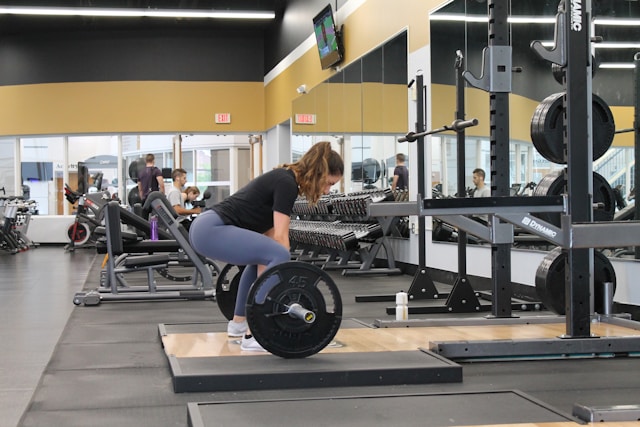
Photo: Danielle Cerullo / Unsplash
Discover more from BeeFit: Fitness & Wellness
Subscribe to get the latest posts sent to your email.
Share :