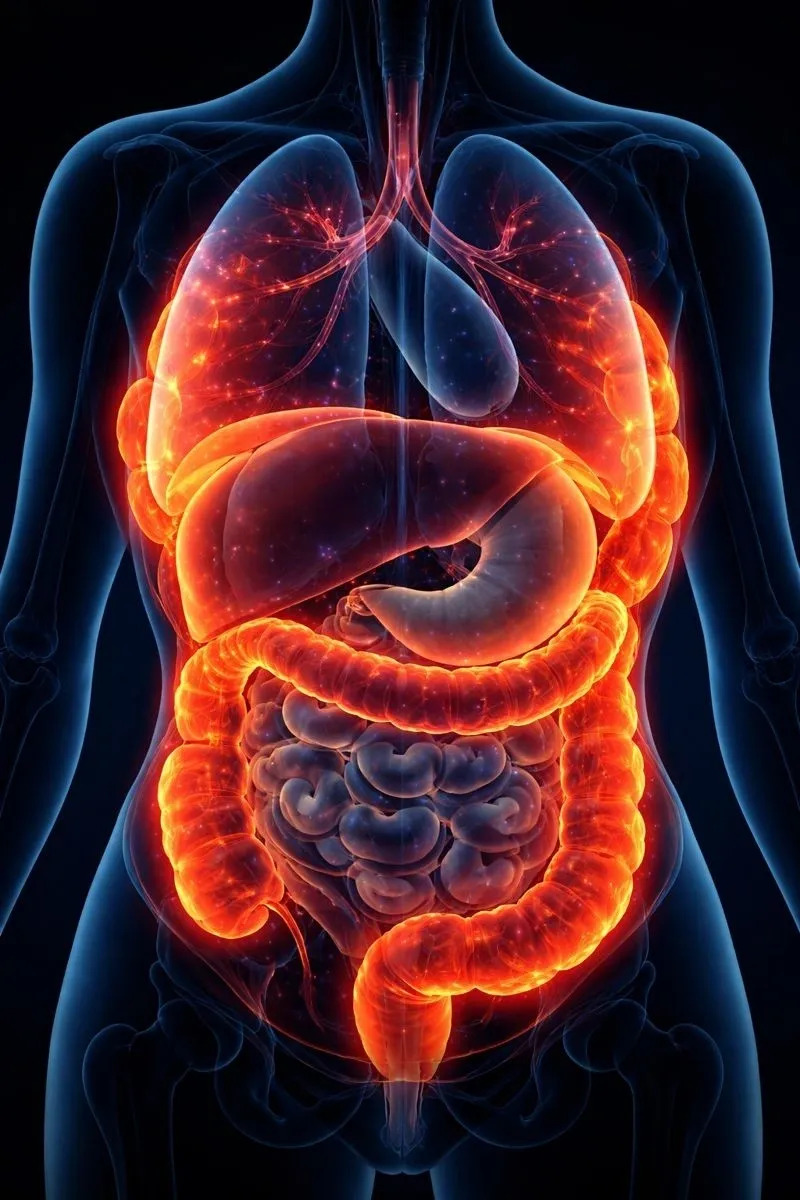
Learning how to reduce visceral fat begins with understanding what it is—and what it is not. Visceral fat sits within the abdominal cavity around internal organs. Higher amounts are associated with insulin resistance, type 2 diabetes, cardiovascular disease, and other health risks, but no single food or workout can selectively melt it away.
Quick Take
- Visceral fat is metabolically active abdominal fat associated with greater cardiometabolic risk.
- Calorie balance drives fat gain and loss, while food quality may influence appetite, metabolic health, and where some excess fat is stored.
- Sugary drinks are more concerning than whole fruit because they provide concentrated calories with little satiety.
- Aerobic exercise, intervals, and strength training can all help reduce visceral fat; HIIT is not required.
- Waist circumference is a useful screening tool, but it does not directly measure visceral fat.
Most visible belly fat is subcutaneous fat located beneath the skin. Visceral fat lies deeper inside the abdomen and cannot be accurately judged from appearance alone. Someone can have a relatively small body size while still carrying abdominal fat, while another person may have a larger waist without knowing exactly how much fat is visceral.
Fortunately, visceral fat responds to many of the same habits that improve overall health: a sustainable calorie deficit when weight loss is appropriate, regular aerobic activity, strength training, adequate sleep, and a dietary pattern built around minimally processed foods.
1. How Food Choices Help Reduce Visceral Fat
Calories still matter. Consistently consuming more energy than the body uses promotes weight gain, while a calorie deficit is generally required for meaningful fat loss. However, the foods supplying those calories can affect fullness, blood lipids, insulin sensitivity, liver fat, and possibly fat distribution.
A randomized 2014 trial assigned adults to consume approximately 750 additional calories per day from muffins made with either saturated-fat-rich palm oil or polyunsaturated-fat-rich sunflower oil. Both groups gained a similar amount of weight, but the saturated-fat group accumulated more liver and visceral fat. The polyunsaturated-fat group gained more lean tissue.
The study supports choosing more unsaturated fats, but it does not show that food quality cancels calorie balance. Participants were deliberately overeating, and the results cannot predict precisely how every person will respond during normal eating.
Make Better Fat Swaps
Rather than setting an arbitrary gram limit, focus on practical substitutions:
- Use olive or avocado oil instead of butter for some meals.
- Choose fish, beans, or leaner meats more often.
- Include nuts, seeds, olives, and avocado in suitable portions.
- Limit frequent meals built around fatty processed meats, fried foods, and large amounts of butter or coconut oil.
Current heart-health guidance emphasizes replacing sources of saturated fat with unsaturated fat rather than simply adding healthy fats on top of an already excessive calorie intake.
For a broader meal-building framework, read BeeFit’s Nutrition After 40 guide.
2. Rethink Sugary Drinks
A frequently cited 2009 trial compared beverages sweetened with glucose or fructose in adults with overweight or obesity. For 10 weeks, the drinks supplied 25% of each participant’s energy intake. The fructose group experienced increases in visceral fat, blood lipids, and insulin resistance that were not seen to the same extent in the glucose group.
This does not prove that ordinary amounts of table sugar or high-fructose corn syrup uniquely send fat to the abdomen. The intervention used an unusually large amount of pure fructose in liquid form, making it difficult to apply the results directly to normal mixed diets.
The most useful conclusion is simpler: regularly drinking large quantities of sugar-sweetened beverages can add substantial calories without producing the same fullness as solid food. Reducing them can make it easier to control total energy intake and improve diet quality.
Start With Liquid Calories
Begin with the largest concentrated sources:
- Soda
- Sweetened energy drinks
- Sweet tea
- Flavored coffee drinks
- Large servings of juice
- Frequently consumed sweetened sports drinks
Whole fruit is not nutritionally equivalent to a fructose-sweetened beverage. Fruit supplies water, fiber, vitamins, minerals, and plant compounds, and its physical structure generally makes rapid overconsumption less likely.
Replacing sugary drinks with water, sparkling water, unsweetened tea, or coffee can support a plan to reduce visceral fat without requiring the elimination of fruit or every food containing sugar.
3. How Exercise Can Reduce Visceral Fat
Exercise cannot spot-reduce the fat covering one body part. However, regular physical activity can reduce total and visceral fat while improving insulin sensitivity, cardiovascular fitness, blood pressure, and muscle function.
A 2024 network meta-analysis found that vigorous aerobic exercise and high-intensity interval training performed well for reducing visceral fat among people with overweight or obesity. However, another major review found no meaningful difference between aerobic exercise and HIIT when total energy expenditure was comparable.
That means HIIT is an option—not a requirement. Brisk walking, cycling, swimming, jogging, rowing, intervals, and other forms of aerobic exercise can all contribute when performed consistently.
Match Intensity to Your Fitness Level
Current physical-activity guidance recommends at least 150 minutes of moderate aerobic activity or 75 minutes of vigorous activity each week, plus muscle-strengthening activity on at least two days.
A practical week might include:
- Two or three brisk 30-minute walks
- One longer walk, ride, or swim
- One optional interval session
- Two full-body strength workouts
Beginners do not need to begin with repeated all-out intervals. Moderate activity may be easier to recover from and repeat, while HIIT can be added once or twice weekly when fitness, joints, and recovery allow.
BeeFit’s HIIT vs. LISS Fat Loss guide can help you choose the appropriate style.
4. Why Weight Loss Helps Reduce Visceral Fat
Visceral fat is responsive to changes in energy balance and physical activity, but it is misleading to say that the body always burns it first. Fat-loss patterns vary according to genetics, sex, age, hormones, starting body composition, and the type of intervention used.
Research consistently shows that diet, aerobic exercise, or a combination of both can decrease visceral fat. Exercise may reduce abdominal fat even when scale weight changes only modestly, which is one reason body weight should not be the only progress measure.
The goal is not to force rapid weight loss. Aggressive dieting can increase hunger, reduce training performance, and make muscle loss more likely. A moderate, sustainable approach is more useful for long-term health.
Focus on Repeatable Behaviors
Focus on the behaviors that can be maintained:
- Create a modest calorie deficit when fat loss is appropriate.
- Base most meals on protein, vegetables, fruit, legumes, whole grains, and appropriate portions of healthy fats.
- Perform regular aerobic activity.
- Strength-train to preserve or build lean mass.
- Limit frequent sugary drinks and heavily processed foods.
- Protect sleep and manage stress where possible.
- Track trends over several weeks rather than reacting to daily fluctuations.
BeeFit’s Fat Loss After 40 guide explains how to create a sustainable deficit while protecting muscle.
Visceral Fat FAQ
How Can I Tell Whether I Have Excess Visceral Fat?
CT and MRI can quantify abdominal fat in research or clinical settings, while DEXA provides an estimate. These scans are not routinely needed solely to track ordinary fat-loss progress.
Waist circumference is a simpler screening tool. General U.S. guidance identifies greater health risk at approximately 35 inches or more for women and 40 inches or more for men. However, appropriate thresholds may differ with ancestry, body size, age, and medical history.
Measure at the same location and under similar conditions each time. A healthcare professional can help interpret waist size alongside blood pressure, blood glucose, cholesterol, family history, and other risk factors.
Do Fat-Burning Supplements Work?
No supplement can selectively remove fat from the abdomen. Products marketed as belly-fat burners commonly rely on caffeine, stimulants, herbal blends, or unsupported claims.
Some ingredients may temporarily affect energy, appetite, or exercise performance, but their effects are small compared with calorie intake, food quality, movement, sleep, and consistency. Stimulant supplements may also cause anxiety, sleep problems, increased heart rate, or medication interactions.
How Does Chronic Stress Affect Weight?
The relationship is more complicated than “stress raises cortisol, which creates belly fat.” Chronic stress may affect sleep, appetite, alcohol intake, food choices, activity, and hormonal signaling. These factors can make weight management more difficult and may contribute to abdominal fat accumulation over time.
Stress management should support—not replace—nutrition and exercise. Helpful strategies may include regular sleep hours, walking, social support, relaxation practices, and professional help when stress becomes persistent or disruptive.
When Should Progress Become Noticeable?
There is no universal timeline. Progress depends on starting body composition, calorie intake, physical activity, sleep, health conditions, medications, age, and genetics.
Instead of expecting a dramatic change in two weeks, monitor body weight and waist circumference over several months. Improvements in fitness, blood pressure, glucose control, energy, and consistency may also appear before a large visual transformation.
A Sustainable Path Forward
The best way to reduce visceral fat is not a special food, supplement, or interval protocol. It is a repeatable system combining appropriate calorie intake, nutritious food choices, aerobic activity, strength training, sleep, and time.
Replacing some saturated fat with unsaturated fat may support metabolic health. Reducing sugary beverages can lower unnecessary calorie intake. Moderate and vigorous exercise can both help, while strength training protects the muscle that supports long-term function and body composition.
Choose the approach you can sustain rather than the one promising the fastest abdominal-fat loss. For a complete starting framework, use BeeFit’s Fat Loss After 40 guide or build a personalized plan with the BeeFit AI Fitness Planner.
Related BeeFit Guides
This article is for informational and educational purposes only and is not a substitute for medical advice, diagnosis, or treatment. Consult a qualified healthcare professional before beginning a weight-loss or high-intensity exercise program, particularly if you have cardiovascular disease, diabetes, significant joint problems, or another medical condition.
Discover more from BeeFit: Fitness & Wellness
Subscribe to get the latest posts sent to your email.
Share :