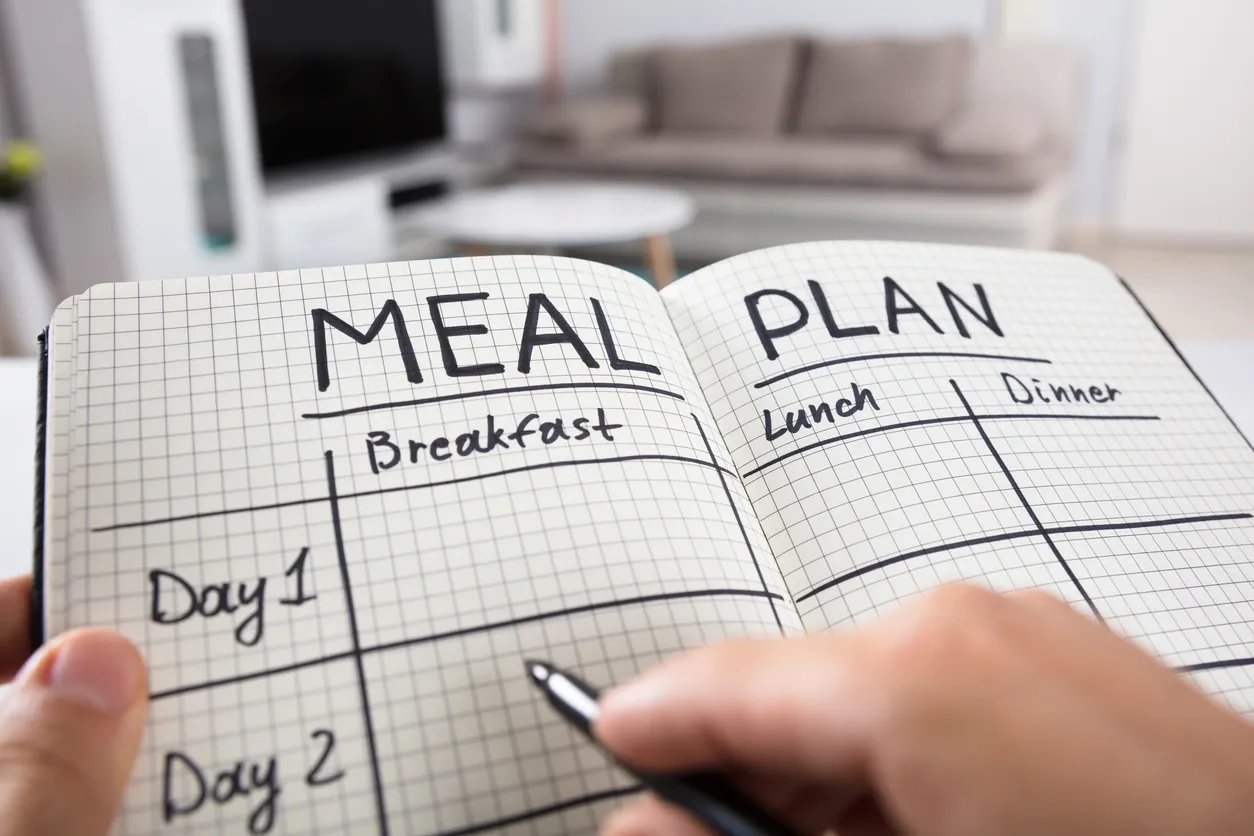
The best meal planning tips do not require identical containers or a rigid diet. A useful plan simply makes balanced meals easier when work, training, or family responsibilities leave little time to decide what to eat.
Quick Take
- Plan around your real calendar.
- Use a balanced plate as a flexible guide.
- Prepare ingredients that work in several meals.
- Include leftovers and schedule changes.
- Store prepared food safely.
1. Start Meal Planning With Your Schedule
Most meal plans fail because they begin with recipes instead of reality.
Review the week and identify which evenings allow time to cook, which days require a packed lunch, and when social plans or late meetings are likely.
A practical structure is:
- Two repeatable breakfasts
- Two lunch options
- Three planned dinners
- One leftovers night
- One flexible meal
Meal planning has been associated with greater food variety and better diet quality, but the evidence is observational. It does not prove that planning alone causes weight loss. Its main advantage is practical: decisions are made before you are tired, rushed, or very hungry.
2. Use a Balanced Plate for Simpler Meal Planning
You do not need to calculate every calorie to build a useful meal. A visual plate guide can provide a simple starting framework.
| Plate section | Examples |
|---|---|
| About half | Vegetables and fruit |
| About one-quarter | Fish, poultry, eggs, tofu, beans, or lentils |
| About one-quarter | Potatoes, rice, oats, quinoa, or pasta |
| Add as needed | Olive oil, avocado, nuts, or seeds |
This is a starting point, not a prescription. Athletes, older adults, and people pursuing fat loss or muscle gain may need different portions.
Read BeeFit’s Balanced Meal Plan for more detail.
3. Prepare Components Instead of Identical Meals
Batch cooking does not have to mean eating the same meal every day.
Prepare one or two protein sources, one carbohydrate, two vegetables, washed fruit, and one sauce. Chicken or tofu, rice, roasted vegetables, and yogurt sauce can become a bowl, wrap, salad, or quick dinner.
Keep backup foods such as frozen vegetables, canned beans, eggs, tuna, microwaveable grains, or frozen leftovers. Convenience foods can help when they make a balanced meal easier.
For protein-focused ideas, use BeeFit’s High-Protein Meal Plan.
4. Make Your Meal Planning Tips Flexible
A rigid plan can collapse after one restaurant meal, unexpected meeting, or change in appetite. A flexible plan expects those disruptions.
Include a leftovers night, a no-cook option, one social meal, ingredient substitutions, and freezer portions.
You do not need to ban bread, pasta, dessert, or every packaged food. Focus on the overall pattern: adequate protein, vegetables and fruit, fiber-rich carbohydrates, and fats that fit your needs.
When reducing added sugar is a goal, use BeeFit’s 30-Day Eat Less Sugar Challenge rather than eliminating every sweet food overnight.
5. Use Tools Without Making Planning Complicated
Digital tools can organize recipes, estimate needs, and create shopping lists. They should reduce work—not turn eating into a full-time tracking project.
The BeeFit AI Fitness Planner can create a starting fitness and nutrition plan using your goals, activity level, dietary preferences, allergies, and schedule.
Treat automated plans as frameworks. Medical conditions, medications, pregnancy, digestive problems, and eating-disorder history may require individualized advice.
Store Prepared Meals Safely
Refrigerate perishable food within two hours, or within one hour when temperatures exceed 90°F. Keep the refrigerator at 40°F or colder.
Most cooked leftovers should be eaten within three to four days. Freeze later-week portions and label containers with the preparation date.
Meal Planning Tips FAQ
How Should a Beginner Start?
Choose three dinners and make enough for one or two lunches. Add two easy breakfasts and a short shopping list.
Does Meal Planning Guarantee Weight Loss?
No. It can reduce unplanned choices, but weight change still depends on calorie intake, activity, sleep, health, and consistency.
Is Meal Planning the Same as Meal Prep?
No. Planning decides what you will eat and buy. Meal prep completes some cooking or portioning in advance.
Make Meal Planning Easy to Repeat
The most effective meal planning tips reduce friction without making eating rigid.
Plan around your schedule, use a balanced plate, prepare flexible components, keep backup foods available, and store meals safely. A modest plan repeated most weeks is more useful than an elaborate system abandoned after several days.
Adults whose needs change with age can also read BeeFit’s Nutrition After 40.
For a plan adapted to your goals and schedule, use the BeeFit AI Fitness Planner.
Related BeeFit Guides
- Balanced Meal Plan
- High-Protein Meal Plan
- 30-Day Eat Less Sugar Challenge
- Nutrition After 40
- BeeFit AI Fitness Planner
Research Sources
- Meal Planning and Diet Quality
- Harvard Healthy Eating Plate
- Dietary Guidelines for Americans
- CDC Food-Safety Guidance
- USDA Leftovers and Food Safety
This article is educational and is not individualized medical or nutrition advice. Consult a qualified professional for medical conditions, pregnancy, allergies, medications, or eating-disorder history.
Discover more from BeeFit: Fitness & Wellness
Subscribe to get the latest posts sent to your email.
Share :