Losing weight after 40 is not only about making the scale move. To lose fat after 40 without losing muscle, you must protect the tissue that supports strength, blood-sugar control, joint health, and long-term independence. That takes a moderate calorie deficit, sufficient protein, strength training, sensible cardio, and sustainable recovery.
Quick Take
- Use a moderate deficit instead of cutting calories as aggressively as possible.
- Eat enough protein across three or four meals.
- Strength train at least twice per week and work to maintain performance.
- Use walking and cardio to support the deficit without exhausting recovery.
- Protect sleep, manage fatigue, and consider creatine only after the foundations are in place.
Why Is It Harder to Lose Fat After 40 Without Losing Muscle?
Weight loss rarely comes entirely from body fat. Some lean tissue may also be lost, especially when calorie restriction is aggressive or resistance training is absent.
Muscle supports force, glucose storage, balance, and physical independence. A meta-analysis of calorie restriction and resistance training in older adults found that adding resistance training prevented most of the lean-mass loss seen with dieting alone. Exercise combined with weight loss can also preserve strength and lean mass better than diet-only approaches.
That is why a plan to lose fat after 40 without losing muscle should begin by protecting the tissue you want to keep—not by eating as little as possible.
How Large Should Your Calorie Deficit Be After 40?
Fat loss requires consuming less energy than you expend over time, but the size of the deficit matters. A very aggressive cut may produce faster scale loss while increasing hunger, fatigue, poor training, and lean-tissue loss.
A practical starting point is roughly 10–20% below maintenance, often producing a gradual loss of about 0.25–0.75% of body weight weekly. Leaner people and experienced lifters should usually favor the slower end because slower weight loss is more compatible with preserving lean mass. The International Society of Sports Nutrition similarly notes that slower rates may better protect lean mass in leaner individuals.
Track average weight and waist measurements across two to four weeks. If neither changes, reduce portions slightly or add movement. If strength falls quickly and fatigue builds, the deficit may be too aggressive.
How Much Protein Protects Muscle During Fat Loss?
Protein is central when you want to lose fat after 40 without losing muscle because it supports muscle retention, recovery, and fullness.
A 2024 systematic review of protein during weight loss found that higher protein intake reduced muscle-mass decline in adults with overweight or obesity. Research in adults over 50 also supports higher-protein diets for retaining more lean mass during energy restriction.
For active adults after 40, a practical range is often 1.6–2.0 grams per kilogram daily. Spread it across three or four meals, aiming for roughly 25–40 grams per meal from eggs, dairy, fish, poultry, lean meat, soy foods, legumes, or protein powder.
More is not automatically better. People with kidney disease or other conditions affecting protein intake should seek individualized guidance.
For a more personalized target, continue with BeeFit’s Protein After 40 and Protein for Muscle Growth guides.
Why Strength Training Prevents Muscle Loss After 40
Protein supplies the building material, but resistance training gives your body a reason to retain muscle. During a calorie deficit, the goal is not to set records every week; it is to preserve as much strength and training quality as possible.
Train major muscle groups two to four times weekly with progressively loadable squats or leg presses, hinges, presses, rows, pulldowns, split squats, and carries. Most working sets can finish with one to three controlled repetitions available.
Do not replace lifting with more cardio simply because fat loss is the goal. A large trial in older adults found that combining aerobic and resistance exercise with weight loss produced the strongest overall improvement in physical function.
Use BeeFit’s Strength Training After 40 and Muscle Building Fundamentals guides for complete programming.
How Much Cardio Supports Fat Loss After 40?
Cardio supports energy expenditure and fitness, but more intensity is not automatically better. Begin with walking and two or three moderate sessions. Add a short HIIT session only when you recover well and enjoy it.
| Training element | Practical starting point |
|---|---|
| Strength training | 2–4 sessions weekly |
| Walking | Most days |
| Moderate cardio | 2–3 sessions of 20–40 minutes |
| HIIT | 0–1 session initially |
| Easy recovery or rest | At least 1 day |
HIIT is efficient, but it is not uniquely required for fat loss. Easier cardio is often more repeatable and less likely to reduce leg-training quality. BeeFit’s HIIT vs. LISS for Fat Loss guide explains how to choose.
Do You Need to Cut Carbohydrates or Fat?
No. Once protein is set, carbohydrates and fats can be adjusted around preferences, health needs, and training performance.
Carbohydrates support training; prioritize fruit, oats, potatoes, rice, legumes, and whole grains. Dietary fat supports health and satisfaction, but oils, nuts, cheese, and dressings are easy to underestimate.
Build most meals around:
- A clear protein source
- Vegetables or fruit
- A controlled portion of high-fiber carbohydrates
- A measured source of fat
This structure helps control calories without forcing you to eliminate entire food groups. BeeFit’s Fat Loss After 40 and Nutrition After 40 guides provide a complete food framework.
Why Does Recovery Matter When You Lose Fat After 40 Without Losing Muscle?
Sleep loss can change the quality of weight loss. In one controlled study, restricted sleep reduced the proportion of weight lost as fat and increased the loss of fat-free mass. Another trial found that modest repeated sleep restriction led to less fat loss during a calorie-restricted diet.
Keep a consistent sleep schedule and allow enough time to wake reasonably restored. Reduce training volume temporarily when performance drops across several sessions, soreness remains unusually high, or joint irritation builds.
BeeFit’s Sleep and Fitness Recovery Guide and Muscle Recovery Supplements article explain why recovery matters more than adding another hard workout.
Can Creatine Help You Maintain Strength While Losing Fat?
Creatine does not burn fat. It can support strength and repeated high-intensity performance, which may help you maintain a productive resistance-training stimulus while dieting.
Meta-analyses show that creatine combined with resistance training can improve strength and lean tissue in aging adults. A standard approach is 3–5 grams of creatine monohydrate daily; loading is optional.
A small increase in scale weight may reflect water stored inside muscle, not fat. Creatine remains optional, and people with kidney disease or relevant medical concerns should consult a clinician.
See BeeFit’s Creatine Monohydrate Guide for a complete breakdown.
Fat Loss After 40 FAQ
Can You Build Muscle While Losing Fat After 40?
Yes, particularly if you are new to lifting, returning after a break, or carrying more body fat. Experienced and leaner lifters should usually make muscle retention—not rapid muscle gain—the main goal during a deficit.
Is Intermittent Fasting Better for Muscle Preservation?
Not inherently. It can work when it helps control calories while still allowing enough protein and effective strength training.
Reviews suggest intermittent fasting can maintain lean mass when paired with resistance training, but it is not superior by default. The eating schedule matters less than whether the plan creates an appropriate deficit and supports adequate protein and training.
How Can You Tell Whether You Are Losing Muscle?
Watch for a persistent decline in strength, major drops in training performance, an overly fast rate of weight loss, and measurements shrinking beyond the waist.
Consumer body-fat scales fluctuate based on hydration, food intake, sodium, and other factors. Evaluate longer-term trends rather than treating one reading as precise.
How to Lose Fat After 40 Without Losing Muscle Long Term
To lose fat after 40 without losing muscle, keep the deficit moderate, eat enough protein, and strength train consistently. Use walking and cardio to support the plan, then protect the sleep and recovery that keep training productive.
The strongest result is not simply a lower scale number. It is a leaner body that remains strong, capable, and easier to maintain.
Related BeeFit Guides
- Fat Loss After 40
- Nutrition After 40
- Protein After 40
- Protein for Muscle Growth
- Strength Training After 40
- HIIT vs. LISS for Fat Loss
- Sleep and Fitness Recovery Guide
- Muscle Recovery Supplements
- Creatine Monohydrate Guide
This article is for informational and educational purposes only and is not a substitute for medical advice or individualized nutrition guidance. Consult a qualified healthcare professional or registered dietitian before significant weight loss if you have diabetes, kidney disease, cardiovascular disease, osteoporosis, an eating-disorder history, unexplained weight loss, or another condition affecting nutrition or exercise.
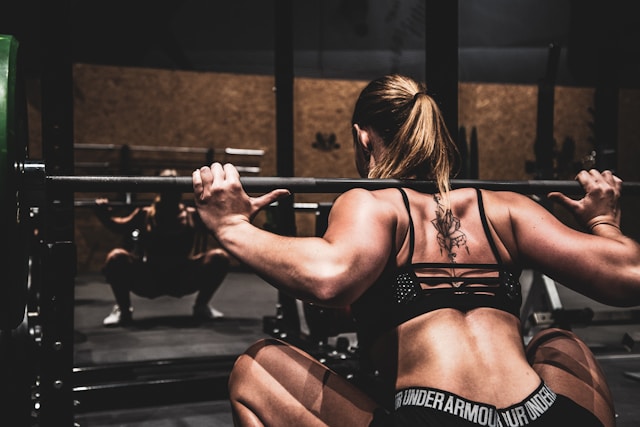
Photo: Sven Mieke / Unspalsh
Discover more from BeeFit: Fitness & Wellness
Subscribe to get the latest posts sent to your email.
Share :